
Six months of consistent muay thai training will not turn a beginner into a bodybuilder. It will strip body fat at a steady clip, tighten the midsection, and build a wiry, functional kind of strength that shows up first in the shoulders, forearms, and legs. The chest stays flat. The arms stay lean. What changes is posture, stamina, and the way the body moves under fatigue, which matters more in this sport than how the body looks standing still in a mirror.
Why Fighters Look Lean, Not Bulky
Walk into any gym and the difference between a muay thai fighter’s build and a powerlifter’s is obvious within seconds. Fighters carry visible muscle with almost no bulk. That look comes from the training itself, not genetics or luck.
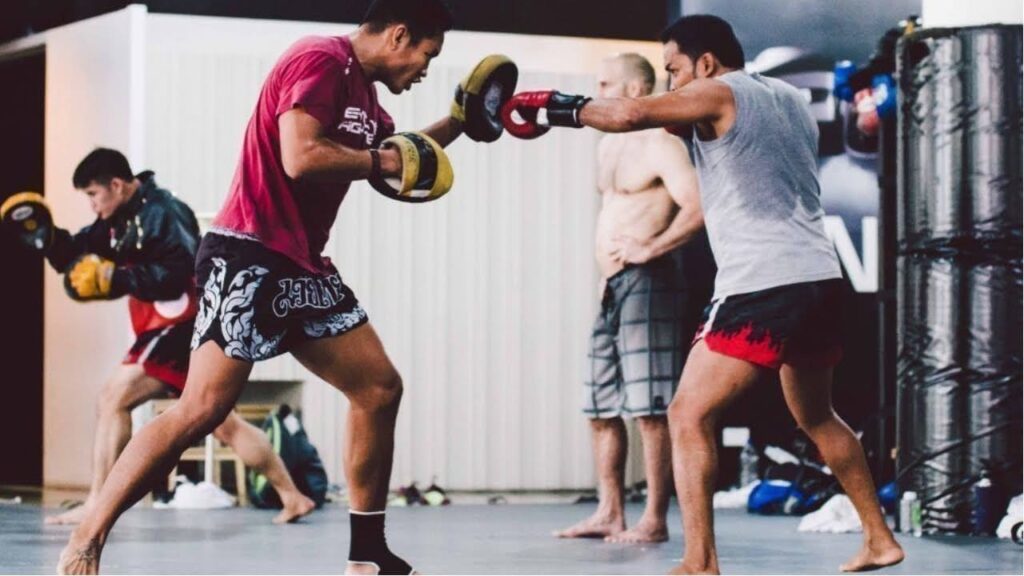
A typical class runs through pad rounds, bag work, clinch sparring, and conditioning drills, often back to back for sixty to ninety minutes with short rests. This is high-volume, moderate-resistance work repeated for hundreds of reps a session. Hypertrophy, the kind of growth that builds size, needs the opposite: heavy loads, low reps, and long recovery between sets. Kicking a bag two hundred times burns glycogen and torches calories. It does not create the micro-tears that make muscle fibers grow thicker.
Diet plays a role too. Fighters preparing for a bout cut weight, and even hobbyists training three or four times a week tend to eat with more discipline once they see how much a bad meal shows up in a training session the next day. Combine a calorie deficit with constant cardio output and the body has no surplus to build size with, even if the training stimulus were there. It isn’t a coincidence that the leanest athletes in combat sports are also the ones training the most hours.
What Changes Month by Month
Progress in muay thai rarely follows a straight line, but certain patterns repeat often enough to be useful as a baseline. Someone training three sessions a week, eating reasonably, and staying consistent through minor soreness and skipped weeks tends to see the following.
| Timeframe | Weight & Body Fat | Endurance | Legs & Shoulders | What It Feels Like |
| Month 1 | Water weight and early fat loss, often 2 to 5 lbs | Round 1 feels fine, round 3 is brutal | Shin soreness, calf tightness, shoulder fatigue from holding guard | Everything is new; the learning curve dominates over the physical one |
| Month 3 | Steady fat loss continues, waistline visibly smaller | Can finish a full class without gasping between rounds | Calves start to firm up, forearms and shoulders show more definition | Technique starts to feel less foreign; punches land with more snap |
| Month 6 | Weight has often stabilized closer to a leaner set point | Recovery between rounds is noticeably faster | Legs look conditioned rather than just tired; upper back and shoulders more defined | The body reads as an athlete’s, even at rest |
| Month 12 | Weight fluctuates in a narrow, sustainable range | Can handle multiple hard sessions per week without breaking down | Full-body conditioning is visible, especially through the hips and posterior chain | Training feels like maintenance of a physique rather than a transformation |
None of this happens on a fixed schedule. Someone training five days a week will move through these stages faster than someone squeezing in two. Genetics, sleep, and diet shift the timeline in both directions, sometimes by months.
Calories and Fat Loss
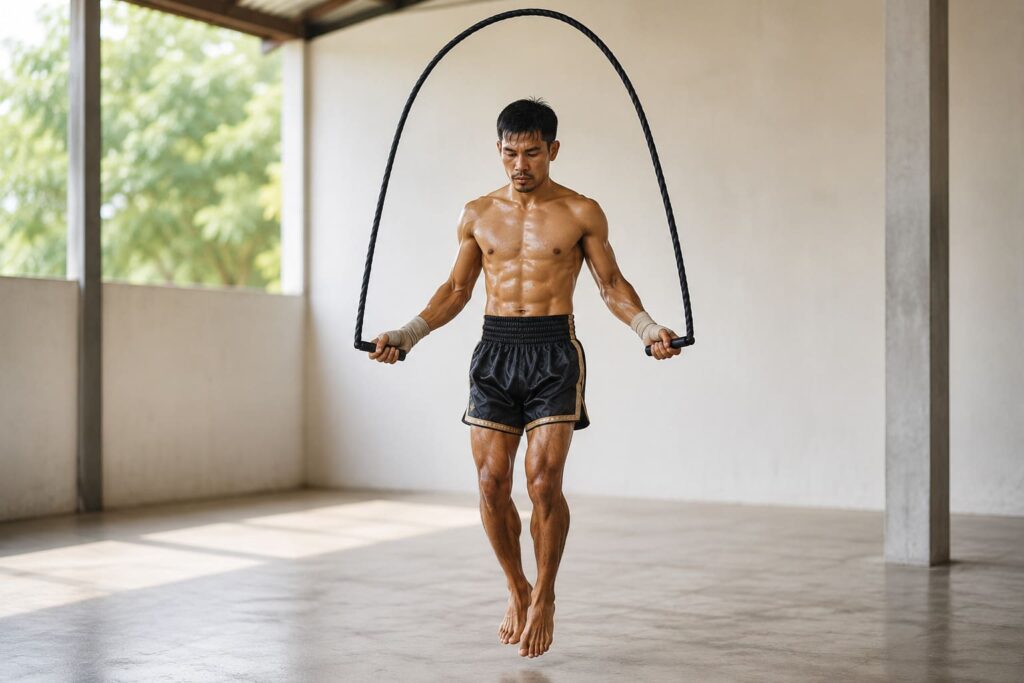
A single hour of muay thai typically burns somewhere between 600 and 900 calories, depending on bodyweight, intensity, and how much of the class is drilling versus live sparring. That range sits well above most gym cardio sessions because the body is working multiple systems at once: striking power, footwork, core rotation, and grip endurance during clinch work all draw on energy simultaneously rather than isolating one muscle group.
That calorie burn compounds fast. Three sessions a week adds up to somewhere near 2,000 to 2,700 calories burned from training alone, before counting the walking, fidgeting, and general activity that tends to increase once someone gets into a fitness routine. For a deeper breakdown of how that translates into actual pounds lost over time, the site’s guide on how muay thai helps you lose weight walks through the math in more detail.
What Muay Thai Won’t Give You
It won’t build a bodybuilder’s chest or biceps. Big, rounded pecs and thick arms come from heavy pressing and pulling movements done for low reps with a caloric surplus, which is the opposite of what a muay thai class provides. Someone hoping to walk out of six months of pad work with a physique built for a magazine cover will be disappointed.
The lower body tells a different story than the upper body. Legs respond well to muay thai’s high kick volume and squatting stance, so calves and quads often develop faster and more visibly than the chest or arms ever will. That mismatch surprises a lot of newcomers who expect uniform growth everywhere.
Adding Muscle on Top
For anyone who wants more visible size without sacrificing conditioning, a small amount of strength work layered on top of muay thai works better than expected. Two short sessions a week focused on compound lifts, squats, presses, rows, and hip hinges, is enough to add noticeable muscle without interfering with striking training, as long as it’s scheduled on lighter training days or the day after a hard sparring session.
Protein intake matters here more than most beginners assume. A body running a calorie deficit from cardio still needs enough protein to preserve and slowly build muscle, roughly in the range of 0.7 to 1 gram per pound of bodyweight for most active adults. Skip that and the lifting adds little.
What Real Progress Usually Looks Like
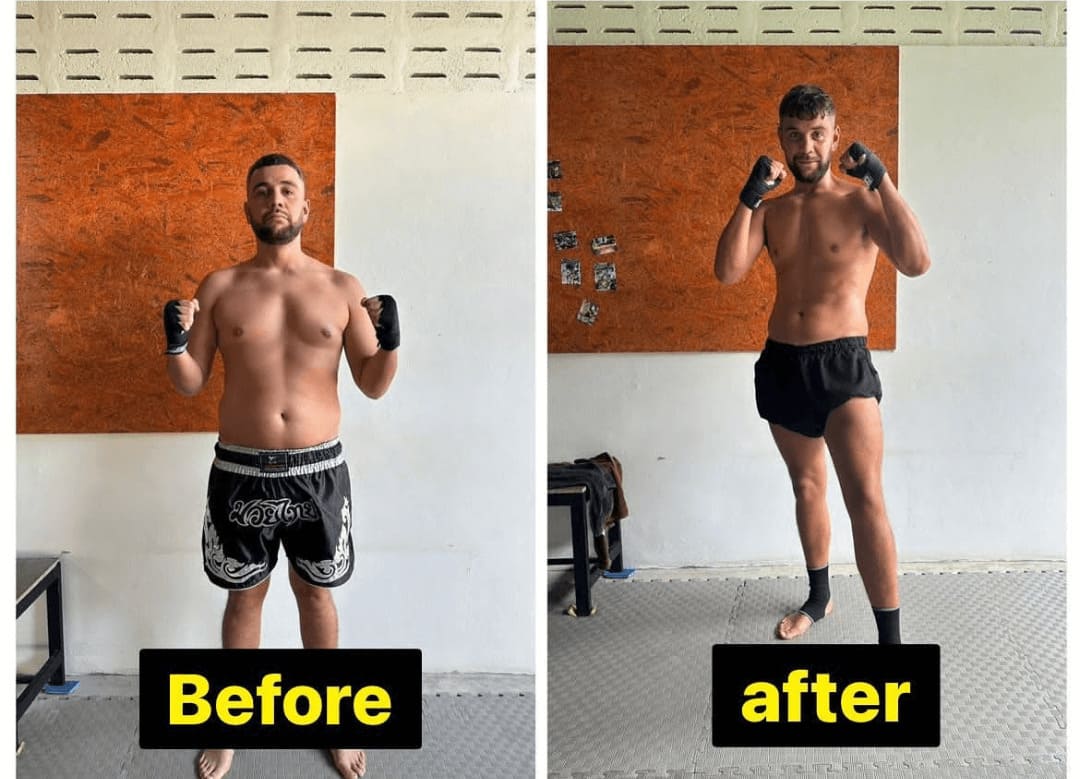
People who track their own transformations over a year tend to describe a common arc. The first two months bring the fastest visible change, largely water weight and early fat loss. Progress then slows around month three or four, a plateau that discourages a lot of newcomers into quitting right when the underlying fitness is actually improving the fastest. Those who push through usually report a second wave of visible change around month six, once technique has improved enough that training intensity climbs without extra effort.
The pattern that shows up again and again in casual accounts from gyms and online communities is not a dramatic before-and-after. It’s a slow tightening: pants fit differently before the scale moves much, shoulders square up before the arms look any different, and stamina improves weeks before anyone else notices a change in appearance. That gradual, uneven timeline is normal, and expecting a straight line to a finished physique is usually where the disappointment comes from.
FAQ
Does muay thai make you bulky? No. The training volume and calorie deficit typical of regular classes work against muscle growth, not for it. Expect lean and conditioned, not bulky.
How soon will I see a physique change? Most people notice a smaller waistline and better posture within four to eight weeks, with more visible changes to the legs and shoulders showing up around month three.
Do I need to lift weights alongside muay thai? Not to get fit or lean, but a couple of short strength sessions a week helps build visible muscle size that striking training alone won’t provide.
Will my legs really change more than my arms? Yes. The kicking volume and stance work in muay thai load the legs constantly, so calves and quads tend to develop noticeably faster than the chest or arms.