
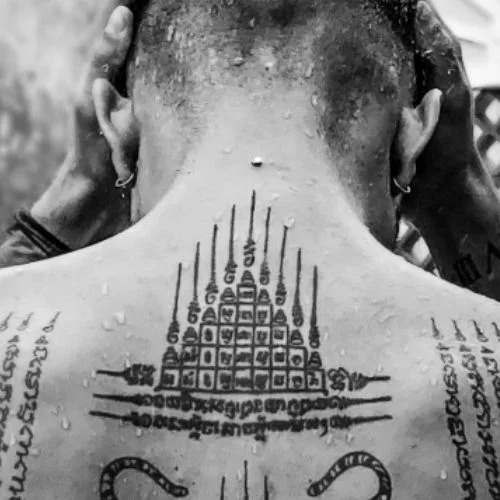
A sak yant is not a cool tattoo design picked off a wall of flash art. It is a blessing applied to skin, delivered by a master who has spent years training in the ritual, and it comes with rules the wearer is expected to live by afterward. Tourists in Thailand see the geometric lines and animal figures on fighters and locals and assume they function like any other tattoo choice. They do not. Getting one wrong, wearing one below the belt line, or treating the process as a photo op has landed foreigners in genuine trouble with Thai authorities and communities. This piece breaks down what the major designs are believed to mean, how the tradition actually works, and where the real etiquette lines sit.
Sak Yant: More Than Ink
The word sak means “to tap” or “to inscribe,” and yant comes from yantra, the same root used for sacred geometric diagrams across South and Southeast Asian spiritual traditions. Put together, sak yant refers to tattoos applied by a monk or lay master, called an ajarn, using techniques passed down through an unbroken teacher-to-student lineage. The designs blend Buddhist prayers, older animist symbolism, and in some lineages, Brahmin and Khmer magical scripts that predate Buddhism’s arrival in the region.
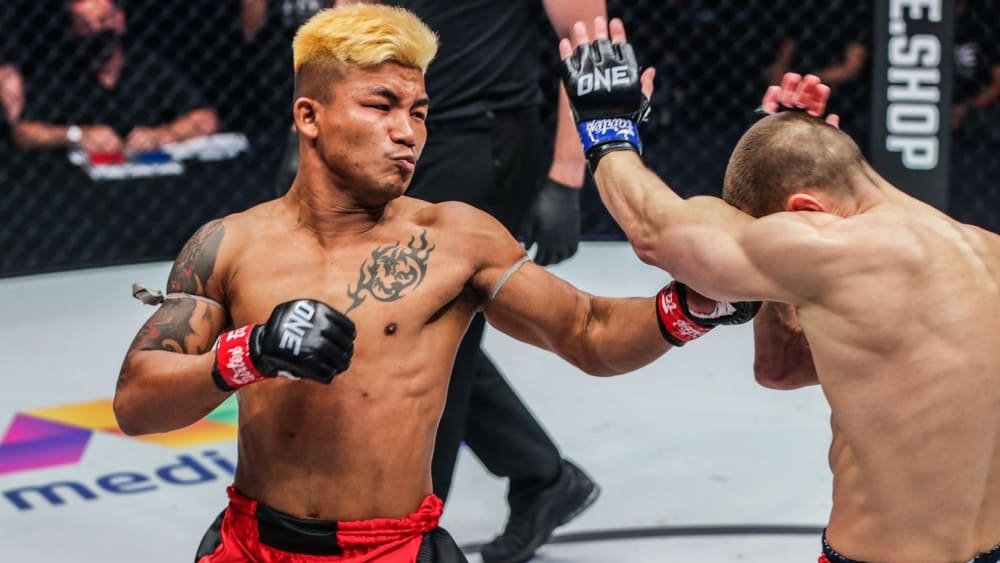
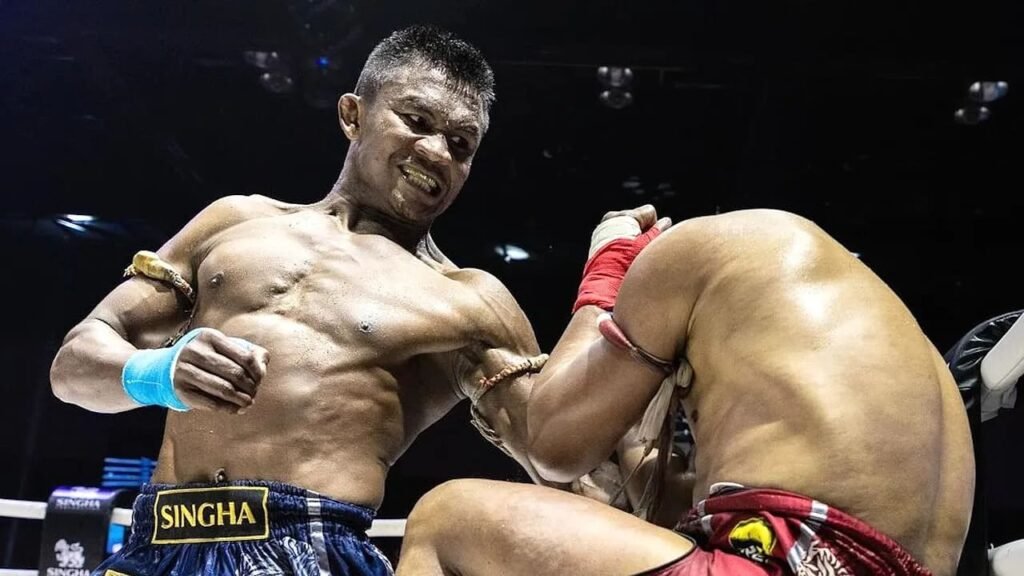
Fighters have worn these tattoos for generations, often believing they offer protection in the ring or luck outside it. Whether or not a viewer shares that belief, the tradition itself deserves to be treated as what it is: a living religious practice, not a design catalog.
The Main Designs and Meanings
Meanings vary by region, by the individual ajarn, and by which prayers were recited during the tattooing. What follows reflects commonly cited traditional interpretations rather than a single, universally agreed definition. Ask ten monks and you may get ten slightly different answers on the finer points.
| Design | What It Looks Like | Commonly Cited Meaning |
| Hah Taew | Five vertical lines of sacred script, usually across the left shoulder blade | Each line carries a separate blessing: protection, luck, charm, success, and removal of bad fortune |
| Gao Yord | Nine spires or peaks, often topped with small swirling script | Considered one of the most powerful and respected designs, linked to the nine sacred peaks of Buddhist cosmology and worn for overall protection |
| Suea Koo | A pair of tigers facing or mirroring each other | Associated with strength, power and protection from rivals; the paired tigers are sometimes read as balance between two forces |
| Hanuman | The monkey warrior god from Hindu and Thai mythology, shown mid-leap or in combat pose | Linked to courage, resilience and fighting spirit, drawing on Hanuman’s role as a fierce, loyal protector in the Ramayana tradition |
None of these designs are decorative shorthand. A monk applying Gao Yord will typically chant specific prayers into each spire as it is tapped in, and the design is not considered complete, or spiritually active, without that recitation.
How Traditional Sak Yant Is Done
The classic method uses a mai sak, a length of bamboo or steel rod sharpened to a point at one or two ends. The ajarn dips the tip in ink, usually a mix that can include herbs, snake venom, or in some lineages, ground charcoal, and taps it into the skin by hand at a rapid, practiced rhythm. There is no machine buzz. Sessions are done in a temple or a master’s home, often in front of a shrine, with incense burning and other clients waiting their turn on mats.
Speed varies wildly depending on design complexity and the master’s experience. A simple line design might take twenty minutes. A large back piece with multiple sacred scripts can run well over an hour, and the ajarn frequently pauses to chant.
After the ink goes in, most masters recite a final blessing over the completed design, sometimes blowing on the tattoo or pressing a palm against it. This is the moment many practitioners consider the tattoo “activated.” Before that point, in the traditional view, it is just ink.
Along with the tattoo comes sila, a code of conduct the ajarn explains to the recipient. Rules differ by lineage but often include things like not speaking ill of one’s mother, not stepping over a sleeping person, and avoiding certain foods depending on which animal spirit is inked. Breaking sila is believed to cancel out the tattoo’s protective power. Some wearers take this literally. Others treat it as a moral reminder more than a magical contract. Either way, the code is part of the deal, not an optional add-on.
Famous Fighters and Their Tattoos
Sak yant tattoos show up constantly in Muay Thai media and on fight cards, and it is well known within the sport that a large number of Thai fighters carry them, often applied before their careers began or during their rise through regional stadiums. Fighters have spoken publicly, in general terms, about visiting temples for blessings ahead of big fights, and sak yant imagery appears often in documentaries and promotional material about the sport’s roots. Rather than attach specific tattoo details to any one athlete, it is enough to say the practice runs deep through the fighter community and predates the sport’s modern commercial era by centuries.
What Foreigners Should Not Get
Here is where the etiquette actually bites. Buddha imagery anywhere below the waist, on the legs, feet, or lower back, is a well-documented and serious taboo in Thai culture. The feet are considered the lowest, least respectful part of the body in Thai belief, and placing a sacred image there is read as a direct insult to the religion, not an aesthetic choice. This is not a minor faux pas. Thailand has, in real and documented instances, deported or otherwise penalized foreign visitors over disrespectful Buddha tattoos, and Thai immigration officials have made public statements warning tourists about it.
A few other patterns to avoid without a genuine connection to the tradition. Getting a full sak yant design purely as a souvenir, from a street shop with no ajarn lineage and no blessing ritual, strips the tattoo of its meaning and is often seen locally as appropriating a sacred practice for decoration. Copying a design associated specifically with monastic ordination or a particular temple’s private lineage without any relationship to that temple is another sore point. When in doubt, a design placed above the waist, received from a recognized master, and accompanied by an honest conversation about what it means, is the safer and more respectful path.
Getting One in Thailand: Where and How Much
Wat Bang Phra, a temple in Nakhon Pathom province not far from Bangkok, is probably the most internationally known site associated with sak yant tattooing. Monks there have tattooed both Thai and foreign visitors for decades, and the temple draws crowds especially around its annual Wai Kru ceremony, when practitioners return to renew their tattoos’ blessings and some enter trance states associated with the animal spirits they carry. It is far from the only place to get one; independent ajarns operate temples and private studios across the country, particularly in and around Bangkok, Chiang Mai and other cities with strong Buddhist temple networks.
Pricing is loosely structured and varies a great deal by design complexity, the master’s reputation, and whether the visit includes a formal blessing ceremony. Simple single-line designs from a respected ajarn commonly run in the range of a few hundred to a thousand baht, while larger, multi-symbol pieces from well-known masters can cost several thousand baht or more. Donations to the temple are typically expected on top of whatever fee is discussed, and haggling over a sacred tattoo is generally considered poor form.
Aftercare and Training With Fresh Ink
Bamboo-method tattoos heal a bit differently than machine work. The hand-tapping technique tends to sit slightly shallower in the skin, and many practitioners report faster surface healing, though the ink can still take two to three weeks to fully settle. Keeping the area clean and dry for the first several days matters more than any special ointment.
Training is the real complication. Sweat, friction from pads and gloves, and grappling in the clinch are rough on fresh tattoos, and most ajarns and tattoo shops alike recommend at least a week off contact training, longer for larger pieces. Rushing back into sparring with a half-healed sak yant risks infection and can blur or fade the linework before it has fully set, which matters even more for a design meant to carry spiritual weight for life.
FAQ
Do sak yant tattoos actually work as protection? That depends entirely on personal and cultural belief. Many practitioners and fighters treat the protective claims as genuine, tied to Buddhist and animist tradition, while others view the tattoos as symbolic and meaningful without literal magical effect. Sak yant is a matter of faith, not something with a testable outcome.
Can any tourist get a sak yant tattoo in Thailand? Generally yes, temples like Wat Bang Phra tattoo foreign visitors regularly, but respectful behavior matters. Dressing modestly, following the temple’s instructions, and treating the ritual as a religious ceremony rather than a novelty photo opportunity go a long way.
Is it disrespectful to get a sak yant if you’re not Buddhist? Most ajarns will tattoo non-Buddhists without issue, since the practice has always drawn a mix of visitors. What matters more than personal faith is intent: receiving the design from a genuine master, understanding roughly what it represents, and avoiding placements or imagery considered taboo.