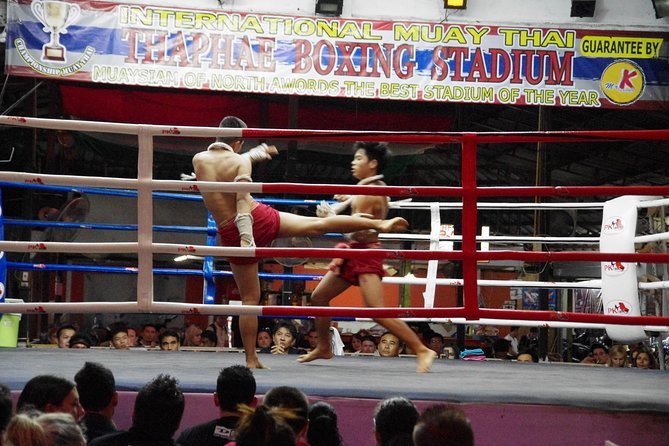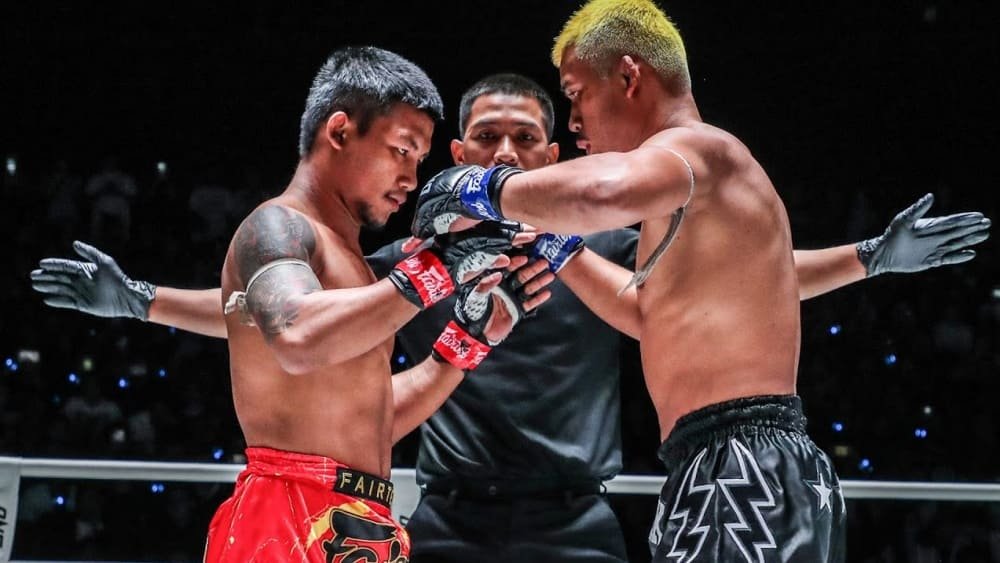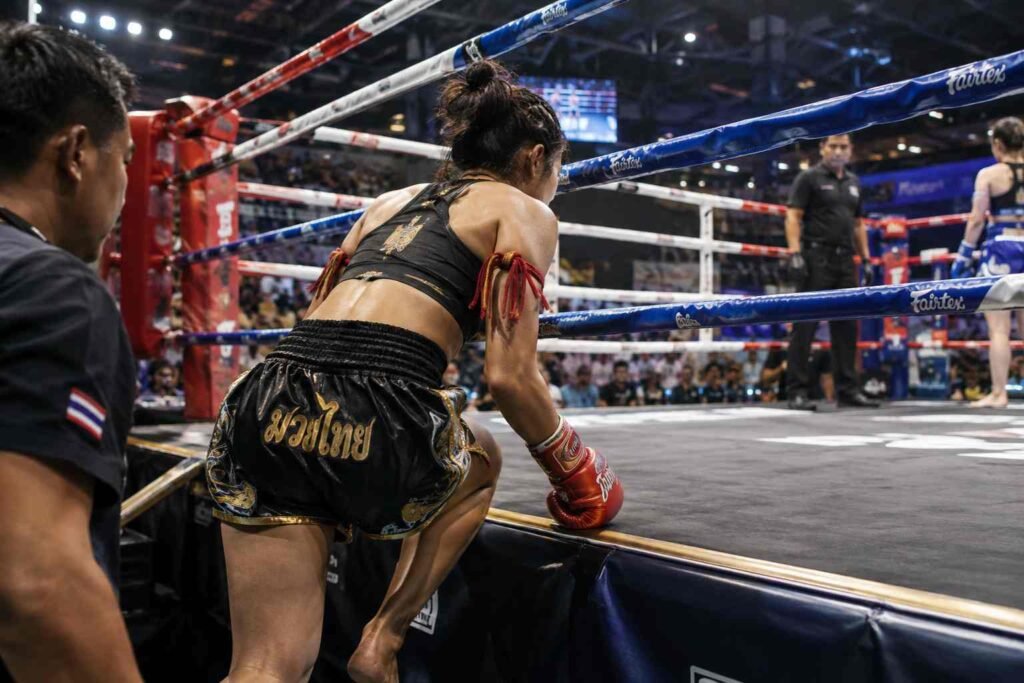


A good combo isn’t a string of moves you memorized off a whiteboard. It’s a setup and a payoff, built to exploit a specific reaction from your opponent. This list gives you twelve combos across three skill levels, why each one works, and how many reps to run on the bag.
How Muay Thai Combos Differ From Boxing Combos
Boxing combos are built entirely around hands, so they chain punches to create angles and openings within a tight, fast rhythm. Muay Thai combos have to account for kicks, knees, elbows, clinch entries, and the fact that a kick generates far more force than a punch but takes longer to load and throw.
That changes the math. In boxing you can throw six punches in the time it takes to throw one kick, so combos there are dense and quick. In Muay Thai, we’re usually setting up one or two strikes that matter with two or three that soften the target first. A jab in Muay Thai often exists just to get the head moving before a kick lands on an unguarded body.
There’s also a defensive layer boxing doesn’t need in the same way. Every combo you throw leaves you standing in range of a kick, a knee, or a clinch attempt, so where your combo ends matters as much as how it starts. We’ll get to that.
Combos From Beginner to Advanced
Work through these in order. Each tier assumes you’re comfortable with the individual strikes already; the goal here is chaining them under a clear tactical idea, not learning new technique.
Beginner Combos
- Jab → Cross → Switch Kick. The one-two forces your opponent’s hands up to cover the head. Their weight also shifts back slightly on the cross, which is exactly when the switch kick lands clean on the body or thigh. Run 3×20 per side on the bag.
- Jab → Cross → Rear Low Kick. Same setup, but the kick targets the lead leg instead of the body. Beginners tend to drop the rear hand after the cross, so use a mirror or coach check here. 4×15 per side.
- Teep → Jab → Cross. The teep isn’t a strike so much as a range-finder. It pushes the opponent back or makes them flinch, which opens a beat for the jab-cross to land clean instead of into a guard. 3×20 per side.
- Jab → Rear Low Kick. Two strikes, two different rhythms. This teaches the pause between hands and kicks that a lot of new fighters rush past. 4×20 per side, slow and deliberate before you speed it up.
Intermediate Combos
- Jab → Cross → Left Hook → Switch Kick. The hook comes in on an angle the opponent’s guard usually isn’t built to catch after two straight punches, and it also turns your hips into position for the kick that follows. 5×12 per side.
- Cross → Left Hook → Rear Low Kick. This one baits a counter. Most opponents expect a third punch after the hook, not a kick, so the low kick lands while they’re still bracing for hands. 4×15 per side.
- Jab → Teep (feint) → Switch Kick. Fake the teep, just load it and pull it back. The opponent’s hands drop to defend a kick that never comes, and the real kick lands a half-second later while their guard is still low. 5×12 per side.
- Cross to the body → Left Hook to the head → Rear Head Kick. Body shot first to bring the guard down, hook to bring it back up and off-balance, then a head kick through the gap. This is a level-change combo, and it’s where a lot of intermediate fighters start scoring real knockdowns. 4×10 per side, focus on the level changes more than speed.
Advanced Combos
- Jab → Cross → Left Hook → Right Uppercut → Switch Kick. Five strikes, three different planes. The uppercut sneaks in under a guard that’s been reacting to straight punches and a hook, and the kick punishes the recovery. 4×10 per side.
- Feint Jab → Rear Low Kick → Cross → Rear Head Kick. Broken rhythm on purpose. The feint buys a flinch, the low kick punishes the flinch, and by the time the cross lands, most opponents have stopped expecting the second kick that follows it. 5×8 per side, quality over speed.
- Left Hook → Right Body Kick → Left Head Kick. Same side kick twice in a row is unusual, and that’s the point. Most fighters brace for the kick to switch sides after the first one connects, so the second head kick from the same leg catches a guard that dropped early. 4×10 per side.
- Catch the opponent’s low kick → Counter Cross → Left Hook → Switch Kick. This is a defense-to-offense combo. Catching a kick puts your opponent on one leg for roughly half a second, which is more than enough time to counter before they reset. 3×10 catches per side, live with a partner once the mechanics are solid on pads.
Why Every Combo Ends With a Kick
Notice the pattern. Almost every combo above closes with a kick, and that’s not an accident of this particular list. It’s the core logic of Muay Thai scoring and Muay Thai power both.
A kick generates more force than anything else in the combo because it uses the whole body, hip rotation, and the shin as the striking surface instead of a fist. Punches are there to set the table. The kick is the meal.
There’s a defensive reason too. A kick naturally resets your range. When you throw a switch kick or a rear kick as your last strike, your body rotates and your base shifts back into a position where you’re not standing directly in front of your opponent anymore. Finish a combo on a punch instead, and you’re often still square in front of them, in range for a counter with your weight forward and nowhere to go. Traditional Muay Thai scoring reflects this bias too. Judges reward the strike that ends an exchange more heavily than the ones that set it up, so a combo that fizzles out on a jab scores worse than the identical combo finished with a kick, even if the punches did the real work of opening the target.
Building Your Own Combos
Once you’ve drilled these twelve, stop treating combo lists as something to memorize and start treating them as a formula: set up a reaction, then punish it. Every combo works because strike one creates a problem strike two or three can exploit, not because the strikes happen to look good in a row.
Ask three questions before you build a new one. What does my opponent’s guard do after this specific strike? Where does their weight go? And what’s open for the half-second after that? If you can answer those, you can build combos on the fly in sparring instead of reaching for a memorized sequence that may not fit the moment.
Here’s the drill we give students who are ready for this step: shadowbox for three rounds and, after every single strike you throw, freeze for a beat and ask yourself what just opened up. Do that consistently for a few weeks and combo-building stops being memorization. It becomes reading.