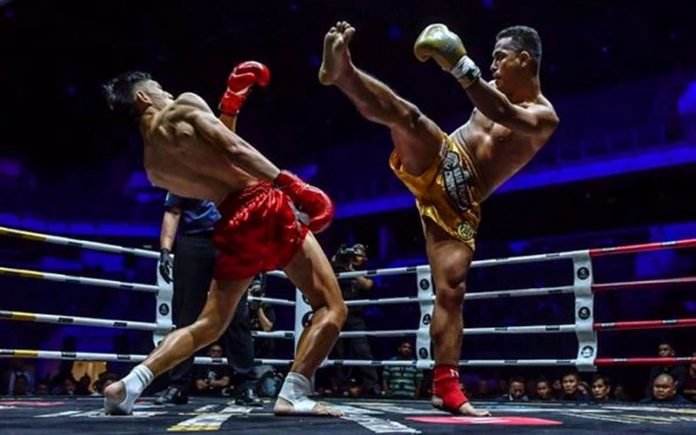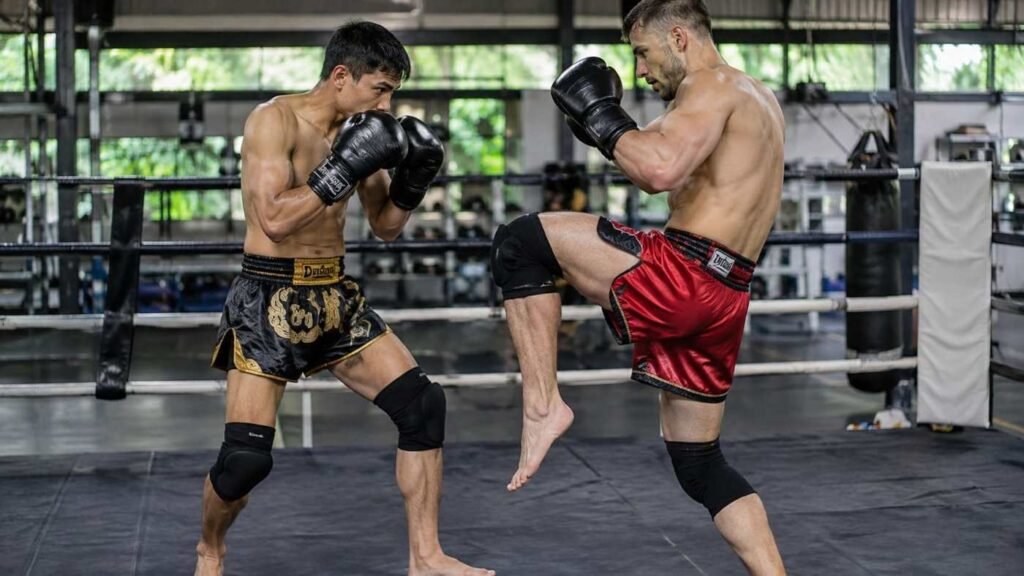
A boxer brings two weapons into the ring. A Muay Thai fighter brings eight, and the name for the sport, the art of eight limbs, is simply an honest inventory. Two fists, two elbows, two knees, two shins. Count them on your own body and the phrase stops sounding like a slogan printed on a gym shirt and starts sounding like an accusation: every one of these is available to the person across from you.
The phrase is English, and it came to the West as a way of explaining what made the Thai style different from the boxing that crowds in New York or Toronto already understood. Thai speakers often describe the older fighting arts in terms of awut (อาวุธ), which means weapons. The body, in this way of thinking, is an armory. You do not have arms and legs so much as you carry them.
Is Muay Thai a martial art, or a sport?
Both, and the tension between the two is part of its character.
Muay Thai grew out of battlefield and village fighting in what is now Thailand, a family of older styles that practitioners today group under the name Muay Boran, “ancient boxing.” During the reign of King Rama VII (1925 to 1935) the fighting moved toward the form we recognize: rings, timed rounds, referees, and gloves in place of the rope bindings fighters once wrapped around their hands. What had been a martial art in the old sense, a way of hurting someone before they hurt you, acquired a rulebook and became a professional sport watched by millions.
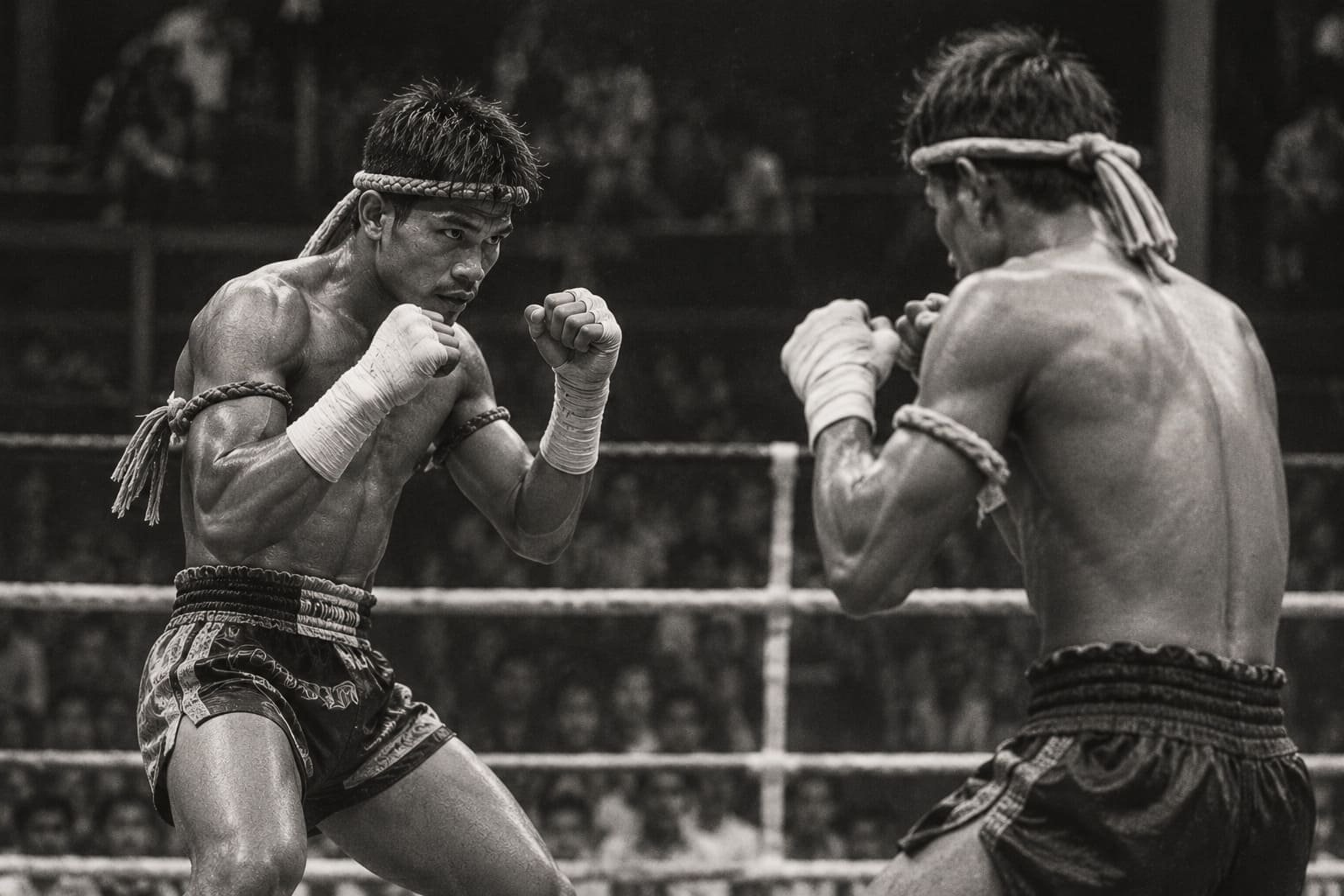
The martial side never left. Before every bout a Thai fighter performs the wai kru ram muay, a slow, private dance that honors teachers, family, and the camp. Fighters wear the mongkhon, a headband blessed by their trainer, and often a prajead armband. A sport does not need any of this. A martial art does, because the ritual is where the fighter admits what the fight is: two people offering their bodies to harm and asking to be protected while they do it.
There is also the modern, institutional answer. The International Federation of Muaythai Associations (IFMA) received full recognition from the International Olympic Committee in 2021, after provisional status granted in 2016. So yes, Muay Thai is a martial art with a lineage, and it is also a governed amateur sport with world championships. Beginners who ask the question are usually asking something simpler: will I learn to defend myself here, or only to play a game with points? You will learn to defend yourself. The points come later, if you want them.
The eight, one pair at a time
The inventory is easier to understand as a table first, then as flesh.
| Pair | Thai term (approximate) | Main strikes | Where it lives in a fight |
| Fists | mat (หมัด) | Jab, cross, hook, uppercut | Long to middle range, setting up everything else |
| Elbows | sok (ศอก) | Horizontal, uppercut, downward, spinning | Short range, cutting and ending |
| Knees | khao (เข่า) | Straight, diagonal, flying, clinch knees | The clinch and the counter |
| Shins and feet | te (เตะ) and teep (ถีบ) | Roundhouse kick, push kick | Long range, scoring and controlling distance |
The fists: the smallest voice in the room
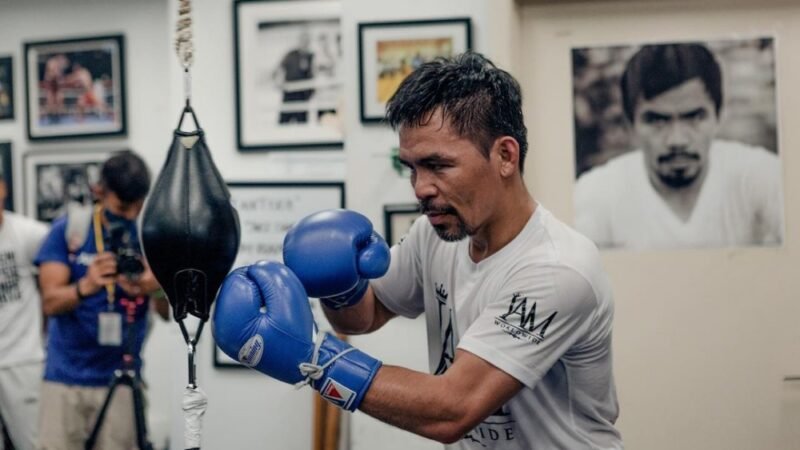
Western visitors are often surprised to find that punching, the thing they came to learn, is the least celebrated weapon in a traditional Thai gym. Judges at the big Bangkok stadiums have historically given more weight to kicks and knees, and fighters built their styles accordingly. The fists matter anyway. A jab measures distance. A cross forces a reaction. Punches are the sentences that lead to the paragraph, and a fighter who cannot throw them clean will never land the heavier weapons they are meant to open.
The elbows: the cruelest pair
Nothing in the art of eight limbs frightens newcomers like the elbow, and nothing deserves more respect. The point of the elbow is hard and narrow. It opens the skin over the eyebrow in a way no glove can, and a single clean strike can stop a bout on a cut. Fighters throw it horizontally, upward from beneath the chin, downward like a hatchet, and spinning, among other variations. Anyone curious about the full catalog, and about how gyms drill it without sending partners to the emergency room, should read this guide to the eight elbow strikes before touching a partner with one.
The elbow belongs to close range, which means it belongs to courage. To use it you must stand where the other person can use it too.
The knees: weapons of the embrace
In the clinch, two fighters hold each other with an intimacy that looks, from the cheap seats, almost tender. Hands are locked behind the neck. Heads press together. Then the knees begin. They drive into the ribs, the thigh, the stomach, and when the grip is strong enough, the face. The clinch is where fights between experienced Thai fighters are often decided, and it is the part of the sport most foreign to people raised on boxing, where a referee separates the fighters the moment they tie up.
Knees also live outside the clinch. A straight knee meets a fighter who rushes forward, and the flying knee, launched from a running step, is the most theatrical weapon in the sport.
The shins: the signature
If the art has a signature, it is the roundhouse kick thrown with the shin. The motion is closer to a swinging bat than to the snapping kick of karate. The hip turns over, the supporting foot pivots on the ball, and the shin lands across the thigh, ribs, or neck with the whole weight of the body behind it. Years of kicking heavy bags and pads condition the bone and the nerves around it. Nobody should believe the old stories about fighters kicking banana trees until the trunks fall; conditioning in a real gym is slower and duller than that, and it works.
The foot earns its place through the teep, the push kick, which Thai trainers often call the jab of the legs. It stops a charging opponent, spoils rhythm, and keeps distance. The first weeks of training are spent learning to throw these weapons without falling over, and the list of basic moves beginners learn first is mostly a list of these eight limbs used in their plainest forms.
Why eight, and not nine?
The number is a rule, and rules are historical accidents that come to feel like nature.
The older styles grouped as Muay Boran counted differently. Some traditions spoke of nawa awut, the nine weapons, adding the head, since a headbutt in close quarters was simply one more way to win. Some accounts go further and describe ten weapons. Modern Muay Thai removed the head for the same reason modern boxing removed bare knuckles: a sport that wants to continue must keep its athletes able to return next month. The eight survived because they could be governed. The ninth could not.
Read this way, the name records a decision. Every art defines itself by what it permits, and the sport’s name tells you where the line was drawn.
How to pronounce Muay Thai
English speakers mispronounce the name in two predictable ways. They say “may Thai,” or they turn the first word into one flat syllable, “moy.” Neither is right, and trainers in Thailand will notice, though most are too polite to mention it.
The Thai spelling is มวยไทย. In the official romanization it is written muai thai, and linguists transcribe it as [mūaj tʰāj]. For practical purposes:
- Muay sounds like “MOO-eye” run together quickly into almost one syllable. Start with the vowel in “moo” and slide into the sound of “eye.”
- Thai sounds like “tie.” The th is not the th of “this” or “thin”; in Thai romanization the h only marks a breath after the t, so say it as a plain English “tie.”
- Tones: Thai is a tonal language, and a syllable spoken at a different pitch can become a different word. Both syllables here take the mid tone, which is the easy one for English speakers: keep your voice level and do not let it rise or fall.
The whole thing comes out close to “MOO-eye tie,” smooth and even. Say it that way at a gym in Bangkok, Chiang Mai, or Phuket and nobody will flinch.
The name itself is plain. Muay means boxing or fighting, and Thai means Thai. The poetry of “eight limbs” was added later, by people trying to explain the sport to others. Fighters also call themselves by a Thai term, nak muay, and a short list of Thai words every fighter hears in camp will get you through your first weeks far better than a phrasebook.
A small story the eight limbs carry
Every March 17, Thailand marks National Muay Thai Day in honor of Nai Khanom Tom, a fighter from Ayutthaya who, according to the story, was taken prisoner by the Burmese after the city fell in 1767. Years later, the story goes, he was ordered to fight before the Burmese king, beat the champion, and then beat nine more men in a row, earning his freedom. Historians treat the tale with caution, and some argue it took its familiar shape only in the 20th century, when Thailand was building a national identity around the sport.
Whether or not a single man ever fought ten opponents in an afternoon, the legend explains why Thais think of the eight limbs as something more than technique. In it, the body becomes a nation’s argument that it cannot be defeated. Fighters who perform the wai kru before a bout are, in a quiet way, remembering that argument.
FAQ
What are the eight limbs in Muay Thai?
The two fists, two elbows, two knees, and two shins. The feet are used too, mainly for the teep (push kick), but they are usually counted together with the shins as part of the kicking weapons.
Is Muay Thai a martial art?
Yes. It descends from older Thai fighting systems, keeps rituals such as the wai kru ram muay, and is taught for self-defense. It is also a professional and amateur sport, and its international federation, IFMA, gained full IOC recognition in 2021.
How do you pronounce Muay Thai correctly?
Say “MOO-eye tie,” with both syllables on a level, middle pitch. The “th” in Thai is pronounced like a plain “t.”
Why aren’t headbutts allowed if older styles used the head?
Modern rules removed the headbutt to protect fighters and allow regular competition. Styles that include the head, sometimes called the nine weapons, belong to the older Muay Boran traditions.