

How a Thai Pad Session Sounds
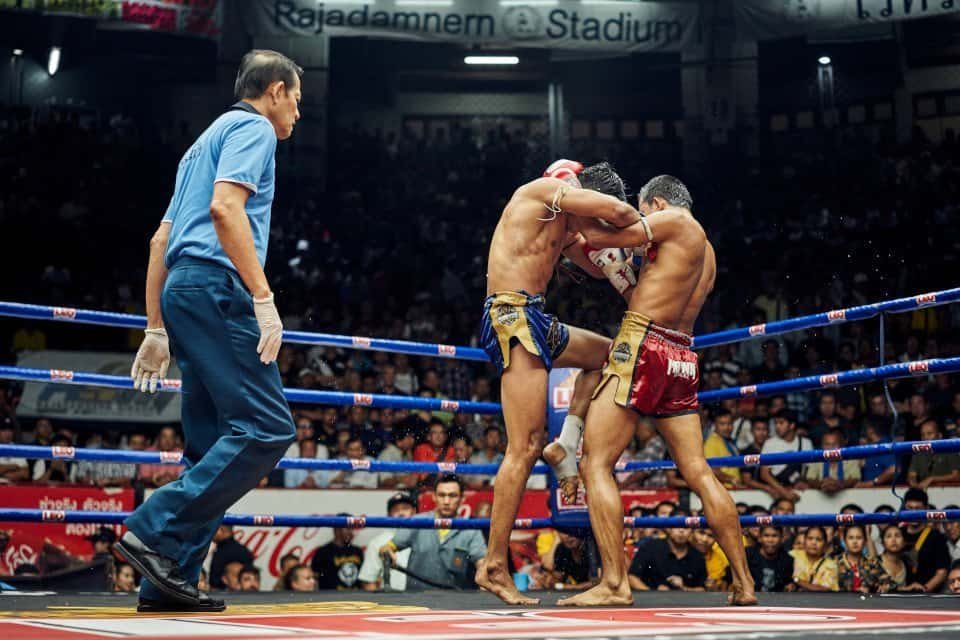
The pads crack twice, sharp as a slammed door. “Sok!” the trainer barks, and the fighter’s elbow whips across the top of the mitt before the word has even finished leaving his mouth. “Dee. Reo, reo!” Good. Faster, faster. The trainer resets his stance, taps his own thigh once, and calls “khao,” and a knee drives up into the pad held low against his ribs.
Nobody in this gym talks much between rounds. Language does the least amount of work it can get away with. “Sai,” left, and the fighter throws a left hook without breaking rhythm. “Khwa,” right, the cross comes back the other way. When the round runs long and the fighter’s arms start to drop, the trainer doesn’t yell louder. He just repeats “chok,” flatter this time, almost bored, because a bored voice means keep going, nothing is wrong yet. Then the bell cuts through (an actual bell, or these days a phone alarm gaffer-taped to the ring post), someone shouts “phak,” and every arm in the room drops at once, like a puppet show ending mid-scene.
That’s maybe fifteen words total across three minutes. A newcomer standing ringside, especially one who has spent months reading English-language technique breakdowns online, won’t recognize a single one at first. Every gym in Thailand runs on roughly the same short list of commands, numbers, and strike names, repeated so many thousands of times that trainers stop thinking of them as words at all. They’re just the sound the work makes.
What Nak Muay Means
Nak muay (นักมวย) is the Thai word for a person who does the sport, roughly “fighter” or “boxer.” The prefix nak attaches to a wide range of Thai nouns to mean “one who does X.” Nak rian is a student. Nak dontri is a musician. Nak muay reads almost literally as “one who does muay,” muay being the general Thai word for boxing or fighting.
The word predates the modern ring by a long stretch. Muay described empty-hand fighting long before anyone strapped on padded gloves or fought inside a roped square, and the older form is usually called muay boran, ancient boxing, kept separate from the ring sport practiced today. Its full origins and evolution stretch back centuries before the term ever needed a modern definition.
A fighter is a nak muay whether they’ve had one fight or three hundred. There’s no certification attached, no belt system built into the word itself. It just names the role. Thai fighters use it about themselves plainly, the way an English speaker says “boxer,” not as a title that needs to be earned through some ceremony first.
Nak Muay Farang: The Foreign Fighter
Nak muay farang (นักมวยฝรั่ง) means, plainly, “foreign fighter.” Farang is the everyday Thai word for a Western foreigner, used constantly and without much heat behind it, closer to “outsider from the West” than to any specific nationality. Attach it to nak muay and the phrase describes exactly what it sounds like: a non-Thai person training and fighting in the sport.
The label carries a little more weight than it first appears to. Foreign fighters have trained in Thailand in real numbers since international camps expanded through the 1990s and 2000s, and gyms across Phuket, Chiang Mai, and Bangkok now run entire programs built around nak muay farang, sold specifically to travelers who want a month, a season, or a year of daily training. Some Thai trainers use the phrase with genuine warmth for a foreign student who has put in years of work. Some use it neutrally, as a plain fact. Occasionally it gently notes that a fighter, however skilled, still moves like someone who learned the sport as an adult rather than as a child in a village gym. None of that is an insult. It’s a distinction, and in a sport built on decades of repetition, distinctions matter more than compliments do.
Strikes Vocabulary
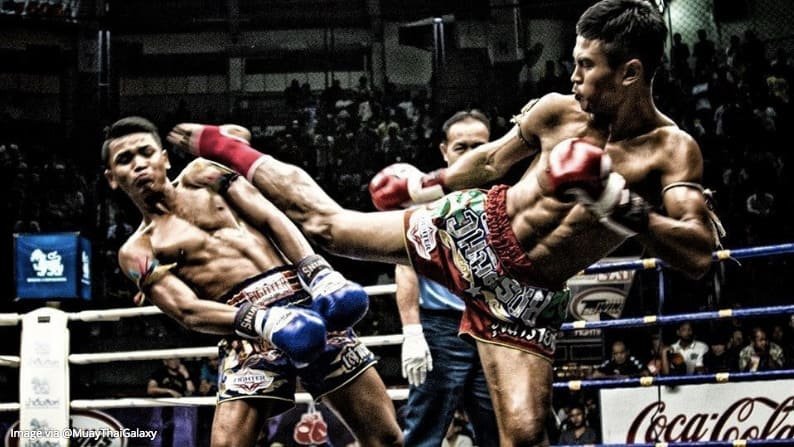
The four core weapons of Muay Thai each have a one-word name, and a few extra terms describe how a fight actually turns.
| Thai Word | Simplified Pronunciation | Meaning |
| Teep | rhymes with “beep” | Push kick, thrown with the ball or heel of the foot into the body or hips |
| Tae | rhymes with “day” | General word for a kick, most often the roundhouse |
| Sok | rhymes with “sock” | Elbow strike |
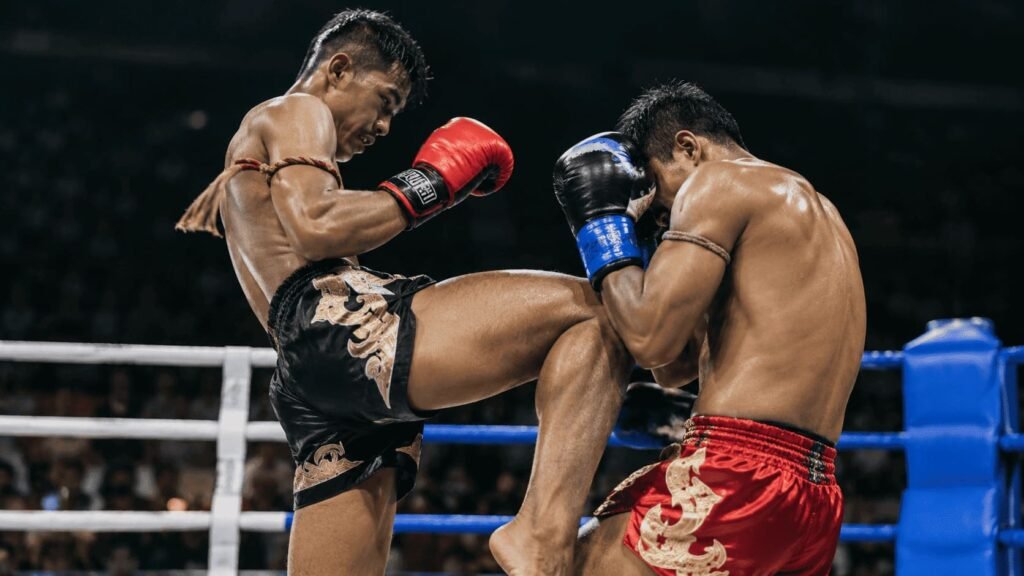
| Khao | rhymes with “cow” | Knee strike |
| Mat | rhymes with “hut” | Punch, from the word for fist |
| Chap | rhymes with “stop” | To clinch or grab, the entry point into close-range grappling |
| Chana | “chuh-NAH” | Win, as in winning the fight |
Chap is the one word on this list most foreign students never hear explained properly. It names the exact moment a fight changes ranges, when two fighters go from throwing strikes to fighting for grip and position, a skill covered in far more depth in this breakdown of clinch techniques. Chana, by contrast, needs no explaining. Every fighter learns it in their first week, usually shouted by someone else after their hand gets raised.
Gym Commands You’ll Hear
These are the words that actually run a training session, repeated so often they stop registering as language.
| Thai Word | Simplified Pronunciation | Meaning |
| Chok | rhymes with “choke” | Hit, go, punch, thrown out as a general “do it now” |
| Phak | rhymes with “pack” | Rest |
| Sai | rhymes with “sky” | Left |
| Khwa | “kwah” | Right |
| Reo | “ray-oh” | Fast, faster |
| Chaa | “chah” (held long) | Slow, slow down |
| Dee | rhymes with “see” | Good, nice, well done |
A trainer can run a full round on nothing but these seven words strung together in different orders. Chok, khwa, chok, sai, reo, dee. That sentence alone tells a fighter everything: punch, right side, punch, left side, faster, good.
Counting in Thai
Round counts, rep counts, and combination numbers all get called out in Thai, even in gyms that otherwise speak English to foreign students all day.
| Number | Thai Word | Simplified Pronunciation |
| 1 | Neung | “nung” |
| 2 | Song | “song” |
| 3 | Sam | “sahm” |
| 4 | Si | rhymes with “see” |
| 5 | Ha | rhymes with “hah” |
| 6 | Hok | rhymes with “hock” |
| 7 | Jet | rhymes with “jet” |
| 8 | Paet | rhymes with “pat” |
| 9 | Kao | rhymes with “cow” |
| 10 | Sip | rhymes with “sip” |
Nine, kao, sounds close enough to eight’s near-neighbor khao (knee) that new students sometimes flinch mid-round, expecting a knee count when the trainer was only counting reps. It’s a small, harmless mix-up almost everyone makes once.
Respect Words
Muay Thai carries a formal layer of language around teachers and tradition that a fighter absorbs early, whether or not anyone sits them down and explains it.
| Thai Word | Simplified Pronunciation | Meaning |
| Wai | rhymes with “why” | The palms-together bow, Thailand’s traditional greeting and sign of respect |
| Wai Kru | “why-kroo” | The ritual dance performed before a fight, honoring teachers |
| Sawasdee | “sa-wat-dee” | Hello, a general greeting |
| Khop Khun Khap | “kop-koon-kap” | Thank you (khap is added by male speakers, kha by female speakers) |
| Kru | rhymes with “true” | Teacher, instructor |
| Ajarn | “ah-jahn” | Senior teacher or master, a level above kru |
The wai itself shows up constantly, not just in the ring. A student walking into a gym waiing an older trainer, a fighter waiing the referee before touching gloves, none of it is performance. It’s the same small gesture Thai people use walking into a temple or greeting an elder relative, just applied to a gym.
Why Isn’t “Muay Thai” Pronounced “Moo-Ay”?
Thai is a tonal language. The pitch used to say a syllable changes its meaning entirely, not just its emphasis. The example every Thai teacher reaches for eventually: the single syllable mai, said with five different tones, can mean new, silk, wood, burn, or a spoken question mark, depending only on pitch. English has nothing quite like this. Say an English word with the wrong stress and people still understand you. Get the tone wrong in Thai and there’s a real chance you said a different word altogether.
Muay only has one syllable in Thai, said quickly with a rising tone, closer to the English word “boo-ey” squeezed into a single beat than to two separate sounds, “moo” then “ay.” English speakers who learned the sport’s name from a page rather than a person tend to split it in two out of habit, because that’s how English eyes read a written u-a combination. A Thai speaker hears that split immediately, and while it’s never rude, it does mark the speaker as new to the language.
None of the pronunciations in this guide are exact. Thai carries sounds and tones that don’t map cleanly onto English letters, and no romanization system captures them perfectly. Every simplified spelling above is a rough gym-floor guide, close enough to be understood, not a substitute for listening to a Thai speaker say the word out loud.
FAQ
Is nak muay a formal title, or just a general word? A general word. It simply means someone who fights or trains in Muay Thai, no license, ranking, or ceremony required to claim it.
Why do some fighters get called nak muay farang instead of just nak muay? Because farang specifies “foreign,” useful shorthand in a sport where the line between fighters raised inside the Thai gym system and international students still gets discussed constantly in commentary and marketing.
Do all Thai gyms use the exact same commands? Mostly, since words like chok, phak, sai, and khwa are standard nationwide. Individual trainers still add their own phrases, and gyms with many foreign students often mix in English on top.