
Ask a Street Fighter player where the towering, eyepatch-wearing kickboxer Sagat came from, and most will shrug. He’s just a character. A boss fight. A guy with a tiger tattoo who throws fireballs from a standing muay thai stance, which should probably be illegal. But Capcom didn’t invent him from nothing. The name and the general look were pulled from Sagat Petchyindee, a real Lumpinee Stadium fighter who came up during a stretch of Thai boxing history that fans and historians still talk about like it was a lost golden age: roughly 1980 to 1995.
It’s one of the most repeated pieces of trivia in the sport, and it happens to be true. Long before international audiences knew muay thai existed outside of action movies, a real Thai fighter’s name ended up on an arcade cabinet in Japan. That alone says something about how far the sport’s reputation traveled during this period, and it’s as good a place as any to start understanding why fans keep calling these fifteen years “golden.”
What Made 1980-1995 “Golden”
Every combat sport has an era its old-timers point to and say “you should have seen it back then.” For muay thai, that era is this one. Stadium cards at Lumpinee and Rajadamnern ran multiple times a week, packed with fighters who had spent their entire childhoods in training camps, sometimes starting before age ten. Thailand had hundreds of active camps feeding fighters into the system, which meant a level of competition and depth that’s hard to replicate anywhere in combat sports today.
The reasons aren’t mysterious. Thailand’s economy was expanding through much of the 1980s, and that growth fed directly into the fight scene. Bigger crowds meant bigger gate revenue. Bigger betting pools meant bigger incentives for camps to develop genuinely elite fighters rather than journeymen. And because the audience for muay thai was still almost entirely domestic, the sport hadn’t yet been pulled in different directions by foreign promoters, international rules committees, or crossover money from other combat sports. It could just be muay thai, refined by people who had grown up steeped in it.
The Economics: Purses and Packed Stadiums
Money is not a romantic subject, but it explains almost everything about why this period produced so much talent. Stadium fights weren’t charity events. They were built around gambling, and Thai fight gambling in this era moved enormous sums between spectators, ringside bettors, and stadium operators. That betting economy created real financial pressure to put on good fights, night after night, week after week.
For a fighter, that meant something concrete: win consistently at Lumpinee or Rajadamnern in your prime years, and you could support your family in a way that wasn’t possible in most other trades available to a poor kid from rural Thailand. The incentive structure pushed camps to specialize, to develop distinct styles, and to keep their best fighters active rather than resting on a reputation. A fighter who stopped performing dropped down the card fast. There was always another sixteen-year-old from another camp ready to take the slot.
This is also why the champion belts from this stretch carry so much weight decades later. A Lumpinee title in the mid-1980s wasn’t handed out after a handful of fights. It came after years of climbing through a stacked, unforgiving stadium system where the loser didn’t get a rematch clause, he got sent back down the card.
The Legends
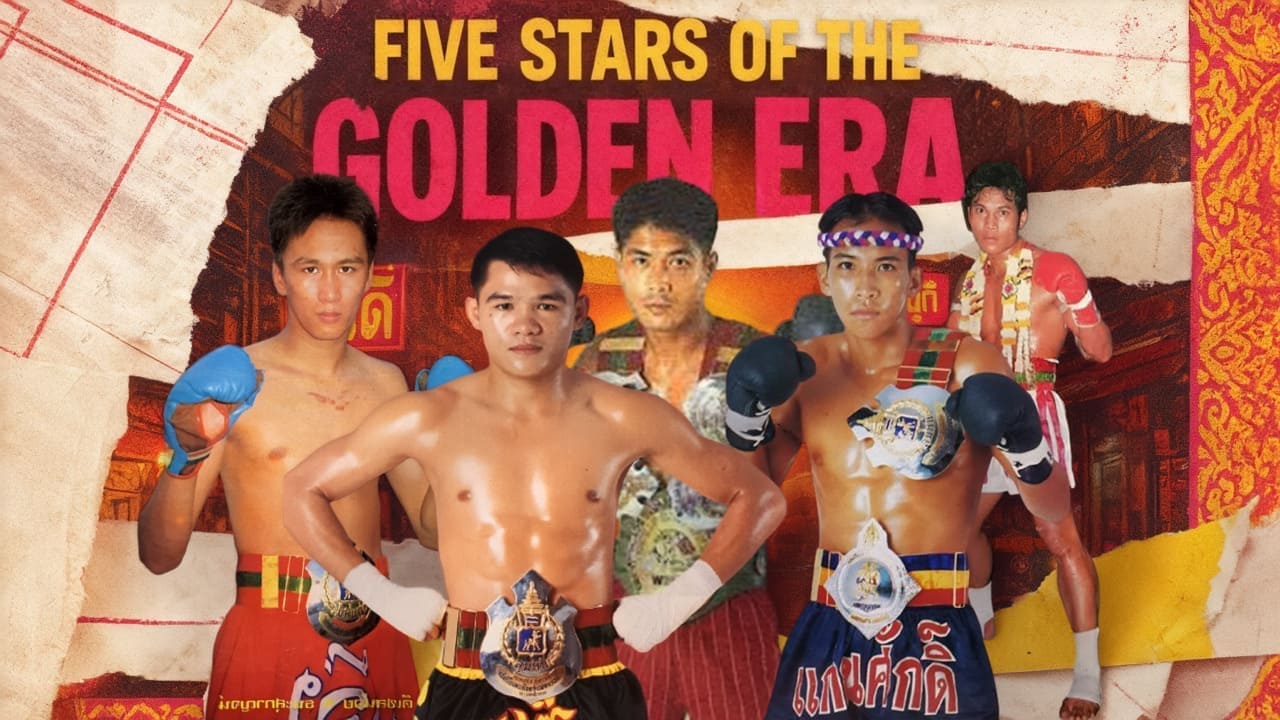
No single article can cover every fighter people cite from this stretch, and honestly, trying to would do a disservice to how deep the talent pool actually ran. But a handful of names come up again and again in any conversation about the golden era, and they’re worth knowing.
Samart Payakaroon
Fans and historians frequently call Samart the “Muhammad Ali of Muay Thai,” and the comparison isn’t just about star power. It’s about how he fought. Samart was known for a kind of effortless technical polish that made brutal exchanges look almost casual, throwing combinations with the kind of balance and timing that other fighters spent careers trying to imitate. He also crossed over into Western boxing during his career, which was unusual for a Thai fighter of his generation and added to his reputation as someone operating on a different level than his peers.
Dieselnoi Chor Thanasukarn
If Samart represented finesse, Dieselnoi represented something closer to inevitability. He was a knee fighter, tall for a Thai boxer, and his clinch game was so dominant that opponents reportedly began avoiding matchups with him altogether. The story widely told among fans is that Dieselnoi’s own dominance effectively priced him out of the sport. Camps stopped offering him fights because there was too little upside and too much risk in facing him. Whether every detail of that story has been polished with retelling, the broader point holds up: he was that good, and the sport’s own economics eventually worked against him because of it.
Karuhat, Samkor, and Namkabuan
Beyond the two names above, golden era conversations almost always pull in Karuhat Sor Supawan, known for unorthodox, almost playful technique that made him a nightmare to read. Samkor Kiatmontep, a southpaw whose power and composure under pressure earned lasting respect. And Namkabuan Nongkeepahuyuth, whose kicking technique is still referenced by coaches teaching the sport today. None of these fighters need invented statistics to justify their reputations. Their names alone still open doors in Thai boxing gyms decades later, and that’s a kind of credibility that record books can’t fake.
Sagat: From Lumpinee to Street Fighter
Back to that trivia at the top. Sagat Petchyindee was a genuine Lumpinee-era fighter, and when Capcom’s team built the original Street Fighter roster in the late 1980s and early 1990s, they borrowed his name and general fighting identity for the game’s towering muay thai boss character. It’s one of those crossover facts that sounds almost too clean to be true, a real Thai stadium fighter becoming a permanent fixture in global gaming culture, but it’s genuinely well documented and frequently repeated by both fight historians and gaming journalists.
What makes it worth mentioning here isn’t just the trivia value. It’s a small, concrete reminder of how far this sport’s reputation had already spread by the early 1990s, even before mixed martial arts and international promotions turned muay thai into a worldwide export. Somebody at a Japanese game studio had heard enough about Thai stadium boxing to want a piece of it on their roster. That doesn’t happen with a sport nobody’s heard of.
Why the Era Ended
Golden eras don’t usually end with a single dramatic event, and this one didn’t either. Thailand’s economy hit serious trouble in the late 1990s, culminating in the 1997 Asian financial crisis, and that downturn hit the stadium betting economy hard. Smaller purses meant camps had less incentive to develop fighters the way they once did. Some camps closed. Others scaled back.
At the same time, audience attention started shifting. International combat sports, and eventually mixed martial arts, began pulling interest and money away from the traditional stadium circuit. Foreign fighters and foreign money entered muay thai in bigger numbers, which changed the sport’s economics and its style in ways that are still debated. None of this happened overnight, and none of it means the sport got worse exactly. It just stopped looking like the tightly closed, hyper-competitive domestic ecosystem that had produced Samart and Dieselnoi in the first place.
Watching Golden Era Fights Today
For fans who want to see this era rather than just read about it, archival footage does exist, scattered across YouTube in uploads of varying quality, some ripped from old Thai television broadcasts and some from private collections. Picture and sound quality can be rough, and context is often missing, so it helps to already know a bit about who you’re watching before diving in. Search directly for fighter names like Samart Payakaroon or Dieselnoi rather than generic terms, and be patient. This isn’t content that’s been polished for a modern algorithm. It’s raw fight footage from a different television era, and that’s part of its appeal.
Is Modern Muay Thai Better?
Here’s the honest, unsatisfying answer: it depends what you’re measuring. Modern fighters train with better sports science, better nutrition knowledge, and often more exposure to cross-training from other disciplines. Rule sets have loosened in some promotions to appeal to international audiences, which changes what “good” muay thai even looks like on camera.
But the golden era had something modern muay thai can’t fully replicate: a closed, brutally competitive domestic system where hundreds of camps produced fighters purely for a stadium betting economy that rewarded skill above everything else. That depth of pure competition, forged inside one country’s stadiums rather than an international market, is the thing longtime fans mean when they say nobody’s topped it. Readers curious about the wider arc of how the sport got here can find more detail in the full history of muay thai, and anyone who wants to see how the golden era fed into pop culture beyond video games might enjoy muay thai’s role in Thai cinema, where several golden era names and styles left their mark on screen too.
Neither era is wrong. They’re just answering different questions about what the sport is for.
FAQ
Why is 1980-1995 called muay thai’s golden era? Fans and historians use the term because Thailand’s stadium scene during those years combined a booming betting economy, packed weekly cards at Lumpinee and Rajadamnern, and an unusually deep pool of talent from hundreds of active camps, producing a concentration of elite fighters that hasn’t been matched since.
Was Sagat from Street Fighter really based on a real fighter? Yes. The character’s name and general fighting identity were drawn from Sagat Petchyindee, a real Lumpinee-era muay thai fighter. It’s a widely repeated and well-documented piece of crossover trivia between the fight world and gaming culture.
Where can I watch golden era muay thai fights today? Archival footage from this period shows up on YouTube, usually uploaded from old Thai television broadcasts. Quality varies, so searching for specific fighter names tends to produce better results than generic search terms.