
You’re standing at the edge of a gym, watching a class of kids throw kicks at pads, and one question is louder than the music. Is this safe for my child? It’s the right question to ask, and it deserves an honest answer instead of a marketing one.
The short version: most kids can start some form of Muay Thai training around age four, but “starting Muay Thai” means something completely different at four than it does at fourteen. A well-run kids’ program looks nothing like the sport you might picture from late-night cable fights. No one is getting hit in the head. No one is getting hurt for a trophy. Once you understand how the age brackets actually work, the worry tends to shrink to a manageable size.
Age-by-Age Guide: What Training Actually Looks Like
Ages 4 to 6: Play First, Fighting Never
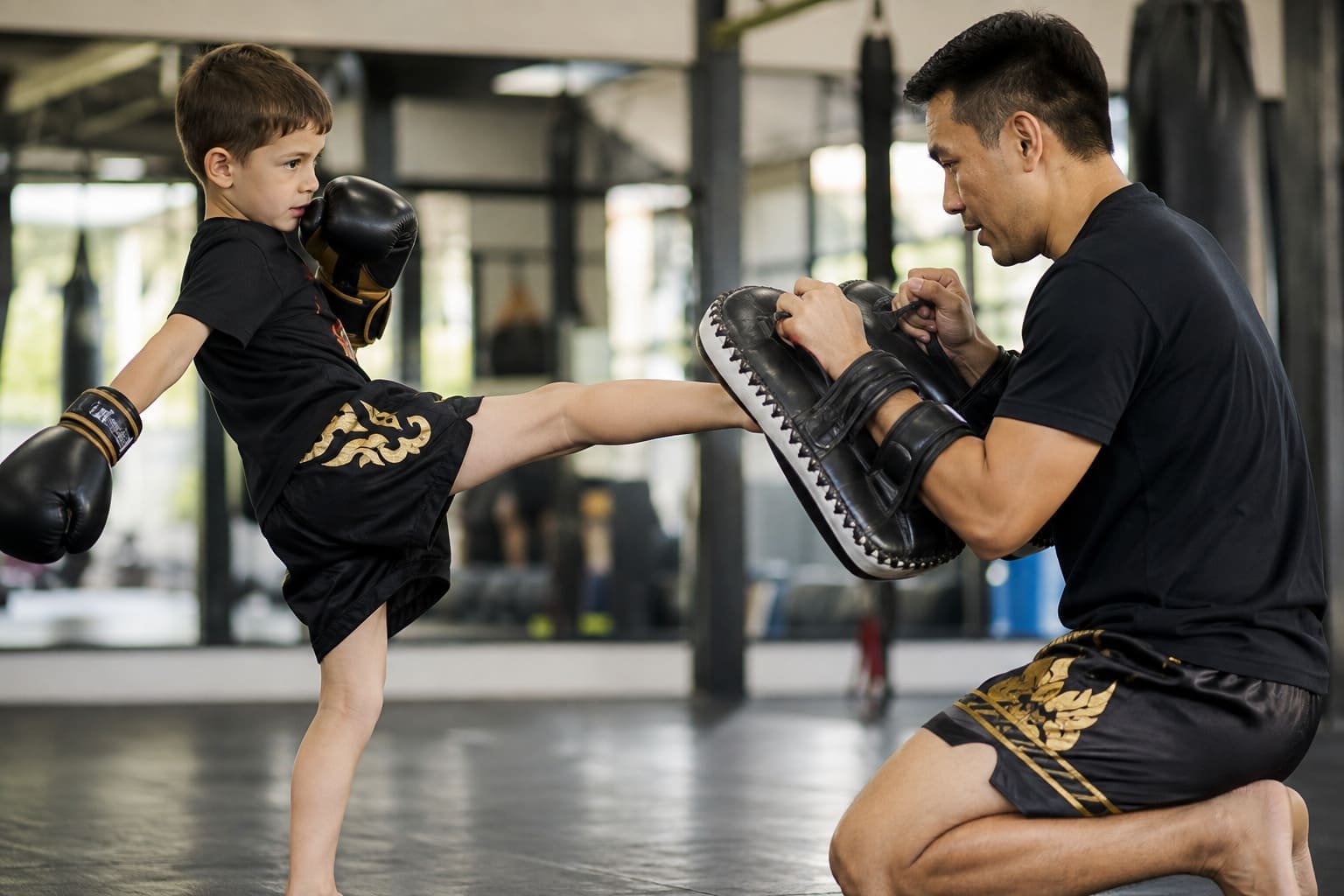
At this age, a good class barely resembles combat sports at all. Coaches run games disguised as drills: hopping between cones, mirroring animal movements, tossing balls back and forth to build hand-eye coordination. Kids learn to stand in a stance and throw a jab at a pad held by an instructor, but there is zero sparring and zero contact between children.
The goal here is body awareness, listening skills, and following instructions in a group setting. Think of it as gymnastics with a martial arts flavor. If a gym puts four-year-olds in pads and has them hit each other, that’s a red flag, not a bonus.
Ages 7 to 12: Technique Meets Pad Work
This is where real skill-building starts. Kids in this range can hold a stance, chain together combinations, and work the pads with an instructor or a partner holding equipment for them. They’ll learn the roundhouse kick, the basic clinch position, defensive blocks. Coordination has caught up enough that footwork drills stop feeling like an obstacle course and start feeling like actual technique.
Contact stays limited to pads, bags, and shields. Kids hit gear, not each other. A few gyms introduce very light, heavily supervised partner drills near the older end of this bracket. Kids wear headgear and shin guards, and a coach stands close enough to stop anything the second it looks off.
Teens (13+): Light Sparring, If the Teen Wants It
By the young teen years, a kid who has put in a couple of years of pad work often wants to test what they’ve learned. That’s normal, and it’s where light sparring can enter the picture, but only as an opt-in, never a requirement. Good gyms ask the teen directly whether they want to spar, not just the parent.
When sparring happens at this age, it’s controlled: full protective gear, no head strikes for most recreational programs, a coach refereeing every round, and the intensity dialed down so it functions as a learning tool rather than a contest. A teen who never wants to spar can still train for years, competing only in technical drills or forms, and lose nothing important by skipping the exchange entirely.
Is It Safe? What Parents Worry About
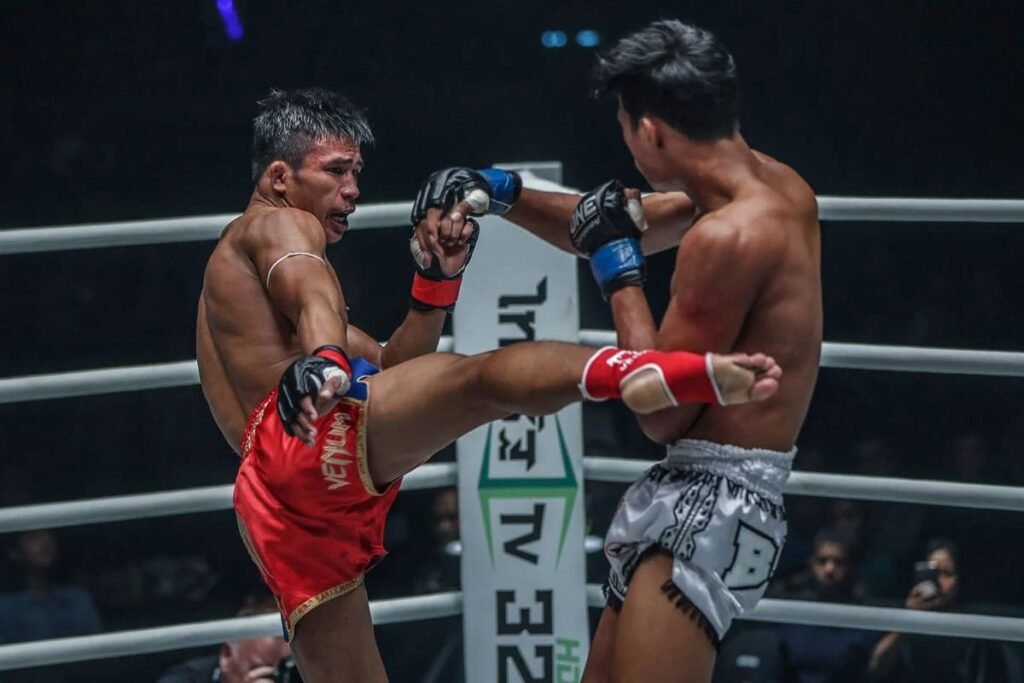
Most of the worry parents bring through the door traces back to images from professional fights. Those are two different worlds, and mixing them up is where the fear comes from.
The injuries that show up in recreational youth Muay Thai tend to be the same low-grade stuff you’d see in youth soccer or gymnastics: a jammed toe, a bruised shin, an occasional sprained wrist from a bad landing during footwork drills. In a supervised, no-head-contact kids’ program, serious injuries are rare. The bigger risk factor is a poorly run class with too many kids and not enough coaches watching hands and feet.
No Head Contact: How Kids’ Programs Work
Here’s the part worth saying plainly, because it’s the detail most parents actually need. In the United States and Canada, legitimate kids’ Muay Thai programs do not allow strikes to the head. Full stop. Sparring, when it happens at all, targets the body and legs behind protective gear, with coaches stopping any exchange that gets too heavy-handed.
This is a different picture from what you’ll find in Thailand’s professional stadium circuit, where children as young as eight or nine have historically competed in full-contact bouts, including head strikes, for prize money. That practice is real, it’s documented, and child welfare advocates and researchers in Thailand have raised serious concerns about it for years, pointing to concussion risk and long-term neurological effects in young fighters. It’s a genuinely different context, shaped by a professional economy and a cultural tradition specific to Thailand rather than anything you’d find in a rec-league kids’ class at a strip-mall gym in Ohio. When you’re evaluating a program for your child, ask directly what the sparring rules are and whether head contact is ever permitted. A gym worth your money will answer without hesitation.
The Benefits Beyond Fighting
Ask a coach why parents keep signing kids up years after the novelty wears off, and fighting skill rarely tops the list. What sticks is quieter than that.
Kids who struggle to sit still in a classroom often find an outlet in a 45-minute class built entirely around structure: bow in, line up, follow the coach’s count, bow out. That repetition builds a kind of discipline that carries over into homework and chores in ways parents notice within a few months. A shy eight-year-old who can barely make eye contact in September sometimes walks taller by spring, not because they learned to punch, but because they learned they could do something hard and get better at it through effort they could see.
There’s also a straightforward anti-bullying angle that isn’t about learning to fight back. Kids who train tend to carry themselves differently. Confident body language reads to other kids as “don’t bother,” and that alone can defuse situations before they start. Training also sharpens focus and attention in a way that shows up outside the gym too, whether that’s better homework habits or just an easier bedtime because the energy finally has somewhere to go.
Choosing a Kids’ Gym: 8 Questions to Ask a Coach
Not every gym running a “kids’ Muay Thai” sign is built the same. Before you commit to a trial class, ask the coach these questions and watch how comfortably they answer.
- What’s your background working with kids specifically, not just adults?
- What’s the coach-to-student ratio in the class my child would join?
- Is head contact ever allowed, at any age, in this program?
- What protective gear is required before a child touches a partner drill?
- How do you handle a kid who’s clearly overmatched or scared during a drill?
- Can I watch a full class before enrolling my child?
- What’s your policy if my child wants to stop sparring partway through a season?
- How do you handle size and skill mismatches between kids of the same age?
A coach who gets defensive or vague about any of these is telling you something. A coach who answers plainly, invites you to watch, and talks about kids by name instead of in the abstract is usually running a program worth trusting.
Gear for Kids
Start simple. A properly sized mouthguard and hand wraps cover the basics for the 4-to-6 crowd, since there’s no contact to protect against beyond the occasional stray pad. Once a child moves into pad work and partner drills around age seven, add 8oz or 10oz gloves sized for small hands, shin guards, and a well-fitted mouthguard that actually stays in place rather than one bought a size too big to “grow into.”
Headgear becomes relevant only once light sparring enters the picture in the young teen years, and it should fit snugly with no wobble. Skip anything marketed as “adult gear that should work fine” for a ten-year-old. Ill-fitting equipment causes more scrapes and bruises than the sport itself does.
FAQ
Is Muay Thai too dangerous for young kids? Not in a well-run recreational program. Kids under seven do coordination-based drills with zero contact, and even older kids hit pads and bags rather than each other until they’re ready for supervised, protective-gear partner work.
What age is best to start Muay Thai? Four to six years old works for playful, non-contact classes focused on coordination. Seven is a common starting point for kids who want real technique and pad work from day one, and neither age is “too late” if a family starts later.
Does my child have to spar eventually? No. Sparring is optional in almost every well-run kids’ and teen program. Plenty of young athletes train for years on pads, bags, and forms alone and get the full benefit of the sport without ever exchanging a strike with another kid.