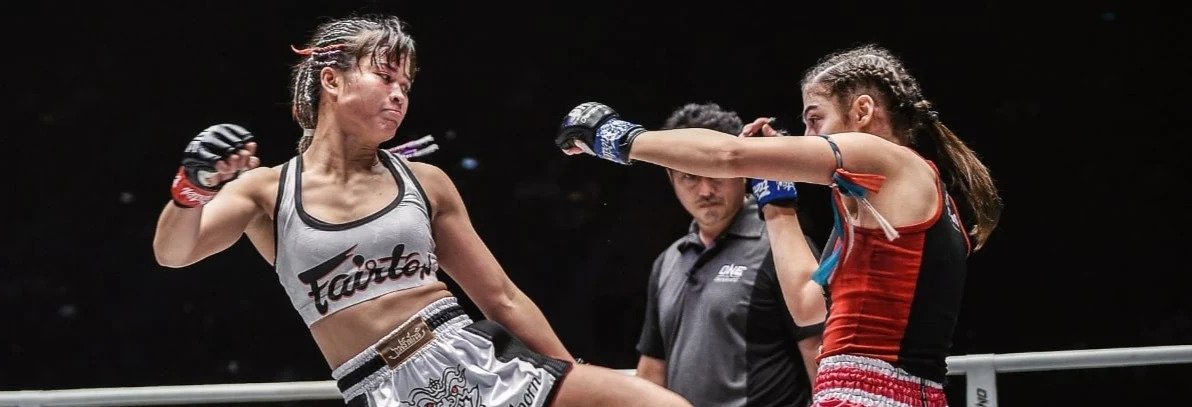
Walk into almost any Muay Thai gym today and you’ll see something that wasn’t true a decade ago: women make up a real chunk of the class, not a token pair of faces in the corner. Some gyms report a female membership close to a third or even higher. That shift didn’t happen by accident. It happened because the sport works, plain and simple, and because enough women showed up first and made it normal for the next ones.
This guide covers what you actually need to know. Part one is practical: what your first class looks like, the myths that still scare women off, and the gear questions nobody explains clearly. Part two looks at where the sport has been, including a restriction that kept women out of Thailand’s most famous rings for generations. Part three introduces the fighters currently making Muay Thai’s female side impossible to ignore.
Women in Muay Thai Today
You’re not a novelty anymore. That’s the short version. Gyms that used to run one “ladies’ class” a week now mix men and women in every session, because pad work, bag rounds, and clinch drills don’t need separating by gender, they need separating by skill level and weight.
The growth shows up in competition numbers too. Amateur female fight cards have expanded steadily across the US, UK, and Australia. Organizations like ONE Championship built entire divisions around women’s Muay Thai and kickboxing, and that gave fighters a real path from local gym to international television. None of this erased the old stereotypes overnight. It just made them easier to ignore.
So What Happens at Your First Class?
Expect a warm-up that will genuinely challenge you: jump rope, shadowboxing, dynamic stretching. Then technique, broken into small pieces, usually one strike or defense per session rather than a full combination on day one. A good coach will pair you with a partner near your size and experience level, not throw you in with someone twice your weight to “toughen you up.”
Pad work comes next, where you hit a coach’s or partner’s pads instead of a person. This is where most beginners realize Muay Thai is far more technical than it looks on video. Hip rotation matters more than arm strength. Balance matters more than speed. You’ll be tired in ways you didn’t expect, and your shins might ache the next day if you’ve never conditioned them before. That’s normal and it fades within a few sessions.
Nobody expects you to spar in week one, or week five for that matter. If a gym pressures a new student into sparring before they’re ready, that’s a red flag about the gym, not a requirement of the sport. Our beginner’s guide to Muay Thai training walks through the full progression if you want the longer version.
Myths That Keep Women Away
“I’ll get bulky.” This is probably the most common reason women hesitate, and it doesn’t hold up. Muay Thai is a high-repetition, high-cardio sport built around technique and endurance, not the kind of heavy progressive overload that builds significant muscle mass. Add in the fact that most women don’t carry the testosterone levels needed to bulk up quickly, and what you actually get is leaner, more defined muscle plus serious cardiovascular conditioning. Fighters look athletic. They don’t look like bodybuilders.
“I’ll get seriously hurt.” Injuries happen in any contact sport, no argument there. But recreational Muay Thai training, the kind most people do, involves controlled drilling, pad work, and light sparring under supervision. Serious injuries cluster around competitive fighting, not gym classes, and even there, protective gear and refereeing cut the risk considerably. You control your own pace. Nobody forces you into contact you’re not ready for.
There’s a quieter myth too: that women join and quit within a month because the sport is “too aggressive” for them. Gyms with strong female retention report the opposite. Women often stick with Muay Thai longer than other fitness programs, because the skill-building keeps it interesting long after the novelty of a new workout wears off.
Beyond the mental side, the physical payoff is significant. Full-body conditioning, functional strength, dramatically improved coordination, and stress relief that outperforms most cardio machines. If you want the deeper breakdown of what training does to your body, our piece on Muay Thai’s full-body fitness benefits covers it in detail.
The Lumpinee Ring-Entry Restriction: A Short History
Here the story shifts from the gym floor to the sport’s roots in Thailand, and it’s less encouraging.
For most of the twentieth century, women were barred from entering the ring at Lumpinee Stadium in Bangkok, one of the two most prestigious Muay Thai venues in the country, the same way male fighters could. The restriction wasn’t written into some rulebook out of nowhere. It traced back to traditional beliefs surrounding the ring itself: the pre-fight Wai Kru ceremony, the sacred mongkol headband worn during it, and a broader superstition that a woman’s presence, or in some versions specifically stepping over or into the ring space, would strip the ring of its spiritual protection or bring bad luck to the fighters and trainers who relied on it.
This wasn’t unique to Lumpinee. Similar taboos existed at other major stadiums and in various regional traditions across Thailand, and they extended past the ring itself into who could touch certain sacred objects or perform certain rituals. Women who wanted to compete built their own circuits and events outside the major stadiums for decades, and plenty of talented fighters simply never got the recognition their male counterparts did, purely because of where they were born.
The restriction eased over recent years rather than disappearing on some single, clean date. Attitudes shifted gradually, driven by growing international interest in women’s Muay Thai, pressure from fighters and promoters, and the sport’s own commercial incentives once organizations realized female cards drew real audiences. Lumpinee’s exact policies have evolved as part of that broader change. The taboo hasn’t vanished from every corner of traditional practice, but the outright ban on women entering the ring the way men do is no longer the fixed rule it once was.
Gear Notes for Women
Most Muay Thai gear is unisex by default, which works fine for gloves, shin guards, and hand wraps. A few pieces deserve more thought.
Sports bras matter more than people expect. You want high-impact support with a snug, compression-style fit, since a standard everyday bra will shift and bounce during pad rounds and clinch work. Look for wide, non-slip straps and a racerback design if you’re doing a lot of overhead movement.
Groin and pelvic protection is where things get less standardized. Female-specific pelvic protectors exist, shaped differently from the male cup-and-jock design, and they’re worth using once you move into sparring or competition, even at a light contact level. Not every gym stocks them, so check before assuming one will be provided.
Shorts sizing runs differently than most casual athletic wear. Traditional Muay Thai shorts are cut wide and short through the leg for hip mobility during kicks, and women’s-specific lines now exist with a narrower waist taper and shorter overall length to match a typical female build. Sizing charts vary a lot between brands, so check hip and waist measurements rather than trusting the letter size alone. Hand wraps, mouthguards, and shin guards don’t need gender-specific versions. Fit and length are what matter there, not the label.
Fighters to Watch
A handful of women have pushed Muay Thai’s visibility further than any marketing campaign could on its own. Here are five worth knowing.
| Fighter | Known for |
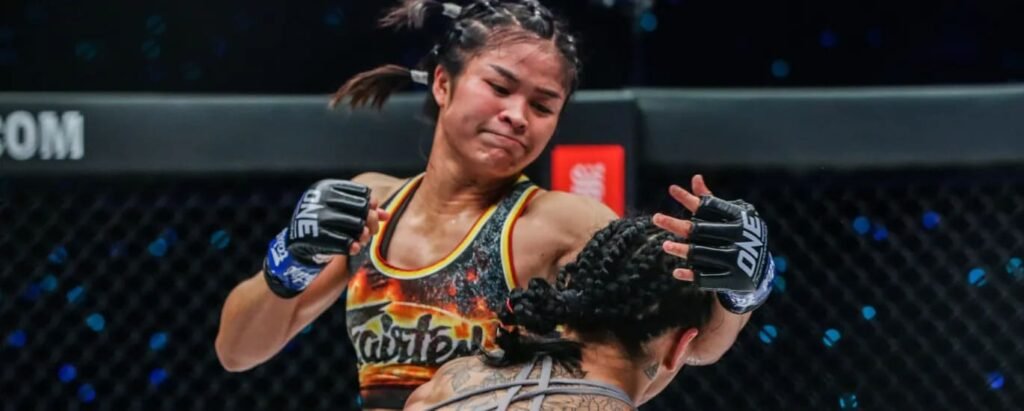
| Stamp Fairtex | One of ONE Championship’s most recognizable stars, competing across Muay Thai, kickboxing, and MMA and known for taking on high-profile matchups against elite competition |
| Allycia Rodrigues | Brazilian striker known for an aggressive, forward-pressing style in ONE Championship’s women’s Muay Thai and kickboxing divisions |
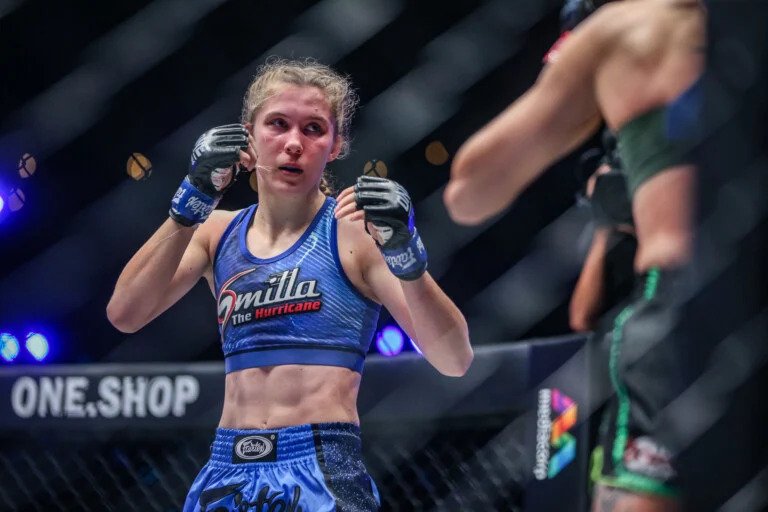
| Smilla Sundell | Young Swedish fighter who became one of the youngest world champions in ONE Championship’s history, known for sharp, technical striking well beyond her age |
| Phetjeeja | Thai fighter widely regarded as one of the most dominant strikers in women’s Muay Thai today, known for relentless output and championship-level composure |
| Loma Lookboonmee | Thai fighter known both for her Muay Thai background and for competing in the UFC, one of the clearest examples of the sport’s crossover into mixed martial arts |
What connects them isn’t just skill. It’s that each built a fanbase on merit, in a sport that historically gave them fewer stages to do it on.
FAQ
Do I need any fighting experience to start Muay Thai? No. Most people who walk into their first class have never thrown a punch or a kick before, and gyms build beginner classes around that assumption.
Is Muay Thai good for weight loss and toning? Yes, it’s a demanding cardio and full-body strength workout, though results depend on consistency and diet like any training program.
What should I wear to my first class? Comfortable athletic wear, a supportive sports bra, and hand wraps if you own them. Most gyms rent or sell gloves for first-timers, so you don’t need to buy gear before trying a class.