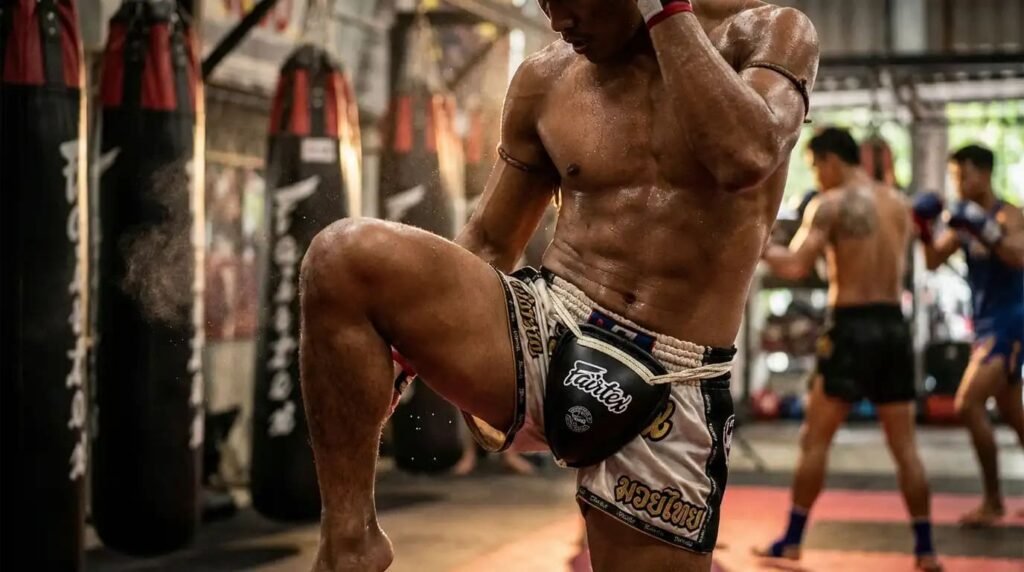

“Weights make you slow.” Walk into almost any Muay Thai gym and someone will say it within the first month, usually a fighter repeating something their old trainer told them in 2009. It’s not true anymore, and depending on the gym, it was never entirely true to begin with. Watch any recent ONE Championship card and the physiques tell a different story: dense, strong, visibly built. Those bodies aren’t made by pad work alone.
The myth has a real history behind it, which is exactly why it survived so long. It came from somewhere legitimate. But the sport has moved on, and the fighters who still believe it are leaving strength on the table for no good reason.
Why Traditional Thai Camps Skip Weights
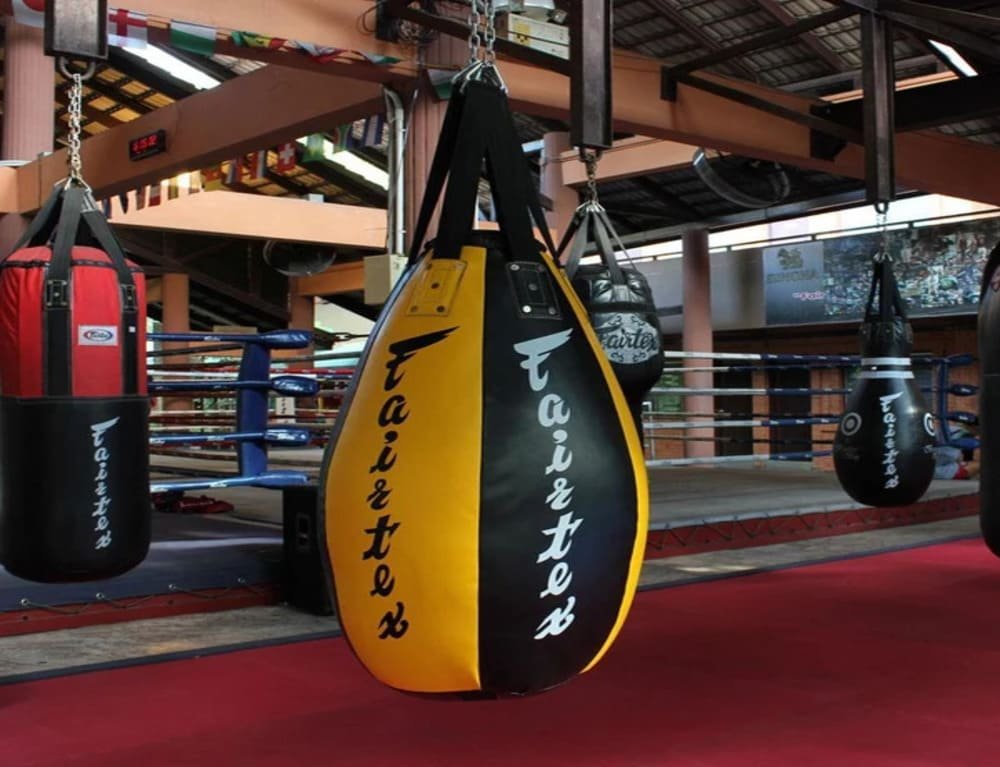
Old-school Thai camps didn’t avoid weight training because of some deep technical insight about speed and muscle fiber. Mostly, they avoided it because there wasn’t any equipment. A rural camp in Buriram or Surin in the 1980s had a heavy bag, some skipping ropes, and a dirt yard. A squat rack cost money nobody had. Kids as young as eight were already fighting for grocery money, and the training model that emerged around that poverty became “tradition” simply because it worked well enough and nothing else was available.
Volume did the heavy lifting instead. Six-mile morning runs. Hundreds of kicks on the bag every session. Clinch rounds that ran fifteen minutes without a break. That kind of workload builds a specific kind of strength on its own, dense legs, a strong core, shoulders that can push and frame for an hour straight. It’s real strength. It just comes from repetition instead of a bar loaded with plates.
Somewhere along the way, the absence of weights got rebranded as a rule rather than a limitation. Trainers who’d never seen a real strength program started telling fighters that lifting would “tighten them up” or “slow their hands down.” The claim spread through camps that had no way to test it, because none of them had a squat rack to test it with. A missing resource became a coaching philosophy. That’s how myths get built in combat sports generally, not just this one.
What Modern Fighters Actually Do
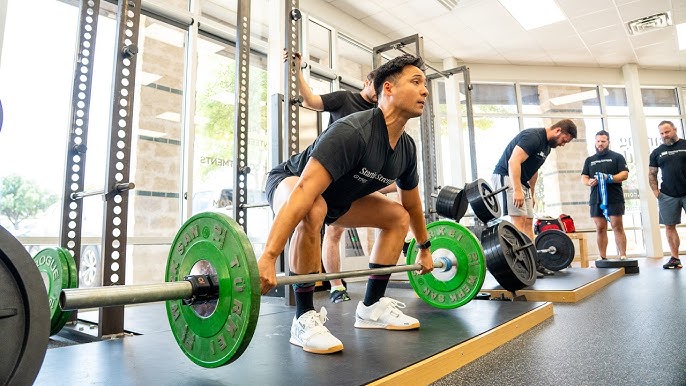
Step into a gym that produces top-level talent today and the story looks completely different. Strength and conditioning coaches who work with professional strikers routinely run separate lifting blocks, two to four sessions a week depending on the point in the training camp. Fighters squat, deadlift, press, and do explosive work like box jumps and med ball throws. None of it looks like bodybuilding. The rep ranges stay low, the loads are moderate to heavy, and the whole program gets built around power output rather than muscle size for its own sake.
The logic is simple once you look at the physics of a kick. A roundhouse runs on rotational force generated by the glutes, hips, and core, then transferred through a straight leg into the target. Weak glutes and a weak posterior chain cap how hard that kick can land no matter how clean the technique looks. Strength training, done right, raises that ceiling. It doesn’t lower it.
There’s also the durability angle that traditional camp culture undervalued for years. A fighter who can squat and hinge properly protects their knees and lower back through thousands of repetitive strikes over a career. Injury prevention isn’t glamorous, but it’s a bigger factor in a long fighting career than most gym conversations give it credit for.
Does Muay Thai Itself Build Muscle?
Yes, to a point, and then it plateaus. Muay Thai training builds real muscle, particularly in the legs, shoulders, and core, through the sheer volume of striking and clinch work involved. Beginners especially see noticeable changes in their first six months. Legs get denser. Shoulders round out. The core tightens from constant rotational and stabilizing demand.
But bodyweight-and-bag training runs into diminishing returns fast for anyone already at an intermediate level. The resistance never really changes. A bag hit a thousand times a month provides roughly the same stimulus each time, and muscles need progressively heavier load to keep growing once the initial adaptation phase passes. This is exactly why fighters who train exclusively without weights tend to look lean and functional, but rarely add serious muscle mass past their first year or two. If someone’s Muay Thai training feels like it’s stopped changing their physique, that’s the reason.
The Minimal 2-Day Strength Plan
A fighter doesn’t need five gym days to get the benefit. Two sessions a week, kept short and focused on a handful of compound lifts, is enough to build strength without eating into striking volume or recovery. The key is picking exercises that support the sport instead of competing with it for energy.
| Day | Exercise | Sets x Reps |
| Day 1 | Back squat or goblet squat | 3 x 5 |
| Day 1 | Push press or bench press | 3 x 6-8 |
| Day 1 | Hanging leg raise | 3 x 10-12 |
| Day 2 | Trap bar deadlift or Romanian deadlift | 3 x 5 |
| Day 2 | Standing overhead press | 3 x 6-8 |
| Day 2 | Pallof press or plank | 3 x 30-45 sec |
Keep the rest periods around two minutes on the main lifts. This isn’t a bodybuilding split, and chasing a pump defeats the purpose here. The goal is loading the hips, posterior chain, and shoulders enough to get stronger without leaving legs too fried for the next day’s pad session. Fighters usually place these sessions the day after a hard sparring day, never the day before one. For anyone whose gym already leans hard on isolated calf and lower-leg work, this kind of compound strength block covers the ground that building bigger calves for kicking power alone doesn’t reach.
Exercises to Avoid
Not every gym lift belongs in a fighter’s program. High-rep isolation work, think endless sets of bicep curls or leg extensions, adds bulk without adding transferable strength, and extra mass a fighter has to carry around the ring without a functional payoff is a real cost. Heavy overhead barbell work done to failure creates the kind of joint fatigue that bleeds into shadowboxing the next day. Anything that leaves a fighter sore for three days straight is programmed wrong, full stop.
Olympic lifts like the snatch have a place in strength and conditioning generally, but they carry a steep technical learning curve, and a fighter with limited gym hours is usually better served mastering five basic lifts than half-learning eight complicated ones. Deep bodybuilding splits, five or six days targeting individual muscle groups, also work against a fighter’s schedule. There isn’t room for that kind of recovery demand alongside daily pad work, running, and sparring.
The Speed vs Strength Myth
Here’s what actually happens when someone gets stronger the right way: they don’t get slower. Speed is a function of the nervous system’s ability to fire muscle fast, and strength training, kept in low-to-moderate rep ranges with real rest between sets, improves that firing rate rather than dulling it. What actually kills speed is doing the wrong kind of lifting: high-rep bodybuilding work chasing fatigue and burn, done with no attention to power or explosiveness. That’s a program design failure, not a weight room failure.
The physiques on display in ONE Championship right now settle the argument better than any theory could. These are some of the most explosive strikers on the planet, and a meaningful number of them lift. If two to four hours a week of properly programmed strength work were actually the speed killer the old myth claims, none of them would look the way they do or move the way they do.
The myth survived because nobody in poor rural Thailand in 1985 had a barbell to test it against. Nobody does anymore. The fighters holding onto that excuse today aren’t protecting their speed. They’re just skipping a training block that would make them harder to hit and much harder to survive against.