
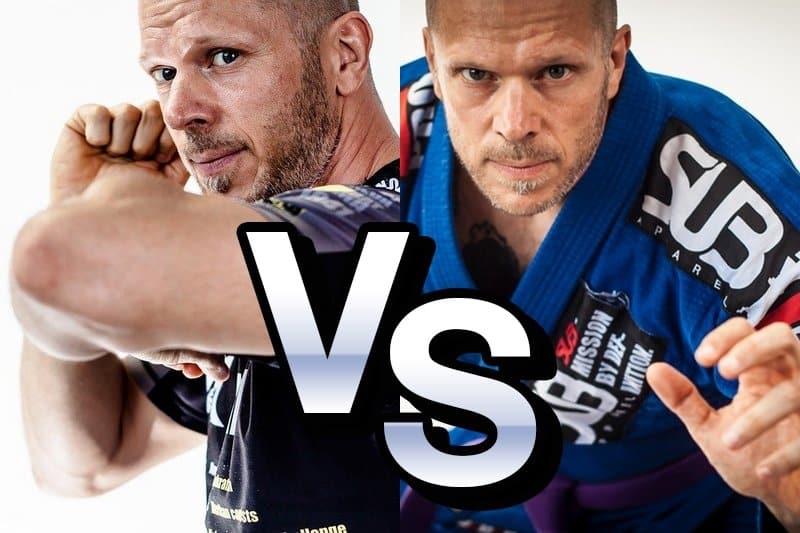
The question “which is better, Muay Thai or BJJ” is the wrong question. One is a striking art built around clinch work, knees, and elbows at close range. The other is a grappling system built around control and submissions on the ground. They don’t compete for the same job. A boxer with no ground game and a grappler with no striking are both missing half of what happens in a real fight, which is exactly why most modern MMA gyms treat the two as complementary rather than rival choices.
That framing matters for a beginner standing in a parking lot trying to decide which door to walk through first. This article breaks down where the two arts actually differ, in learning speed, injury patterns, cost, and gym culture, then gets into the honest self-defense case and a weekly schedule for anyone who wants both.
Striking vs Grappling: The Core Difference
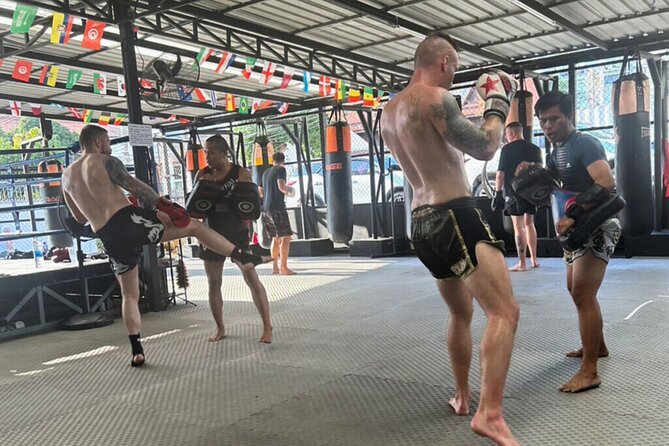
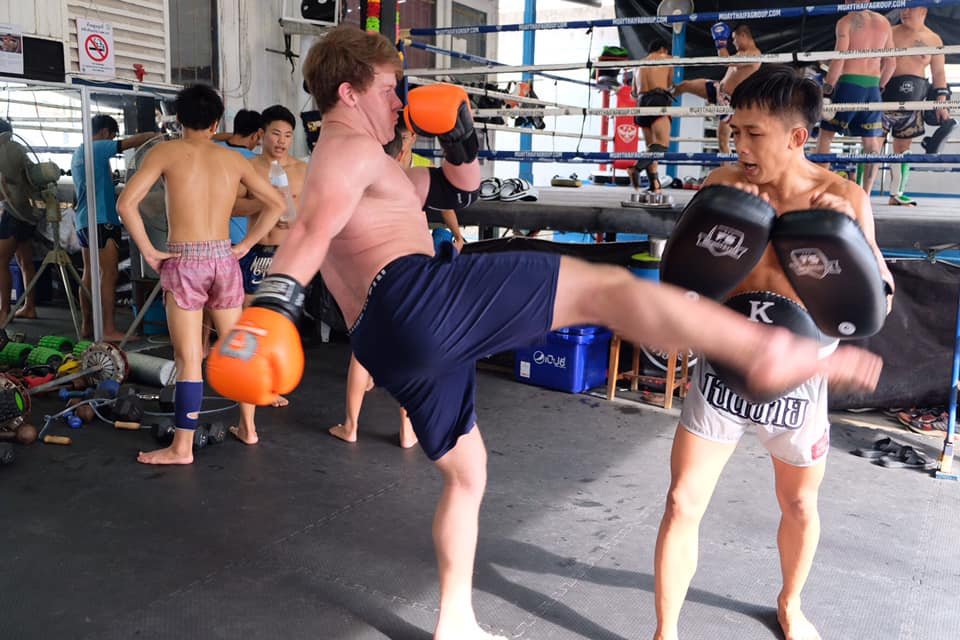
Muay Thai is a stand-up striking art. Punches, kicks, knees, elbows, and clinch work make up the full toolkit, and almost every technique aims to end the exchange while both people are still on their feet. Range management is the whole game. Land clean, avoid getting hit clean, and use the clinch to control distance and land knees when things get close.
BJJ starts from the opposite assumption: most real fights, at some point, end up on the ground, whether by a takedown, a slip, or just two bodies colliding. The entire system is built around what happens next. Position before submission is the guiding principle. Get to a dominant spot on the ground, then work toward a choke or a joint lock that ends the fight without a single strike thrown.
Neither art pretends to cover the whole picture on its own. A Muay Thai fighter with zero grappling exposure who gets taken down has few answers. A BJJ practitioner who never trains to close distance safely against strikes has a serious gap too. This is precisely why the sport of MMA exists in the first place, and why so many gyms now offer both under one roof.
Learning Curves Compared
Muay Thai rewards early progress. A beginner can throw a passable roundhouse kick and a decent jab-cross within the first month, and pad work gives instant, visible feedback: the coach holding the pads can tell you exactly what went wrong on each strike. Sparring usually gets introduced gradually, often starting with light “touch” contact, so new students build confidence without getting overwhelmed early.
BJJ is a slower build. The learning curve is often described as humbling, and for good reason. A brand-new white belt rolling against even a two-stripe blue belt will typically get controlled and submitted repeatedly, week after week, before the pieces start clicking. There’s no equivalent of a clean pad combo to feel proud of on day one. Progress shows up as smaller wins: escaping a bad position for three extra seconds, or stopping a submission you used to fall for automatically. Most instructors put the point of “functional” competence, meaning you can defend yourself against an untrained grappler without panicking, somewhere around one to two years of consistent training. Muay Thai reaches a comparable baseline faster, often within several months.
Neither timeline is a knock on the art. Grappling is simply denser with layered decision-making per exchange, so it takes longer to internalize.
Injury Rates and Body Toll
Both arts carry real physical cost, just distributed differently. Muay Thai’s toll concentrates on the lower legs, shins in particular, along with the occasional bruised forearm from checking kicks and jammed toes from a bad pad angle. Shin conditioning is a slow, deliberate process for a reason. Sparring adds the cumulative concern every striking art shares around repeated head contact, which is why reputable gyms limit hard sparring for students who aren’t competing.
BJJ trades bruises for joint stress. Because most submissions target a joint, strains and small tears around wrists, elbows, and knees are common, especially in gyms where ego rolling replaces controlled technique work. The upside: BJJ has a built-in safety valve that striking doesn’t, the tap. A submission held to its limit ends the exchange before real damage happens, provided both partners respect it. Muay Thai has no equivalent off-switch mid-exchange.
Neither art is inherently more dangerous than the other. The actual injury profile of either one depends heavily on gym culture, how hard people spar or roll, and whether the coaching staff enforces control over ego.
Cost and Culture
The financial and social entry points differ more than people expect. Muay Thai gear is minimal at the start: hand wraps, gloves, and shin guards get a beginner through most classes, shorts included. BJJ usually means buying a gi, which costs noticeably more than a pair of gloves, plus belt tests and sometimes exam fees along the rank system. No-gi BJJ, using rash guards and grappling shorts instead, closes some of that gap, though most schools still treat gi training as the default.
Culture diverges too. Muay Thai gyms tend to run on hierarchy and discipline borrowed from Thai tradition: bow in, respect the trainers, follow the pad-round structure. BJJ culture leans more collaborative, with training partners coaching each other mid-roll and belt promotions functioning as a slower, communal milestone. Neither is better. A student who thrives on structured drilling might prefer Muay Thai’s rhythm; someone who likes solving a live problem with a partner might lean toward BJJ.
For Self-Defense
Judged purely on real-world defense, most serious self-defense instructors land on the same answer: some grappling knowledge is close to essential, because a large share of physical altercations end up in a clinch or on the ground whether either party wants that or not. Knowing how to get back to your feet, or how to control someone until help arrives, closes a real gap that pure striking leaves open.
At the same time, Muay Thai’s clinch game already covers a slice of that need. Controlling an opponent at close range, using knees to create space, and understanding how to fight from a grab rather than just a punch overlaps meaningfully with grappling fundamentals. For a broader look at how the art holds up outside the ring, the guide on Muay Thai’s self-defense applications goes deeper into that case.
The honest answer for someone with time for only one art: a striking base with functional clinch skills covers more common scenarios than pure ground grappling with no striking at all. But someone with the schedule for both gets meaningfully more complete coverage than either art delivers alone, which is really the whole argument for cross-training.
For MMA
There’s no debate to have here. Both arts are load-bearing pillars of modern MMA, not optional extras. A fighter who can’t strike gets picked apart standing. A fighter who can’t grapple gets taken down and controlled or submitted. Cage records back that up: fighters who neglect one discipline tend to have an obvious hole in their game that better-rounded opponents find fast.
Most competitive gyms that produce actual MMA fighters run Muay Thai (or kickboxing) and BJJ as parallel tracks from early on, sometimes alongside wrestling for the takedown piece specifically. The clinch phase is where the two arts blend most directly, since clinch control can set up either a knee strike or a takedown attempt depending on which art the fighter leans toward in that moment.
Training Both: A Weekly Schedule
Someone with five or six training sessions available per week can run both arts without burning out, provided the schedule respects recovery. The table below is a reasonable starting template for a working adult, not a professional fighter’s camp.
| Day | Focus | Notes |
| Monday | Muay Thai (technique) | Pad work, combos, light drilling |
| Tuesday | BJJ (technique class) | Positional drilling, light rolling |
| Wednesday | Rest or light conditioning | Mobility work for shins and joints |
| Thursday | Muay Thai (sparring day) | Controlled sparring only |
| Friday | BJJ (rolling class) | Live rolling, moderate intensity |
| Saturday | Open mat or cross-training | Optional, lower intensity |
| Sunday | Full rest | Recovery is not optional |
Adjust the split based on which art is the primary goal. Someone chasing an amateur MMA debut might weight training toward whichever discipline is weaker. Someone training purely for fitness and self-defense can keep it closer to even, dropping a session in either direction during busy weeks without losing much ground.
FAQ
Is it better to start with Muay Thai or BJJ as a complete beginner? Either works as a starting point. Muay Thai tends to feel more immediately rewarding since visible skill (clean strikes, better cardio) shows up within weeks. BJJ takes longer to click but builds a skill set that’s harder to pick up later in life if joints get less forgiving with age. Pick whichever schedule and gym culture you’ll actually show up to consistently, since consistency matters more than which art comes first.
Can a beginner train Muay Thai and BJJ at the same time? Yes, and plenty of people do exactly that from day one. The main risk is overtraining, since both arts are physically demanding in different ways. Starting with two or three sessions total per week across both, then adding volume once conditioning catches up, avoids the burnout that hits people who go all in on six sessions in week one.
Which one is more useful for a real street altercation? Neither art alone covers every scenario. Muay Thai’s striking and clinch control handle a large share of confrontations that stay standing, while BJJ’s ground skills matter most once a fight goes to the floor, which happens more often than people expect. Training both gives the most complete coverage, but if only one is realistic, most self-defense instructors lean toward some baseline grappling knowledge as the harder gap to leave unfilled.