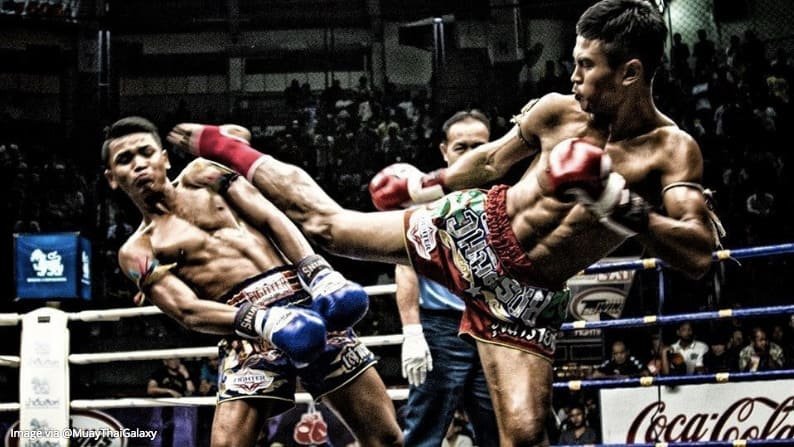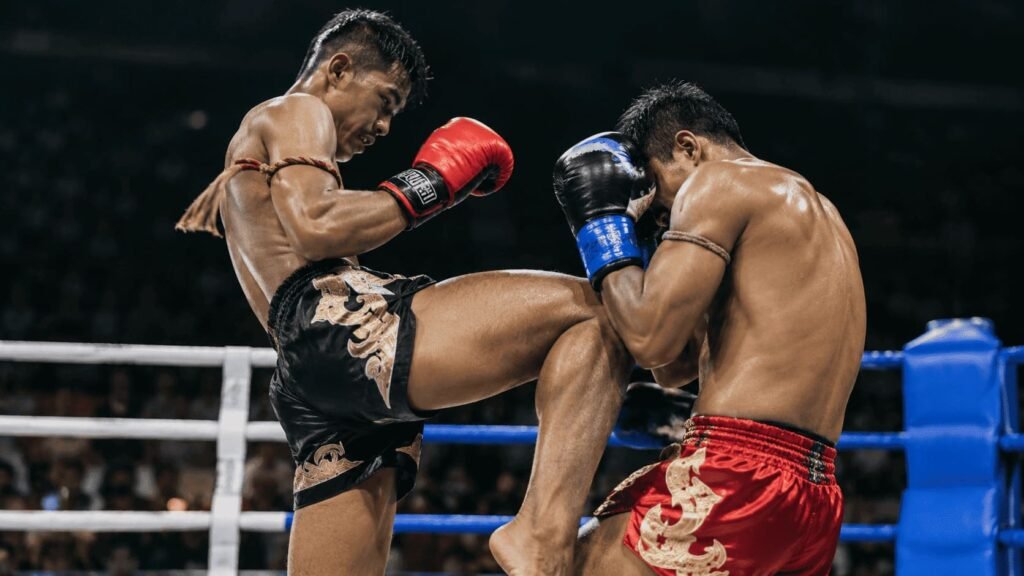

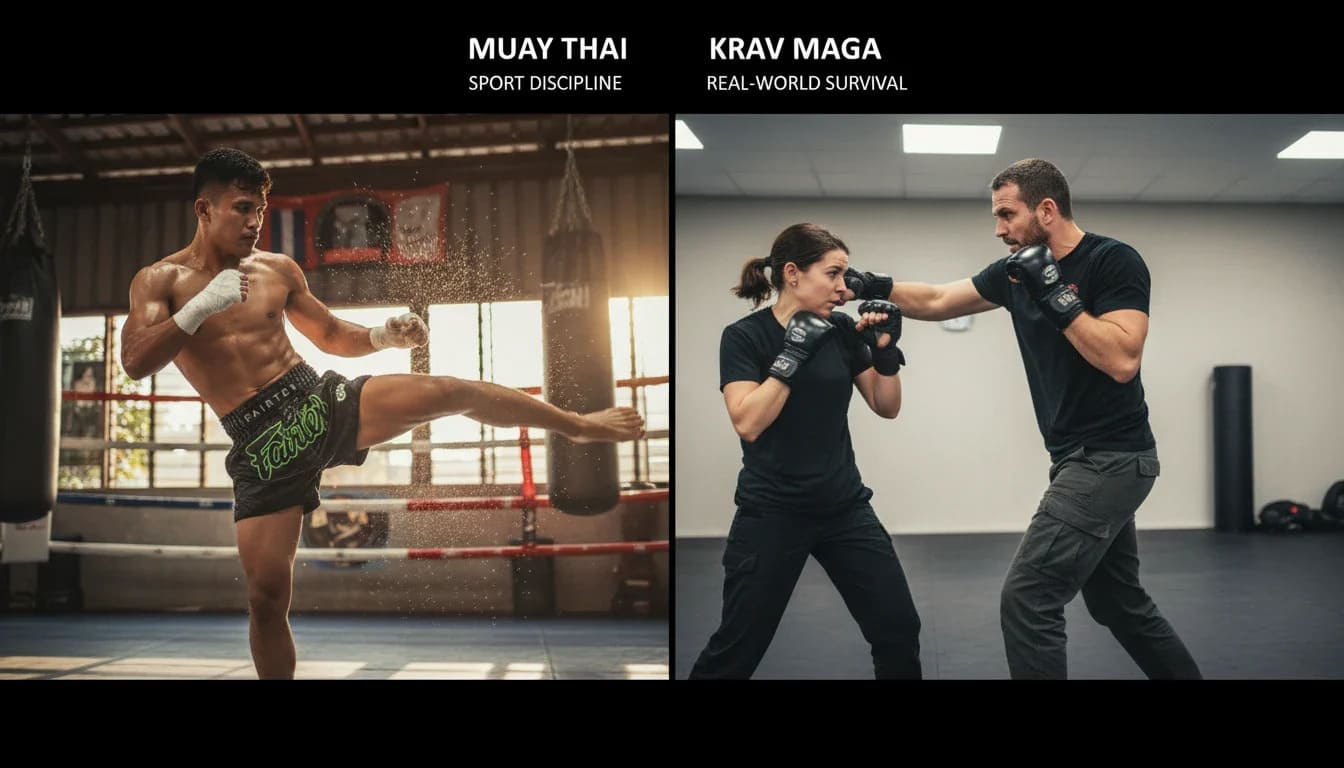
Muay Thai builds people who have already been hit, hard, by someone actually trying to hurt them. Krav Maga builds people who have rehearsed being attacked by a training partner who is trying to help them succeed. That gap, whether the person across from you wants you to win, is the real dividing line between these two systems, and it matters more for self-defense than any single technique either one teaches.
Neither art is wrong for the job. They solve different problems, and picking between them without understanding that wastes time, money, and possibly a real confrontation down the road.
Two Completely Different Goals
Muay Thai is a combat sport first. It has weight classes, judges, a scoring system, and a clock. Everything in a Muay Thai gym points toward one outcome: performing under pressure against a live opponent who is doing everything possible to hit back. Self-defense is a side effect of that training, not the stated goal.
Krav Maga was built for a different purpose entirely. It came out of the need to teach soldiers and civilians fast, brutal responses to violence with minimal training time. There is no ring, no belt progression tied to competition, and in most schools, no sparring against a fully resisting opponent. The goal is survival in a specific bad moment, not skill development over years.
Comparing them as two flavors of the same thing misses the point. One is an athletic discipline that translates well to the street. The other is a self-defense curriculum never meant to be tested in competition. Judging Krav Maga by sport standards is unfair. So is judging Muay Thai by its self-defense curriculum, since it barely has one written down anywhere.
Training Methods: Sparring vs Scenarios
A typical Muay Thai class ends in some form of live sparring once a student passes the basics. Pads and bags build technique, but sparring is where it gets tested against someone moving, hitting back, and trying to win. Over months, that repetition changes how a person reacts under real pressure. Flinching goes away. Distance and timing stop being theoretical.
A typical Krav Maga class looks completely different. Students walk through scenarios: a wrist grab, a bear hug from behind, a knife thrust to the stomach. A partner throws the attack at a set speed, the student executes the defense, and the pair resets. It teaches the shape of a response to dozens of situations in a fraction of the time it would take to build the same instincts through sparring.
Both approaches carry a cost. Muay Thai students spend years learning to strike and clinch, without ever training a response to a weapon or a grab from three directions at once. Krav Maga students learn a huge library of responses they have rarely, if ever, had to perform against someone actually resisting.
What Krav Maga Covers That Muay Thai Doesn’t
Credit where it’s due. Krav Maga takes weapons seriously in a way that almost no striking sport does. Knife defense, gun disarms, defending against a stick: these get real class time, session after session. Muay Thai gyms almost never touch this material, because none of it shows up in a ring.
Multiple attackers get the same treatment. Krav Maga drills teach students to create angles, put one attacker between themselves and another, and disengage rather than stand and trade. A Muay Thai fighter trains for one opponent standing across from them. Real assaults are frequently not that tidy.
Situational awareness rounds out the list. Good Krav Maga programs spend real time on what happens before a physical confrontation even starts: reading body language, de-escalating, recognizing a setup, choosing when to walk away. Combat sports rarely teach any of this, since the entire premise of the sport assumes both people already agreed to fight.
None of this is a small footnote. For someone specifically worried about a mugging, a home invasion, or a group confrontation, this coverage is a real reason to consider Krav Maga even though the sparring gap is just as real.
The Pressure-Testing Argument
Here is the uncomfortable truth for Krav Maga. A technique practiced only against a cooperative partner is unproven. It might work. It might fall apart the moment someone resists and tries to hurt the person performing it. There is no way to know until it gets tested, and most Krav Maga curricula never test it against resistance at all.
Muay Thai solves this by design. Every technique that survives to an advanced level has been thrown, blocked, and countered thousands of times against someone trying to win. A fighter’s clinch, their check on a low kick, their ability to read a jab: none of it is theoretical. It got beaten into muscle memory the hard way, against resistance, week after week.
This is the strongest argument for Muay Thai as a self-defense base. Pressure-testing does not just teach technique. It teaches composure under attack, the ability to keep thinking and moving while someone is actively hurting you or trying to. That skill transfers to a street encounter more directly than a defense only ever practiced in slow motion against a cooperative partner.
The counterargument is fair too. A street attack usually isn’t a fair fight with agreed rules. Sparring builds composure against a striking opponent, but it doesn’t rehearse a knife coming out of a jacket pocket. Pressure-testing matters, but it only proves what it actually tests.
The School Quality Problem
This is where things get messy for Krav Maga, and anyone shopping for a school should know it going in. The name isn’t protected the way a sport federation protects its rules. Anyone can put up a sign, run a short certification course, and call themselves an instructor. Quality swings wildly from one gym to the next, even within the same city.
Some schools are excellent, run by serious instructors with real backgrounds and demanding curricula. Others amount to little more than choreography dressed up in tactical gear. The industry has a real McDojo problem, and a new student has almost no way to spot the difference just by watching one class from the doorway.
Muay Thai isn’t immune to bad instruction either, but the sport acts as a natural filter. A gym that produces fighters who get knocked out at the first real test loses students fast, since the results are public. Krav Maga has no equivalent scoreboard, so a weak school can operate for years without ever getting exposed.
Anyone considering Krav Maga should ask pointed questions before signing up. How much of class involves live resistance, even occasionally? What is the instructor’s actual background? Does the school promise students can beat multiple armed attackers after a few months of training? Answers that sound too easy are the clearest warning sign there is.
Verdict Matrix
| Your goal | Better choice | Why |
| General fitness and stress relief | Muay Thai | Conditioning, structure, and sparring intensity build fitness few systems match |
| Competitive fighting | Muay Thai | It has rules, rankings, and real events; Krav Maga has no such infrastructure |
| Weapon awareness and multiple-attacker scenarios | Krav Maga | Directly trains what Muay Thai never touches |
| Fastest practical result with minimal time invested | Krav Maga, at a carefully vetted school | Compresses a wide response library into weeks, not years |
| Deepest, most tested self-defense skill over time | Muay Thai | Pressure-tested technique under a resisting opponent beats untested scenario drills |
| One system that covers everything | Neither, honestly | Combine both, or accept the trade-offs of picking just one |
Can You Train Both?
Plenty of serious practitioners do exactly that, and it beats picking a side forever. A common pattern is Muay Thai as the primary discipline, a few sessions a week, with a Krav Maga or reality-based seminar layered in periodically for the weapon and multiple-attacker material Muay Thai skips entirely. The striking base gets pressure-tested where it counts. The scenario training fills the gaps a combat sport was never built to cover, the same gaps covered in this breakdown of Muay Thai’s real-world limits.
Order matters less than most people assume. A Muay Thai student who adds Krav Maga later brings real sparring composure into the scenario drills, which makes those drills far more useful. Someone starting with Krav Maga can add Muay Thai afterward and get roughly the same benefit in reverse. For a broader look at how the art applies outside the ring, this piece on the art of eight limbs as self-defense is worth a read.
The honest answer for most people is simple. Pick Muay Thai if there’s only room for one discipline and self-defense is just one goal among several, alongside fitness and actually enjoying the training. Add Krav Maga, at a school that has been carefully vetted, when weapons or multiple-attacker scenarios are a specific worry Muay Thai doesn’t address. Skipping the vetting step is the one mistake that turns either path into wasted time.