Every combat sports site seems to have a “greatest Muay Thai fighters” list, and most of them are the same ten names shuffled into a slightly different order with no explanation of why. That’s not good enough for a sport with this much history. Before ranking anyone, we’re stating exactly what we measured, so you can agree or argue with the actual reasoning instead of just the names.
This list leans on four things: titles held across major Bangkok stadiums, how completely a fighter dominated their own era, the lasting mark they left on how Muay Thai is taught and fought today, and the level of opposition they had to get through to earn their reputation. A fighter who cleaned out a shallow era ranks lower than one who had to solve genuinely dangerous killers. That standard put a few “obvious” names lower than fans expect, and pushed a couple of technicians higher.
How We Ranked Them
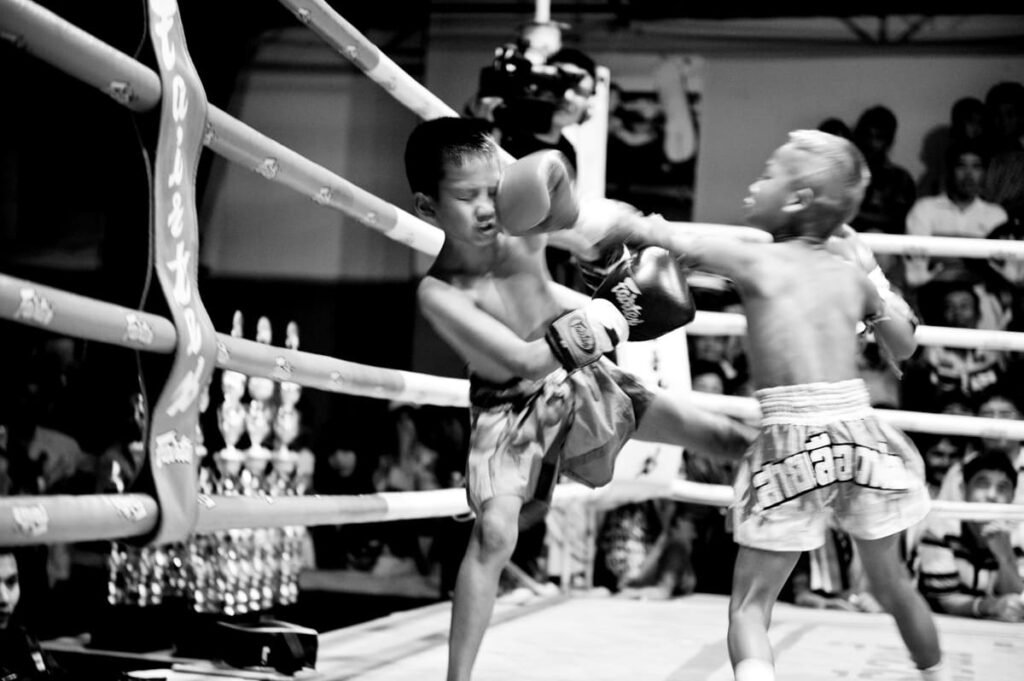
Titles alone don’t make a legend. Bangkok’s stadium scene in the 1970s through the 1990s, widely called the golden era, produced so many dangerous fighters at once that a Lumpinee or Rajadamnern belt from that stretch often meant more than several titles from a thinner period. So era context matters as much as the hardware.
Dominance is separate from title count. Some fighters won belts by grinding out close decisions. Others made opponents visibly afraid to engage, which shows up in fight footage and in how trainers still talk about them decades later. We weighted that kind of era-defining dominance heavily.
Legacy covers two things: influence on technique (did other fighters start copying their style?) and cultural reach beyond Thailand. And quality of opposition is the tiebreaker. Beating three legitimate killers in a row is worth more than beating ten mediocre ones, even if the record looks similar on paper.
#10: Rodtang Jitmuangnon
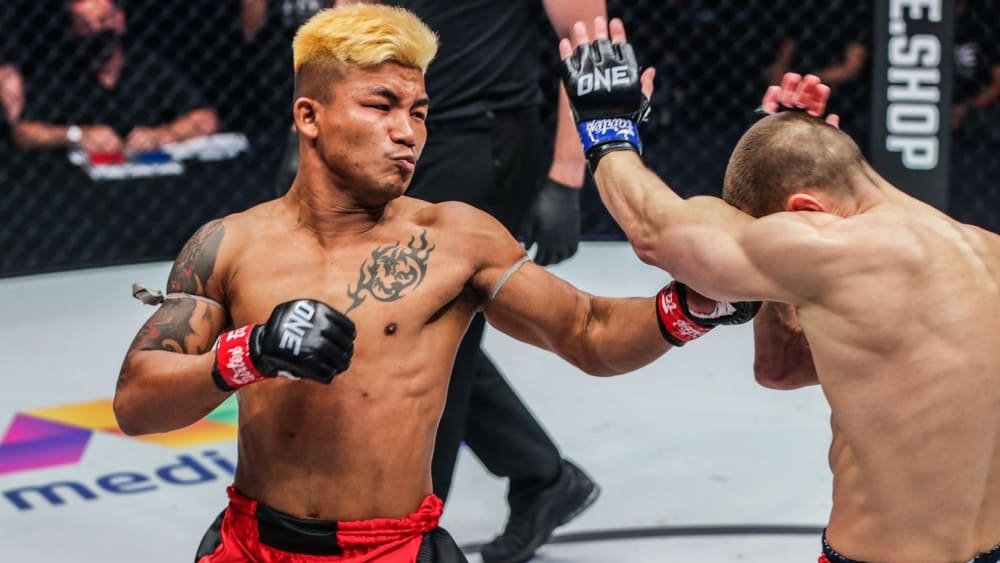
Rodtang earns his spot as the only fighter on this list still actively adding to his resume. Nicknamed “The Iron Man,” he built his reputation on an almost cartoonish ability to absorb punishment and keep walking forward, paired with heavy, relentless pressure that has worn down opponents across multiple weight classes. He’s a ONE Championship flyweight Muay Thai champion and one of the most bankable global stars the sport has ever produced.
What separates him from a typical crowd-pleaser is that the chin and the pressure aren’t gimmicks. He mixes them with genuine technical improvement fight after fight, closing distance behind teeps and body kicks before letting the durability take over. Purists sometimes underrate him because his style looks brutal rather than elegant. It works anyway.
#9: Buakaw Banchamek
No fighter did more to make Muay Thai a global sport than Buakaw. His run through K-1 MAX, the Japanese kickboxing organization that briefly became the biggest stage in striking, introduced millions of people outside Thailand to the art for the first time. He fought a European-heavy field of kickboxers rather than the traditional Thai stadium circuit for a large chunk of his prime, which is exactly why his global name recognition outstrips almost everyone else on this list.
His low kicks are the signature. Thudding, repetitive, and thrown from a stance built to disguise them, they broke opponents down over rounds rather than in one dramatic moment. Some traditionalists dock him slightly because his best-known wins came against non-Thai strikers rather than the golden era’s stadium killers, and that’s fair. It’s also true that his crossover success reshaped how the rise of Muay Thai in elite combat sports is even discussed today.
#8: Sagat Petchyindee
Sagat built his name on raw punching power in an era where Thai fighters rarely emphasized boxing hands the way they do now. He was among the earlier Thai stars to test himself outside the stadium circuit, taking on international competition and helping normalize the idea that a Muay Thai champion could also hold his own in a boxing ring.
His reputation rests on that power and on the fear it created. Opponents had to respect his hands from the opening bell in a way that changed how they approached range entirely. He’s a lower-profile name to newer fans, largely because footage from his era is thinner than what exists for fighters a decade or two later, but historians of the sport consistently rank him among the most feared punchers Thailand produced.
#7: Apidej Sit-Hirun
Apidej belongs in a category by himself: the legend who came before the golden era most fans think of when they picture Muay Thai’s peak. Active mainly through the 1960s and into the early 1970s, he’s often described as the first fighter to win championships across multiple weight divisions, at a time when Thai boxing’s structure and record-keeping looked nothing like it does now.
Calling him “before the golden era” isn’t a knock. It’s closer to calling him the reason the golden era had a foundation to build on. Trainers who came up watching him describe a fighter who combined technical range with an unusual willingness to move up in weight and take on bigger, heavier men. Without Apidej, the sport’s template for what a dominant multi-division champion looks like arrives a decade later than it did.
#6: Somrak Khamsing
Somrak did something no other name on this list managed: he crossed all the way over into Olympic boxing and won gold, taking the featherweight title at the 1996 Atlanta Games after building his reputation in Muay Thai. That crossover alone earns him a spot most golden era discussions skip past.
Inside the ropes at home, he was known for slick footwork and a boxing-influenced upper body game that was ahead of its time for a Thai stadium fighter. His hands were simply cleaner than most of his contemporaries’, which is exactly what made the later transition to amateur boxing plausible in the first place. Few fighters manage to be legitimately elite in two separate combat sports built on different rulesets. Somrak did.
#5: Namsaknoi Yudthagarngamtorn
Ask a trainer to name the best teep in the sport’s history and Namsaknoi’s name comes up constantly. His long-range game, built around a push kick that could stop forward momentum cold and set up everything else, became a template that fighters still study. He was a genuine Lumpinee stadium champion during a stacked period, not a stylist who avoided real competition.
His legacy has an unusual second act. Rather than fading from relevance after retiring from active competition, he opened a gym that has become one of the most respected training camps for foreign fighters looking to learn traditional technique. That combination of championship-level fighting and decades of teaching afterward is rare, and it’s part of why his influence on the sport’s technical side runs deeper than his stadium record alone suggests.
#4: Saenchai
Saenchai is probably the most recognizable name in Muay Thai for anyone who has watched the sport in the last fifteen years, and the longevity behind that fame is remarkable on its own. He fought at the highest levels across an unusually wide span of years, switching stances mid-fight, throwing showboating switch kicks that still landed clean, and generally playing with opponents in a way that looked more like jazz than combat.
That playfulness sometimes gets mistaken for a lack of seriousness, which misses the point entirely. Underneath the flashy footwork is one of the most technically sound fighters the sport has seen, someone who mastered distance and timing so completely that he could afford to improvise. His seminars and instructional content have introduced his specific approach to a global audience of gym-level students who will never fight professionally but train like they might.
#3: Karuhat Sor Supawan
Fans and trainers who watched the golden era in person tend to bring up Karuhat’s name with a specific kind of reverence usually reserved for stylists rather than knockout artists. Nicknamed for his “Hollywood” looks and matching flair, he was known for elusive footwork, sharp counters, and a kind of effortless-looking elegance that made him difficult to hit cleanly even against the era’s best.
He fought during arguably the deepest stretch of talent Bangkok’s stadiums ever produced, which is exactly why quality of opposition pushes him this high. Beating dangerous, well-schooled fighters while making it look easy is a harder trick than grinding out wins through pressure. Karuhat did it consistently enough that his name still comes up whenever old-school fans debate who the most naturally gifted technician in the sport’s history really was.
#2: Dieselnoi Chor Thanasukarn
Few fighters in any combat sport have been as physically dominant relative to their competition as Dieselnoi was in his prime. Unusually tall for the sport, he used that reach to control the clinch and land knees from a position opponents simply couldn’t escape. Stories persist that some fighters avoided matching up with him altogether during his peak years, which is about as strong a statement of dominance as a combat sport can produce.
That dominance is precisely why he sits this high despite a career that, by his own account, ended earlier than fans would have liked due to his size becoming difficult to make matches against. He didn’t just win. He made entire fights look one-sided against opponents who were themselves legitimate championship-level fighters, and that’s the kind of era-defining dominance this list weighted most heavily.
#1: Samart Payakaroon
If there’s a consensus pick for the most complete fighter Muay Thai has ever produced, it’s Samart. He held championships across multiple weight divisions during one of the sport’s most competitive stretches, and he did it with a technical range that included some of the cleanest elbow work anyone has thrown in a Lumpinee ring. Trainers still use footage of his fights to teach timing and elbow angles today.
What pushes him to the top spot is the breadth of it. He wasn’t a specialist who mastered one range and avoided the rest. He was dangerous standing at range, dangerous in close, and defensively sound enough to avoid the kind of careless exchanges that end careers early. He also stepped into boxing later on and won a version of a world title there, adding a crossover credential that few pure Muay Thai legends can claim. Combine the titles, the technical completeness, and the level of opponent he had to beat to earn all of it, and no other name on this list matches the full package.
Honorable Mentions
A ranked list this short leaves out names that would headline almost any other combat sport’s history. Wangchannoi Sor Palangchai, Kaensak Sor Ploenjit, Chamuakpet Hapalang, and Yodwicha Por Boonsit all have legitimate cases for a top-ten spot depending on which criteria get weighted heaviest. The golden era was deep enough that arguing over the eleventh through fifteenth best fighters of that period is its own rabbit hole, and a fun one if you have the time to fall into old fight footage.
The Best Fighting Today
Rodtang’s inclusion above raises an obvious question: who else is building a case right now? Superlek Kiatmoo9 is the name most frequently mentioned alongside him, known for a well-rounded, difficult-to-solve style that has made him one of the hardest outs in the sport at his weight. Tawanchai PK.Saenchaigym gets the same conversation for a different reason: sharp, high-output boxing blended with traditional Muay Thai that has made him nearly impossible to out-point over five rounds. None of them have the decades of context needed to slot into an all-time list yet. Give it ten years and that might change.
FAQ
Who is considered the best Muay Thai fighter of all time? There’s no single official answer, since the sport never had a unified record-keeping system the way boxing does. Samart Payakaroon is the most commonly cited pick among trainers and longtime fans because of how completely he combined titles across weight classes with technical range few fighters have matched.
Is Buakaw the greatest Muay Thai fighter ever? Buakaw is almost certainly the most famous Muay Thai fighter globally, largely because of his K-1 MAX run outside the traditional Thai stadium circuit. Fame and “greatest ever” aren’t the same measurement, though, which is why he lands in the middle of this list rather than at the top.
Who is the best Muay Thai fighter fighting today? Rodtang Jitmuangnon has the strongest current case thanks to his ONE Championship title and global visibility, with Superlek Kiatmoo9 and Tawanchai PK.Saenchaigym close behind. None of the three have fought long enough yet to be judged against the golden era’s full careers.