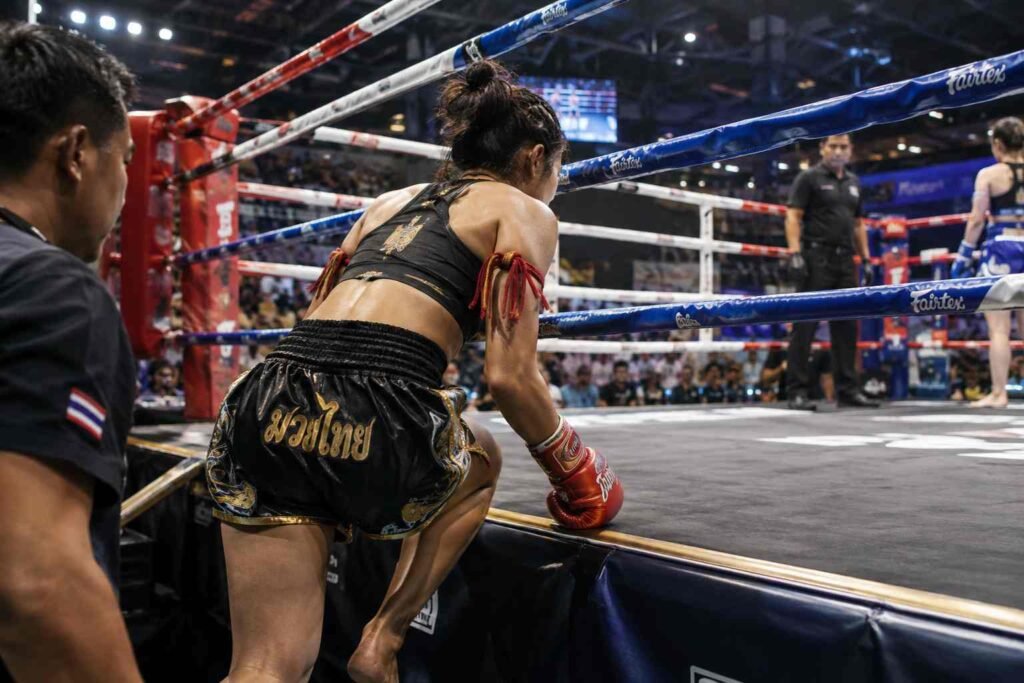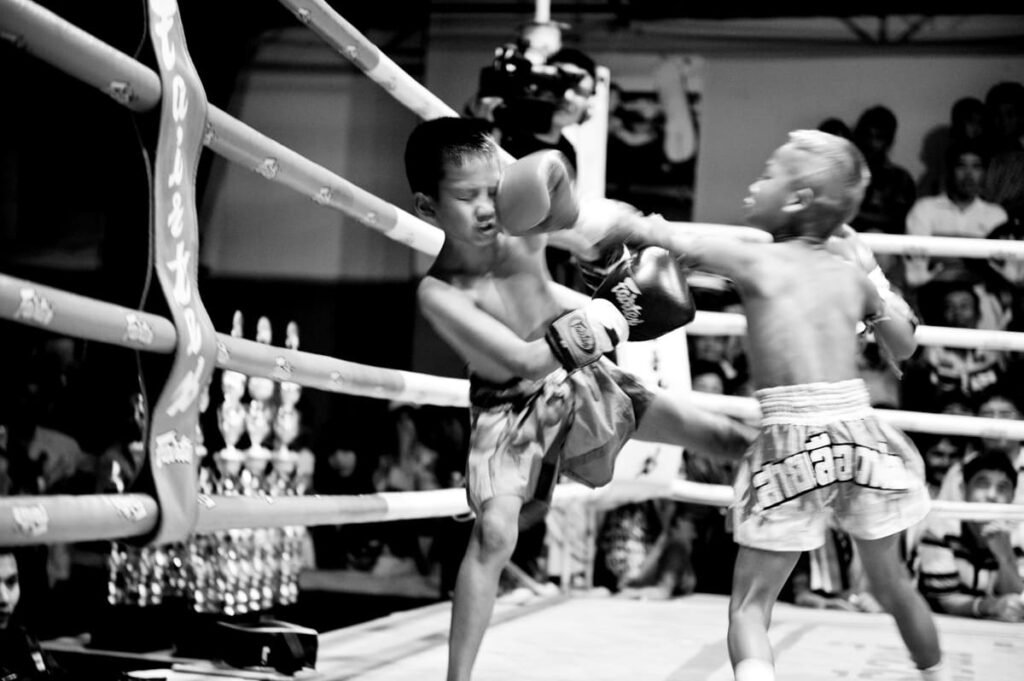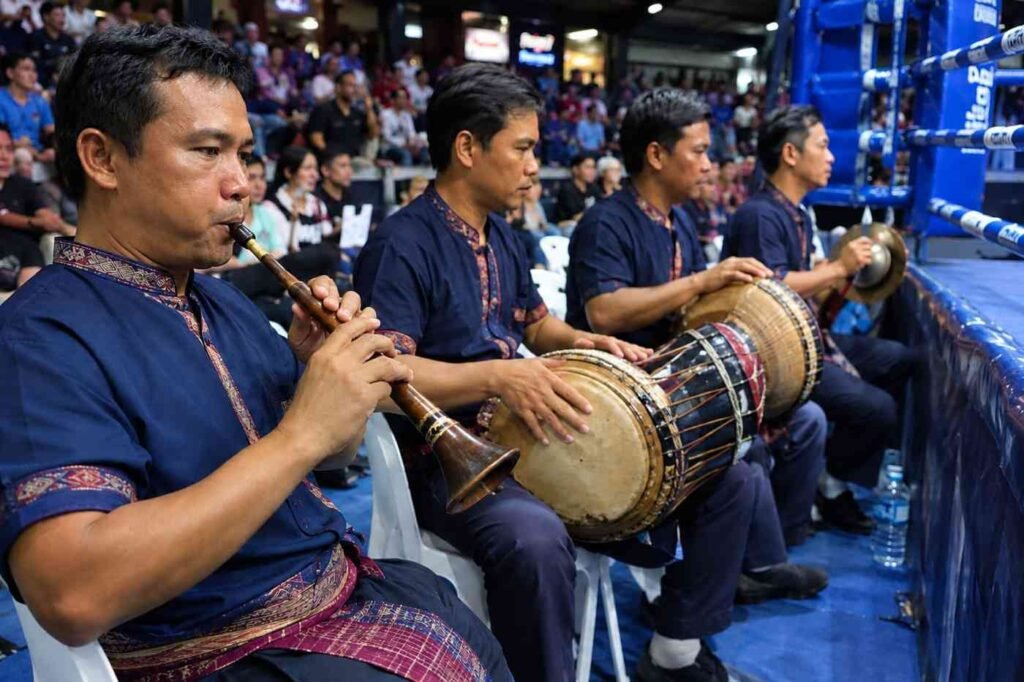

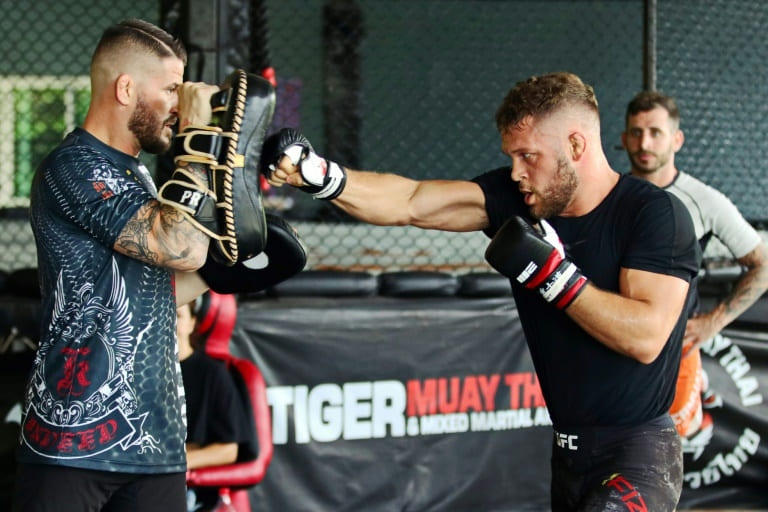
Muay Thai transfers to mixed martial arts, but never as a complete package. The techniques that make a fighter dangerous in a Bangkok stadium, the same clinch work, knees, and elbows behind the art of eight limbs, have to be filtered through a sport where a takedown ends the conversation. Some of those tools survive that filter almost untouched. Others get quietly abandoned the first time a wrestler ducks under a punch. This piece looks at which parts of Muay Thai actually hold up in a cage, and at the fighters who built real UFC careers around them.
Muay Thai’s Place in MMA
Ask ten fans to name a “Muay Thai fighter” in the UFC and you’ll get ten different answers, and several of them will be wrong in some way. Fight promotions love the label. It sounds exotic, it implies discipline, and broadcasters use it as shorthand for “this person kicks hard.” The reality is messier. Plenty of UFC strikers list Muay Thai on their bio because they trained it for a few years at some point, not because it shaped how they actually fight. A smaller group trained it seriously, often from childhood, sometimes in actual Thai stadiums, and it shows in how they move.
That distinction matters for anyone trying to understand what wins fights. Genuine stadium-trained Muay Thai brings a specific toolkit: scoring kicks that land with the shin, clinch entries that look almost lazy until the knee arrives, teeps that stop forward motion cold. A few years of casual training usually leaves a fighter with decent kicks and not much else. The gap between the two shows up fast once someone gets touched on the chin or shot on for a double leg.
The Techniques That Actually Transfer
Not every piece of the Muay Thai game survives contact with MMA rules. A handful of techniques transfer almost directly, and they keep showing up in fighters who are dangerous for real, not just on paper.
Clinch control sits at the top of that list. In stadium Muay Thai, judges reward knees and off-balancing throws from close range, so the clinch is often where a fight actually gets decided. MMA punishes a careless clinch entry with a takedown, but a fighter who understands framing, underhooks, and knee timing can control range in a way pure boxers and kickboxers usually can’t. Low kicks hold up almost as well. Chopping at the lead leg all night is one of the oldest habits in the sport, and it still wrecks opponents who never learned to check properly.
Elbows and the teep round out the short list of techniques that translate cleanly. A fighter with real elbow fluency opens cuts and ends rounds early, throwing them off angles rather than saving them as a last-resort weapon once a punch combination runs out. The teep looks unglamorous next to a highlight-reel knockout, but a well-timed push kick to the hip or midsection stops forward pressure cold, disrupts rhythm, and buys the fighter throwing it the half-second needed to reset distance.
Fighters Who Weaponized Muay Thai
Anderson Silva
Silva is the name most often cited when people talk about Muay Thai clinch work translating into MMA, and the reputation is earned. His clinch control against Rich Franklin is one of the most commonly referenced examples in the sport, a case study coaches still point to when they want to show what happens when someone truly understands how to control a head and land knees from close range. What made Silva dangerous wasn’t just power. It was patience in a phase of the fight most Western strikers rushed through.
Jose Aldo
Aldo built a reputation on low kicks that a lot of featherweights simply couldn’t survive. His background in Muay Thai and capoeira gave him a kicking arsenal that looked different from the usual boxing-heavy MMA striker, and the leg kicks in particular became something opponents had to game-plan around specifically rather than treat as an afterthought.
Jon Jones
Jones isn’t a Muay Thai specialist in the traditional sense, but his elbow work is some of the most widely discussed in the sport’s history. He throws them from angles most fighters don’t train for, often off the clinch or in scrambles. That willingness to use elbows as a primary weapon rather than a rare finishing tool owes a real debt to Muay Thai’s influence on modern MMA striking.
Valentina Shevchenko
Shevchenko’s teep is one of the most talked-about single techniques in women’s MMA. It isn’t just a range-finder for her. Opponents get stopped in their tracks by it, forced to reset, and made to think twice about walking forward carelessly. That’s a very Muay Thai way to use a kick that looks simple on paper.
Loma Lookboonmee
Lookboonmee represents something different from the rest of this list. She came up through actual Thai stadium competition before moving to MMA, rather than adding Muay Thai to an existing striking base later on. Her footwork and kicking rhythm read as distinctly Thai in a way that stands out even among UFC strikers with strong credentials elsewhere.
Alex Pereira
Pereira’s path ran through elite kickboxing before he ever set foot in the UFC, and his Muay Thai roots run just as deep as his kickboxing resume. The calf kicks and check hooks that made him a nightmare in Glory carried over almost unchanged. That says something about how much of a genuine Muay Thai base survives the jump once a fighter’s power is already at that level.
Rafael Fiziev
Fiziev trained Muay Thai competitively before MMA, and it shows in details casual fans might miss: the way he switches stances mid-exchange, the variety in his kick selection, the willingness to throw knees in the clinch rather than just looking to disengage. His striking reads as layered rather than one-dimensional, precisely because the base underneath it is real.
Why a Stadium Style Doesn’t Work in a Cage
Here’s the part most “best Muay Thai fighters in the UFC” lists skip. A fighter who walks into the cage with an unmodified stadium style is going to have a bad night. Traditional Muay Thai favors a high, narrow stance built for scoring kicks and absorbing leg checks, plus a walking, marching rhythm that closes distance in a straight line. That works fine when the only threat is another striker. The cage punishes it instantly.
A narrow, upright stance is easy to shoot on, and the marching rhythm telegraphs entries before they even land. Stadium scoring also rewards a relaxed, economical output that doesn’t map onto a sport where judges reward output and aggression in a completely different way. Fighters who make the jump successfully widen their base, learn to sprawl, and mix in feints and level changes that stadium Muay Thai never demanded of them. Skip that adjustment and even a great kicker gets exposed against a decent wrestler.
Training Muay Thai for MMA
The smartest gyms training MMA fighters today don’t teach pure stadium Muay Thai and hope it holds up. They teach a modified version: wider stances for takedown defense, kicks thrown with head movement built in, elbows and knees drilled specifically for scramble situations rather than a clean stand-up exchange. Clinch work gets paired with wrestling defense from day one instead of being treated as its own separate skill, because in a cage those two things happen in the same three seconds. Nothing about that pairing is optional.
For a fighter coming up now, the lesson from this list isn’t simply “learn Muay Thai.” It’s learn the parts that survive contact with someone trying to take you down, and drill them until the adjustment stops feeling like an adjustment at all. The clinch fundamentals that hold up under MMA rules look a little different from the ones that win a stadium fight, and the fighters who understand that difference tend to be the ones still winning five years into a UFC career.