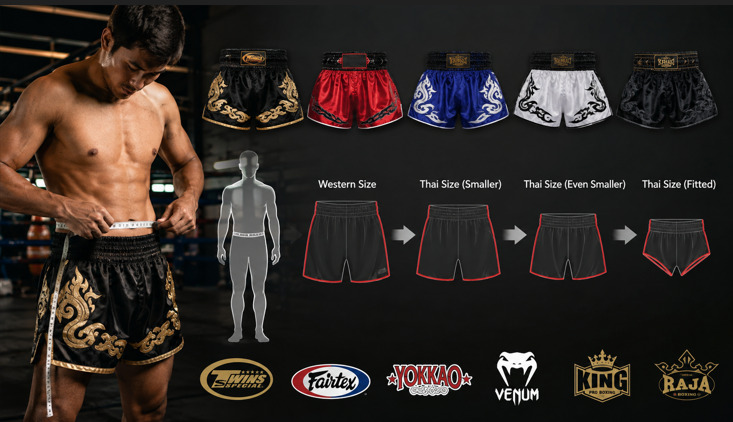
Buy a pair of Thai-made Muay Thai shorts in the size you’d normally wear, and there’s a decent chance they show up too tight through the hips or too short in the rise. This isn’t a shipping error or a one-off bad batch. It’s a pattern reported often enough by gym owners, fighters, and online shoppers that it’s worth treating as close to a rule: Thai sizing commonly runs one to two sizes smaller than what a US or European buyer expects. A Thai-labeled XL frequently fits closer to a US medium or large. Nobody prints that on the tag.
The reason isn’t mysterious once you think about it. These shorts were designed for the Thai fighter build first and exported second. Western distributors and resellers eventually pushed brands to add size charts, but even those charts vary by brand, by year, and sometimes by which factory ran that particular batch. The result is a category where the label means less than the actual measurement, and where “just order your normal size” is genuinely bad advice.
Why Thai Sizes Run Small
Traditional Thai boxing shorts were cut for a specific body type: lean, narrow through the waist, shorter in stature than the average Western customer. When brands like Fairtex and Twins started shipping internationally in bulk, they added a size range on top of an existing pattern rather than redesigning the pattern itself. The garment stayed close to its original silhouette. Only the labels changed.
That’s why an XL from a Thai brand can measure closer to a US size 34 to 36 waist instead of the 38-plus you might expect from an XL in Western activewear. Some brands have since adjusted their patterns for export markets, and newer runs tend to run slightly larger than shorts made a decade ago. But there’s no universal fix. Two shorts from the same brand, bought a year apart, can measure differently. Treat every size chart as a starting point, not a guarantee.
The Master Size Chart
Waist measurements below are general, commonly-reported ranges pulled from buyer experience and reseller guidance across the six brands most people ask about. They are not official manufacturer specifications, and actual garments vary by production run. Always check the specific listing before buying, and measure your own waist rather than trusting your usual pants size.
| Brand | Size | Approx. Waist (cm) | Approx. Waist (in) |
| Fairtex | M / L / XL | 66–86 cm | 26–34 in |
| Twins Special | S / M / L / XL | 61–81 cm | 24–32 in |
| Top King | M / L / XL | 66–86 cm | 26–34 in |
| Yokkao | S / M / L / XL | 63–84 cm | 25–33 in |
| Boon Sport | M / L / XL | 71–91 cm | 28–36 in |
| Raja | M / L / XL | 66–86 cm | 26–34 in |
Boon tends to run the closest to Western expectations, according to most buyer feedback, which is one reason it’s popular with people who’ve been burned once already. Twins and Top King sit at the smaller end. None of this is exact science. It’s a pattern worth knowing before you click “buy,” not a chart you should screenshot and trust blindly for every single pair.
How Should Muay Thai Shorts Fit?
Forget how a normal pair of gym shorts sits. Muay Thai shorts have a different job, and the fit reflects it.
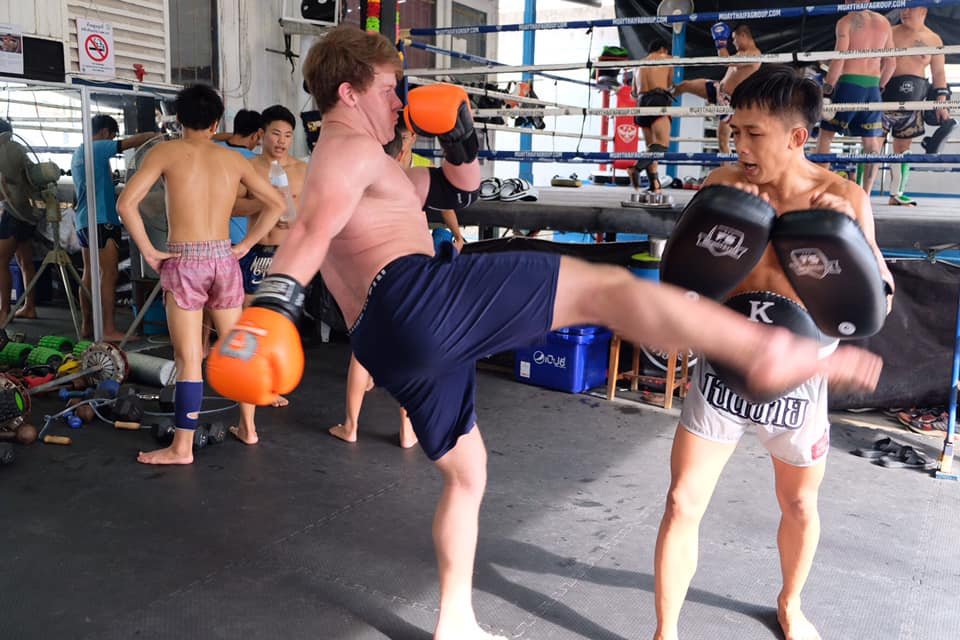
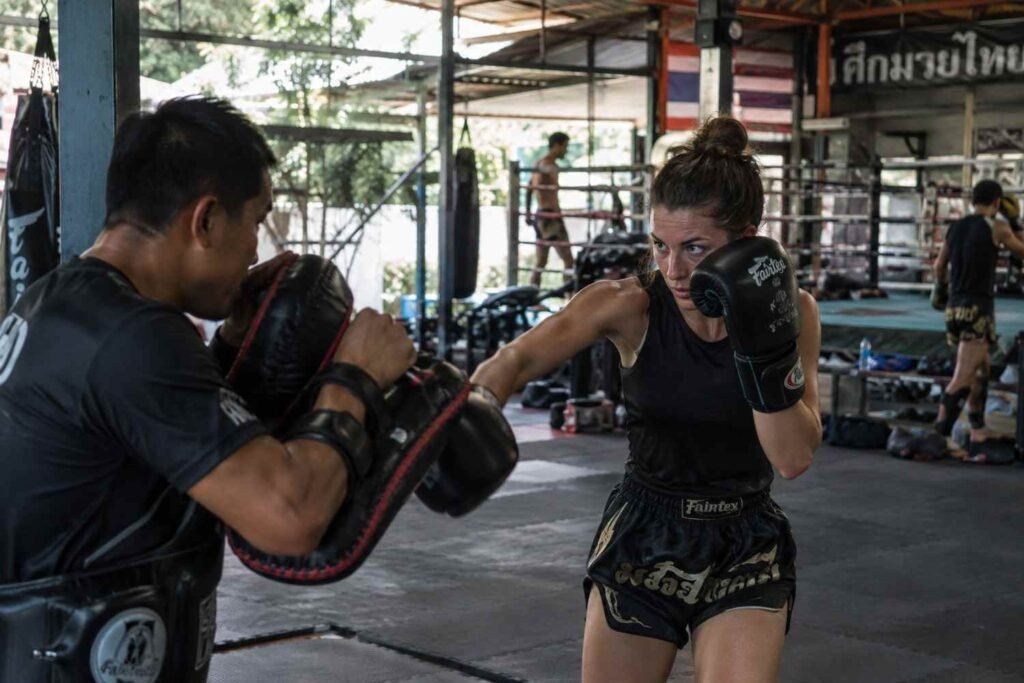
The waistband should sit right at or just above the navel, not on the hips like streetwear shorts. That higher rise keeps the shorts from sliding during knee strikes and clinch work, and it’s the single most common mistake first-time buyers make when they size based on how their jeans fit. The hem should land around mid-thigh, well above the knee, leaving the leg completely free. This is non-negotiable for anyone throwing round kicks. A hem that creeps toward the knee will bunch and restrict exactly the motion the shorts are supposed to allow.
Width matters as much as length. Traditional shorts are cut wide through the leg opening, almost flared, so a high kick doesn’t pull fabric tight against the thigh. Squat down in the fitting room, or at home, and throw a mock kick before deciding a pair fits. If the fabric pulls or the waistband digs in mid-motion, size up regardless of what the tag says. A little extra room in the waist is manageable with a drawstring. A leg opening that’s too narrow isn’t fixable at all.
Satin vs Microfiber: Which Fabric Wins?
Satin is the classic choice, shiny, light, and the material most people picture when they think of Muay Thai shorts. It breathes reasonably well, dries fast, and holds vivid colors and embroidery beautifully. The downside is durability. Satin snags on rough surfaces, and repeated washing dulls the shine over a season or two of regular training.
Microfiber has become the practical alternative for people training several times a week rather than shopping for a single fight. It’s a tighter, more matte weave that holds up better to washing machines and mat friction, and it tends to wick sweat a bit more effectively during long sessions. It costs a little more up front in most lines. Satin still wins on looks and tradition; microfiber wins on longevity. Fighters who compete often keep one satin pair for the ring and a microfiber pair for the daily grind.
Retro Cuts vs Modern Slim Fits
Retro-style shorts sit higher on the waist and flare wider at the leg, following the original silhouette that Thai gyms have used for decades. They photograph well, they move well for kicking, and they’re the style most associated with old-school stadium fighters. Modern slim cuts trim the excess fabric, sit slightly lower, and taper the leg for a more streetwear-adjacent look that’s grown popular outside the ring over the past several years. Some brands, tracking how training equipment has changed over time, now sell both cuts side by side under the same brand name.
Neither cut is objectively better, though the retro version generally offers more room for aggressive kicking and the slim version looks better for casual wear off the mats. Buyers who split time between hard training and everyday errands often end up owning one of each.
Ordering Custom Shorts From Thailand
Custom embroidered shorts, ordered directly from a Thailand-based supplier, are one of the more satisfying purchases in this niche. A buyer picks the color scheme, sometimes a design template, and sends over a name or gym affiliation to be stitched onto the leg or waistband. Turnaround generally lands somewhere between two and six weeks depending on the workshop’s order backlog and international shipping, and pricing usually sits above off-the-shelf retail but below what a boutique fight-gear brand charges for a comparable non-custom pair.
The catch, unsurprisingly, is sizing. Custom orders still run through the same small Thai patterns unless a buyer explicitly requests larger measurements and confirms them in centimeters before the order goes into production. Skipping that step is how people end up with a beautifully embroidered pair of shorts they can’t wear. Measure first, message the seller with exact waist and length numbers, and ask for confirmation in writing before payment clears. Do that, and a custom pair becomes one of the few genuinely personal items a fighter owns.