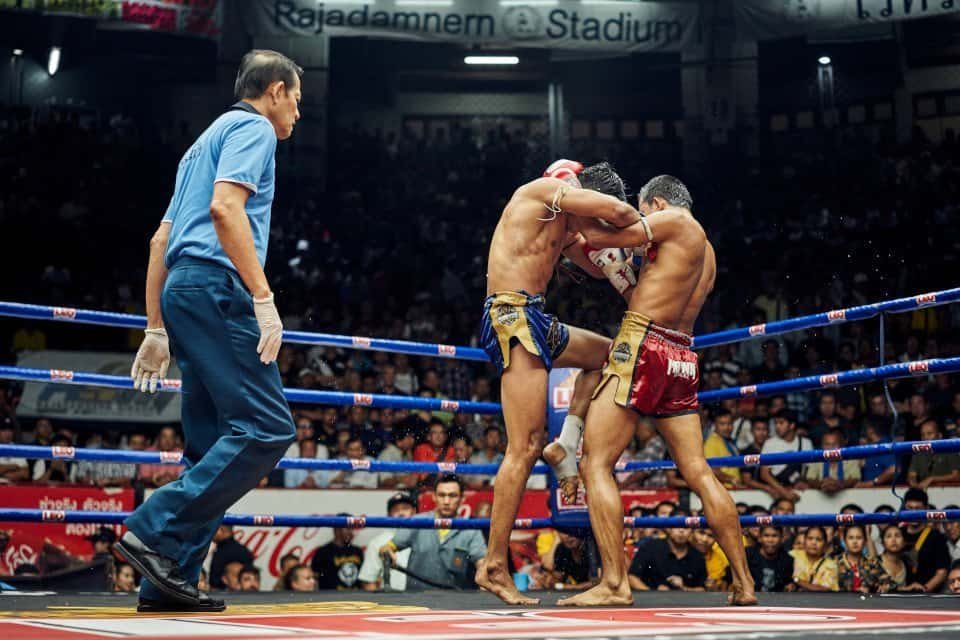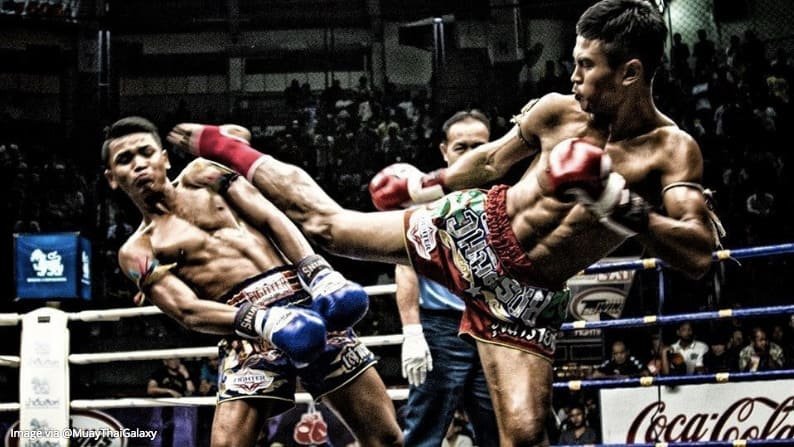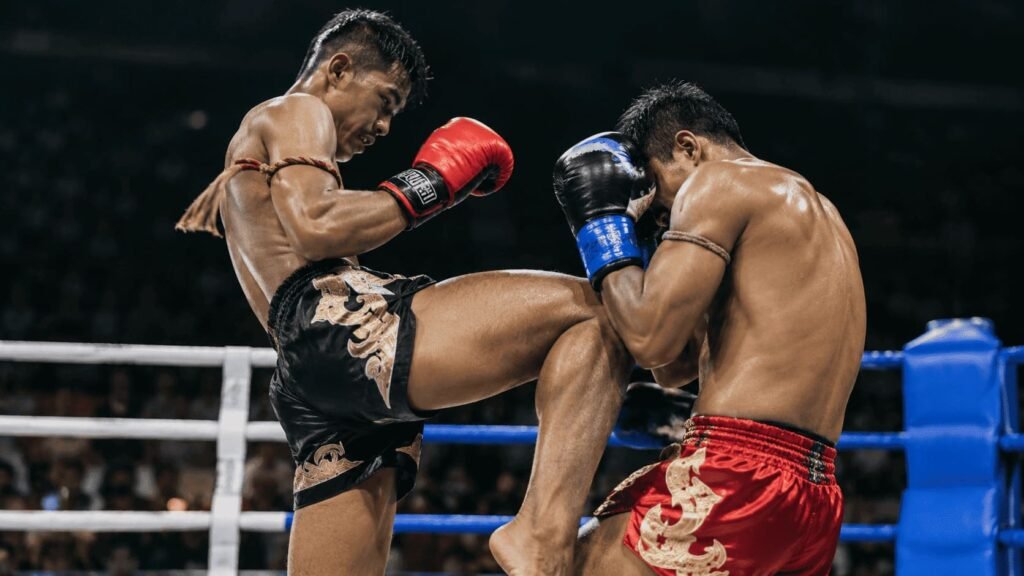

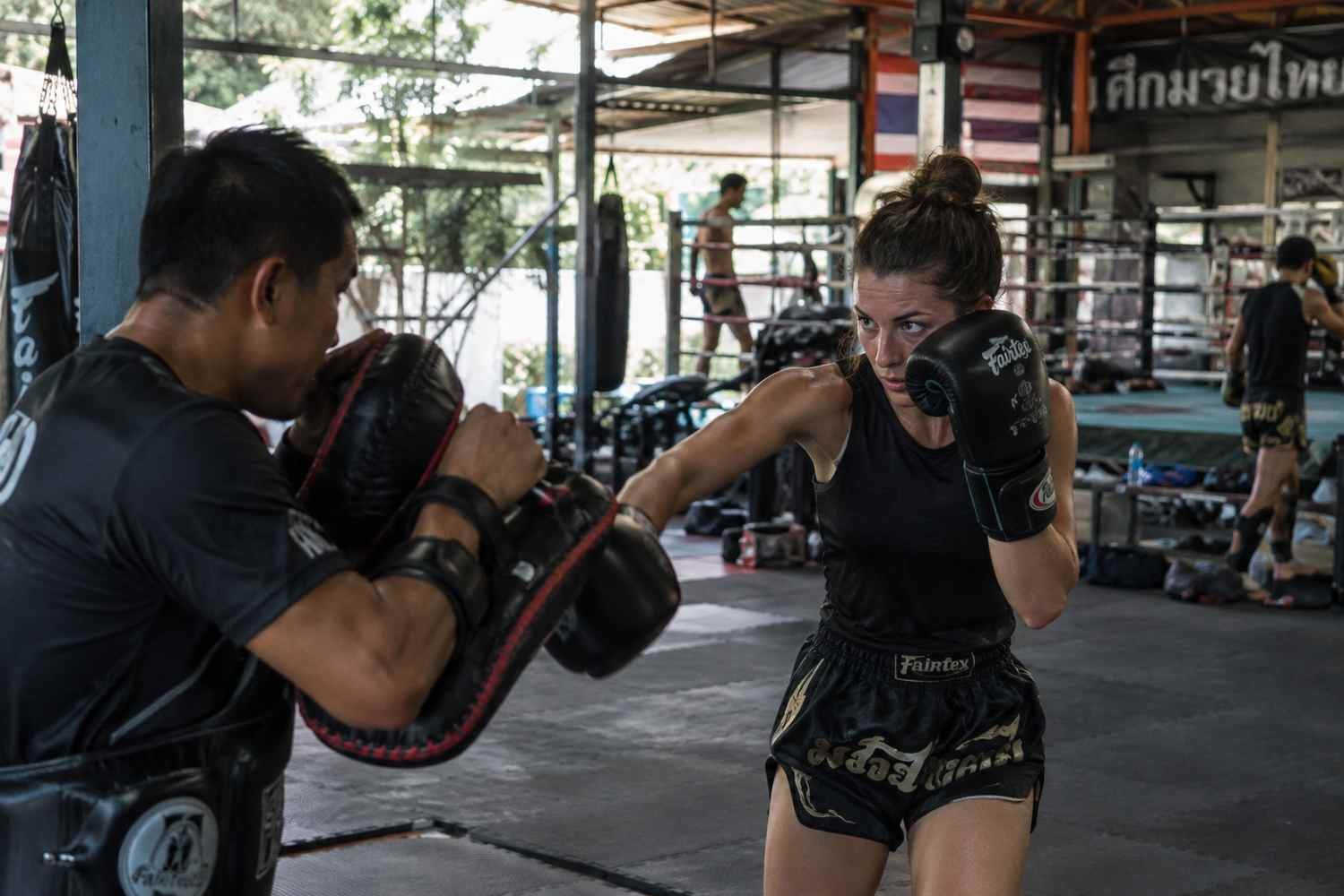
Your coach catches you after class and says there’s a spot on a card in eight weeks. You say yes before your brain catches up. Then you go home, search for a muay thai fight camp schedule, and every result hands you the same thing: 6am roadwork, morning pads, afternoon clinch, six days a week, the routine a 19-year-old at a Chiang Mai gym runs because training is his entire job and his rent depends on it.
You have a job. You have maybe five training slots a week that don’t require quitting it. That is not a problem to apologize for, and it is not a reason to lose. It just means the camp has to be built around what you can repeat, and around a taper you actually respect, because the amateur who shows up fresh and slightly undertrained beats the amateur who shows up cooked almost every time.
This assumes the fight is already booked. If you’re still at the stage of finding one, getting the bout booked is a different problem.
The honest volume question
Four to five muay thai sessions a week, two of them with real pad work, plus two short strength sessions and two or three runs. That is a full amateur camp for a working adult. Anyone selling you eleven sessions a week is describing a life you don’t have, and the copy-paste version of it will break you around week four.
Volume is the easy part to add and the easy part to overvalue. What decides most amateur bouts is conditioning that holds through round three, one or two techniques you can hit under pressure, and whether your legs still work on the night.
Week by week, in one table
Weight targets below are written as a percentage over your fight weight rather than in pounds, so they work whether you fight at 125 or 185. If you’re more than about 6% over at week eight, the honest conversation is about moving up a division, not about cutting harder.
| Week | MT sessions | Sparring | Strength | Weight vs fight weight |
| 8 | 4 | 1 technical round set, light | 2 full-body | +5 to 6% |
| 7 | 4-5 | 1 session, first hard rounds | 2 full-body | +5% |
| 6 | 5 | 2 sessions, one hard | 2, heavier | +4% |
| 5 | 5 | 2 sessions, one hard | 2, heavier | +3.5% |
| 4 | 5 | 2 sessions, gameplan focused | 2, lighter loads | +3% |
| 3 | 4-5 | 1 hard, 1 sharp and short | 1-2, speed work | +2.5% |
| 2 | 4 | Last hard session, early in the week | 1, low volume | +2% |
| 1 | 3 short | Touch sparring only | None | +1% or on weight |
The column that matters most is the sparring one, and it is the column most amateurs get exactly backwards.
Weeks 8 and 7: fix the thing that falls apart
The first fortnight is where you find out which parts of your muay thai survive contact. Everyone has a technique that looks clean on pads and vanishes the second someone throws back. Usually it’s the left hook, or the right teep, or the fact that you stop breathing when you get touched clean.
Start sparring properly in week seven, not week five. Not war, but rounds where the other person is genuinely trying to hit you. You want six clear weeks of feedback, because a technical fix takes hundreds of repetitions before it shows up in a fight, and there is no version of this where you patch it in the last ten days.
Get your coach to name your gameplan out loud in week seven. Two techniques and one situation. Something like: long left kick to keep the range, right elbow off the clinch break, and if he walks me down, I turn him into the ropes. Every session for the next six weeks should feed those three things, and anything that doesn’t is a hobby you’re doing on fight camp time.
Weeks 6 and 5: the ugly middle
Peak volume lands here. Five sessions, two of them with sparring, and this is where the two hardest strength days of the whole camp belong. You will feel slow, heavy, and slightly worse at muay thai than you did a month ago. That feeling is the point, and it is also the reason so many people panic and start adding sessions at exactly the wrong time.
Round timing matters more than round count now. If your bout is three rounds of two minutes, which is the standard shape of most US amateur cards, spar three-minute rounds so the real ones feel short. If you’re on a card running three-minute rounds, do four. Thai gyms have done this forever, closing every afternoon session with clinch work long past the point where anyone still has legs, and the reason is not toughness for its own sake. It’s so that the last thirty seconds of a real round is familiar territory.
Keep lifting during camp, but keep it boring. Squat, hinge, push, pull, carry something heavy. Twice a week, forty minutes, no novelty, nothing that leaves you unable to kick on Wednesday.
Weeks 4 and 3: spar the style, not your friends
By now your matchmaker or coach should have told you something about the opponent. Southpaw or orthodox. Taller or shorter. Muay khao who wants the clinch, or muay femur who wants to counter and score late. If nobody at your gym knows anything, ask again. Amateur matchmaking is small and someone usually knows someone.
Then stop sparring your regular partners the way you always do. Find the partner closest to the opponent’s shape and ask for those specific rounds. If your opponent is a southpaw and your gym has one southpaw who trains Tuesdays, you are training Tuesdays for the next three weeks. If he’s a clinch fighter, you need somebody leaning on you until your neck is sore.
This is also where the sharpening happens: fewer new ideas, more repetitions of the same three. Pad rounds get shorter and faster. Your coach should be calling combinations you’ve already hit a thousand times, at a speed that makes you slightly late.
Week 2: the last hard round of your camp
Do your final hard sparring session ten to twelve days out, early in week two. After that, no more rounds where you can get hurt or dented.
The reasoning is simple. A hard session leaves you with micro-damage, deep fatigue and a nervous system that needs real days to recover, and at amateur level almost nobody has the recovery habits to absorb that inside of ten days on top of a job. Every fight-week injury I have watched happen came from a session someone insisted on having because they felt sharp. A cut eyebrow eight days out ends the fight before the fight.
Plenty of good coaches disagree with this, and it’s worth knowing why. Some want a hard spar at seven days precisely to shake the rust off, and for a fighter with fifteen bouts and a spare afternoon to sleep, that’s defensible. For your first three fights, with a commute and a manager, take the ten days. You will lose almost nothing in sharpness and you’ll bank a week of actual recovery.
Weight should be within about 2% by the end of this week, achieved by eating like an adult rather than by anything dramatic. If it isn’t, the answer is more attention to what you drink and what you eat after 9pm, not a sauna.
Week 1: doing less, on purpose
Three short sessions. Pads at fight pace but only two or three rounds. Shadowboxing. Touch sparring at maybe 30%, mostly to keep your timing and your eyes alive. No strength work, no new conditioning, no “one last hard run to be sure.”
Sleep is the training now, and eight hours is worth more than any session you could add. Watch two of your opponent’s fights if they exist, then stop watching, because the fifth viewing only builds anxiety.
Tapering feels wrong. You’ll think you’re getting worse, and around Wednesday you’ll want a full session just to prove you still can. Don’t. The fitness you built in weeks five and six is already in the bank, and everything you do this week is either a withdrawal or a deposit on how fresh you feel walking out.
Fight week, day by day
Monday: light technical session, forty minutes, nothing that raises your heart rate for long. Tuesday: pads, three rounds, fight pace. Wednesday: shadow and rope, thirty minutes plus mobility. Thursday: rest or a walk. Friday is usually weigh-in.
Find out now whether your show weighs in the night before or the morning of, because the answer changes your whole week. Day-before weigh-ins give you a rehydration window. Same-morning weigh-ins mean you fight roughly at the weight you weighed, and any cut beyond a pound or two of water is a bad idea you’ll feel in round two.
Pack your bag Thursday night, not Saturday morning. Gloves if the promotion doesn’t supply them, shin guards, headgear if your class requires it, mouthguard, groin guard, hand wraps, two pairs of shorts, tape and gauze if your rules allow it, water, a banana, a towel, and your ID and any medicals the sanctioning body needs. Amateurs get scratched from cards over missing paperwork more often than over failed weigh-ins.
Weigh-in to walkout
Amateur shows run long. Assume you’ll wait three hours past the time on the poster, and plan for it: bring food you’ve eaten before, and something to sit on that isn’t a concrete floor. Find out your bout number and watch the pace of the card so you know roughly when to start moving.
Warm up in stages rather than one long burst. Light movement and rope about forty minutes out, shadowboxing and a few pad rounds twenty minutes out, then keep ticking over. Getting fully warm too early and then sitting down for another hour is a classic first-fight error, and you’ll walk out with cold legs and a racing heart, which is the worst possible combination.
Do your ram muay if the show allows it, even if you feel self-conscious. It is two minutes of controlled breathing at the exact moment your body most wants to hyperventilate, which is a reason to do it that has nothing to do with tradition.
The two mistakes that wreck amateur camps
Peaking in week four. Somewhere around the halfway mark, everything clicks. Your kicks land, your cardio feels endless, sparring goes your way, and you get the idea that if you push harder you’ll be unbeatable. So you add sessions. Four weeks later you’re flat, your shins hurt, your sleep is broken and you cannot figure out why you feel worse than you did in July. Peak sharpness has a shelf life measured in days, not months. Hold the plan.
Cutting weight during your highest-volume week. The instinct is to start the diet the moment you’re stressed about the scale, which is usually week six, which is also the week with the most sparring and the heaviest lifts. Eating in a deficit while doing your hardest training is how you get injured, sick, or beaten by someone you’d normally handle. Bring weight down gradually from week eight, or accept the division above. Cutting hard is a pro problem imported by amateurs who don’t need it.
When life interrupts, and it will
Two or three weeks of this camp will go wrong. A work trip, a cold, your kid’s birthday, a tweaked ankle. Every fighter with a job has had a camp interrupted, and the ones who handle it well have a priority order decided in advance.
Cut in this order: extra conditioning first, then strength, then technical drilling. Protect sparring and pad work above everything else, because those are the only two things that actually rehearse the fight. If you miss a whole week, do not try to make it back with a double week. Rejoin the plan where the calendar says you are, accept slightly less fitness, and keep the taper exactly as it was written.
A camp you finish at 80% intact beats a perfect camp you finish limping. Fight the fight you trained for, not the one you read about.