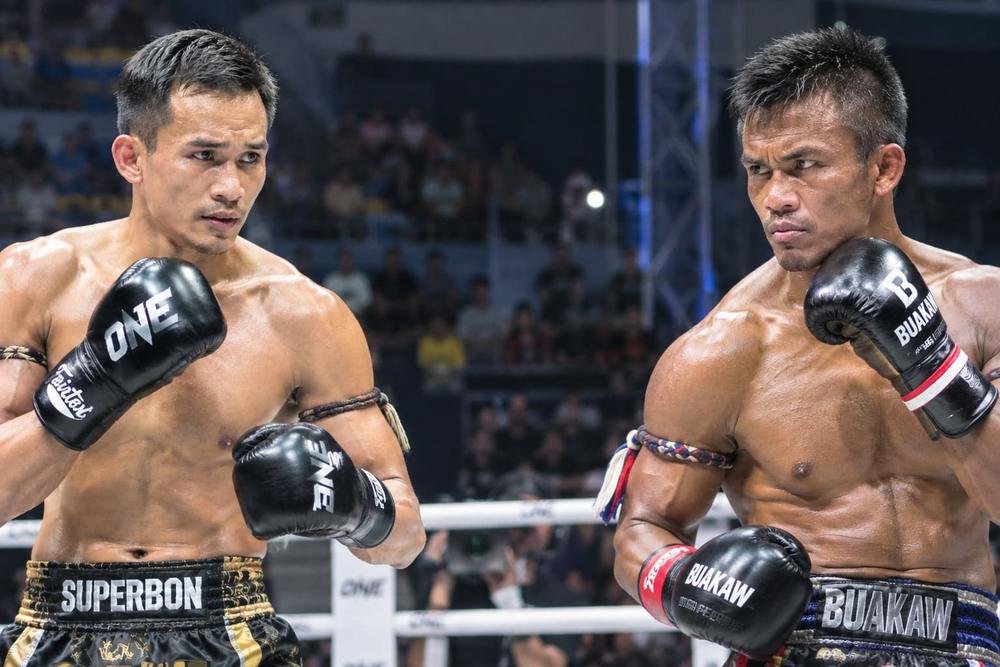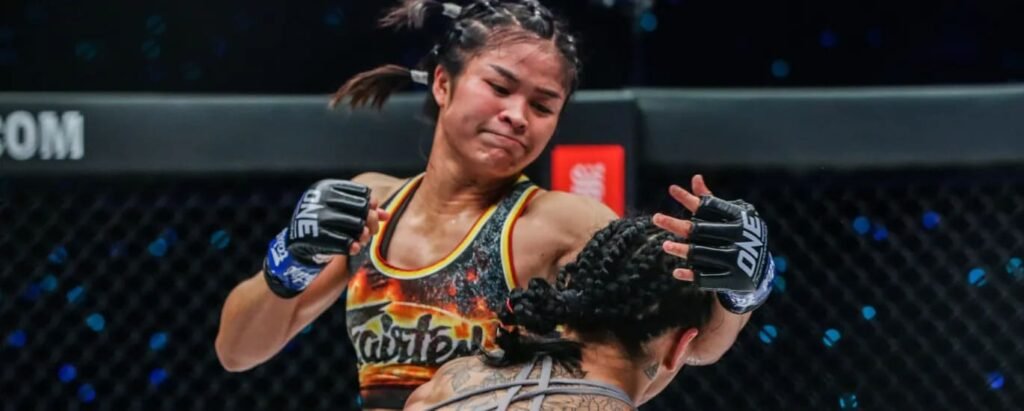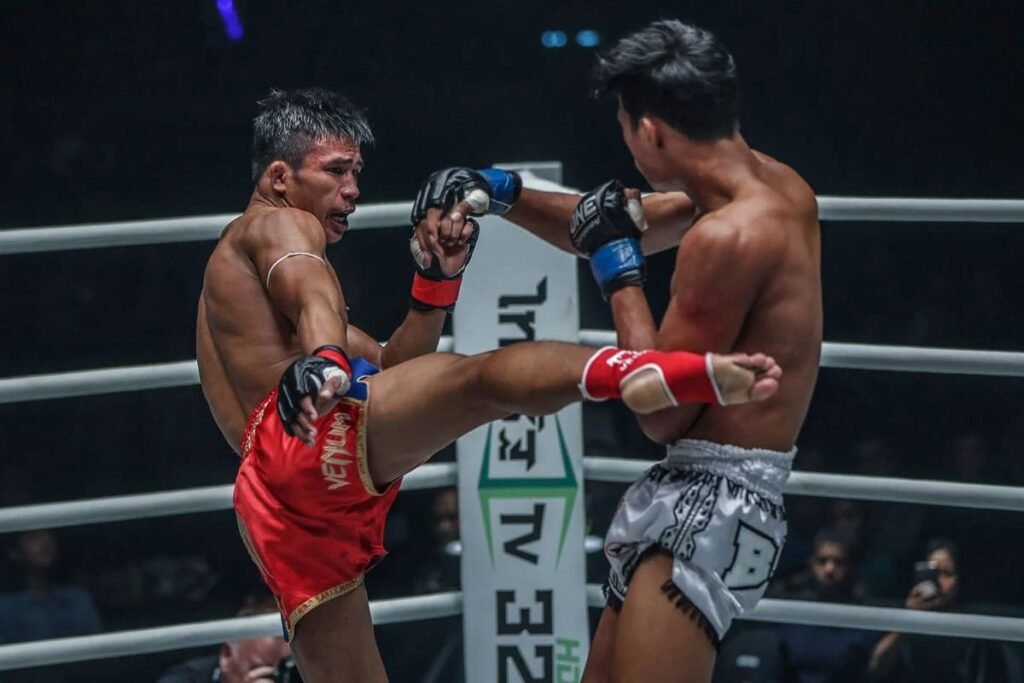

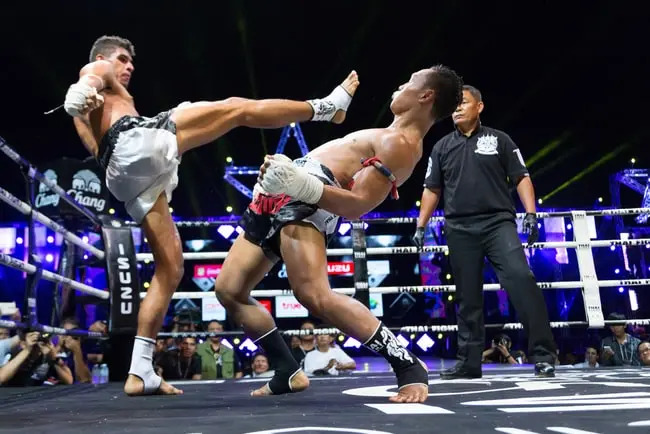
A foreigner walked into Lumpinee Stadium, one of the two most sacred rings in Thailand, and beat a Thai fighter in front of a Thai crowd. That almost never happened before the 1980s. Muay Thai had been closed off to outsiders for generations, a home sport with home judges and home advantages built into the scoring itself. Then a wave of Dutch fighters showed up and did it anyway, repeatedly, until Thailand had no choice but to respect them. It is one of the strangest success stories in combat sports history, and almost nobody outside the striking world knows it happened.
How Muay Thai Reached Amsterdam
The story does not start in Thailand. It starts in Japan. In the 1970s, a karate instructor named Kenji Kurosaki began blending Kyokushin karate, a full-contact style built around hard conditioning and bone-jarring kicks, with elements of Muay Thai he had studied and absorbed. The result became known as Japanese kickboxing, and it traveled to the Netherlands through a small group of Dutch students who trained directly under Kurosaki.
Jan Plas, who later founded the legendary Mejiro Gym in Amsterdam, was one of them. So was Thom Harinck, founder of Chakuriki. Both men understood early on that the Japanese hybrid was only a starting point. If they wanted the real thing, they needed to go to the source. So they did. Dutch fighters and coaches began making regular trips to Thailand through the late 1970s and into the 1980s, training in Bangkok gyms, absorbing the footwork, the timing, the kicking mechanics that Thai fighters had refined over decades in the stadium system. They took what they learned home and kept building.
What the Dutch Changed
What came out of Amsterdam was not a copy. It was an adaptation shaped by different fighters, different competition rules, and a different philosophy of what wins fights.
Dutch kickboxing leaned harder into boxing. Fighters trained jabs, hooks, and combinations with the intensity of a Western boxing gym, then married that hand speed to the low kick, the single most efficient weapon in the entire striking toolbox. A Dutch-style combo might run four or five punches into a leg kick before the opponent even sees it coming. Pace mattered too. Where a Thai fight in the stadium system often builds slowly across five rounds, with the first rounds used to feel out range and the championship rounds reserved for the real scoring, Dutch kickboxing pushed high output from the opening bell. Judges in Dutch and Japanese kickboxing rewarded aggression and visible damage, not composure and technical dominance, so the incentives pointed toward volume.
Clinch work shrank too. Traditional Muay Thai in Thailand treats the clinch as its own discipline, full of knees, off-balancing, and control exchanges that can decide a fight without a single strike landing clean. The Dutch approach downplayed it. Rules in most kickboxing promotions limited clinch time anyway, so there was little reason to master something the sport barely rewarded. The result was a style that hit harder, moved forward faster, and fought at a different rhythm than anything Thailand’s own stadiums produced.
Ramon Dekkers: The Foreigner Thais Respected
No single name carries this story better than Ramon Dekkers. Trained at Mejiro Gym under Jan Plas, Dekkers went to Thailand as a young fighter and did what almost no foreigner had managed before him: he competed in Thai stadiums against Thai fighters and won their respect on their own terms, not just in kickboxing rings back in Europe.
Thai fight fans are notoriously hard to impress, and doubly hard on outsiders who show up expecting an easy night. Dekkers earned a different reception. He fought with a style that was recognizably Dutch, heavy hands, constant forward pressure, but he backed it with enough technical Muay Thai that Thai trainers and fans came to see him as something rare: a farang, a foreigner, who actually understood the art. Decades later, Thai fighters and historians still bring up his name unprompted when the topic of foreign fighters comes up. He died in 2013, and tributes poured in from both sides of the rivalry, which tells you something about how far the respect actually traveled.
Two Styles, One Ring: The Technical Differences
The two traditions still look different to a trained eye, even now, after decades of cross-pollination.
| Element | Dutch Kickboxing | Traditional Stadium Muay Thai |
| Hand technique | Western-style boxing combinations, high volume | Simpler hand usage, often a setup for kicks or knees |
| Kicking | Heavy reliance on the low kick, thrown in combination | Full range of kicks, including teep and head kicks, spaced through the round |
| Pace | High output from the first bell | Measured early rounds, intensity builds toward the end |
| Clinch | Minimal, often avoided | Central skill, includes knees and off-balancing |
| Scoring priority | Aggression, visible damage, forward pressure | Balance, control, technique, and composure over sheer volume |
| Stance | Squared, boxing-influenced | Bladed, kick-oriented |
None of this makes one style better than the other. It makes them built for different judges, different rules, and different definitions of a dominant performance.
K-1 vs Stadium Muay Thai
This difference in scoring explains almost everything about who dominated where. K-1, the Japanese kickboxing promotion that became the sport’s biggest global stage through the 1990s and 2000s, rewarded exactly what Dutch fighters trained for. Judges wanted knockdowns, forward pressure, and punishing combinations, and Dutch gyms like Mejiro and Chakuriki had spent twenty years building fighters for that exact standard. It is no accident that Dutch fighters filled out K-1’s biggest cards and title lists for years.
Stadium Muay Thai in Bangkok never adopted that scoring. Judges there still reward the fighter who controls range, wins the clinch, and looks composed doing it, and Thai fighters raised in that system from childhood have an advantage nobody trains around. Put a K-1 champion in Lumpinee under Thai rules and the fight often looks completely different than it would in Tokyo or Amsterdam. Two legitimate championship traditions, built for different rooms, both correct on their own terms.
The Modern Hybrid
Today the line between the two traditions has blurred, and ONE Championship has become the clearest proof of it. Fighters trained in the Dutch tradition and fighters raised in Thai stadiums now share the same ring under the same rulebook, and the sport is better for the collision. Thai fighters have added boxing combinations to their arsenal. Fighters trained in Dutch gyms have gone back to studying clinch work and the kicks they used to skip. The rivalry that once needed a foreigner to walk into Lumpinee and prove a point has become something closer to a shared inheritance, and the next generation of fighters is being built on both sides of it at once.