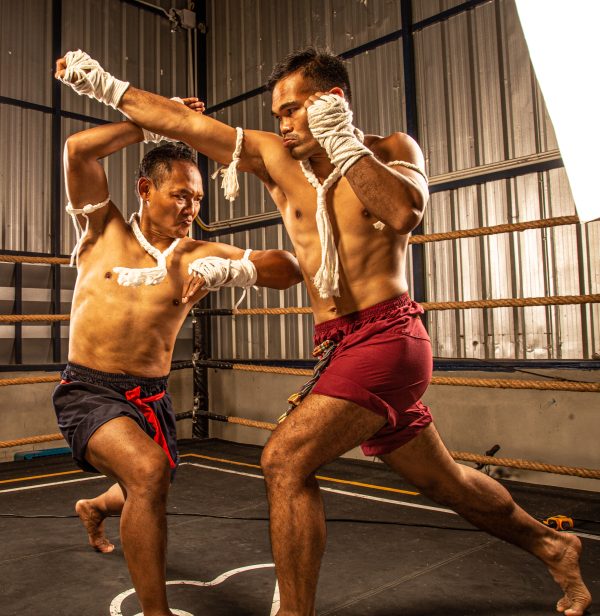
Picture a fight from before Thailand had a boxing commission. Two men wrap their hands in rope soaked in resin and ground glass, not cotton and Velcro. There’s no three-minute round, no five-round cap, no referee stepping in to warn about a low blow, because low blows are legal. A fighter can throw his opponent to the ground and follow him down. A head can meet an elbow, and so can a skull meet another skull on purpose. This is what a real Muay Boran contest looked like: brutal, improvised, closer to a street fight sanctioned by tradition than to anything shown on ESPN.
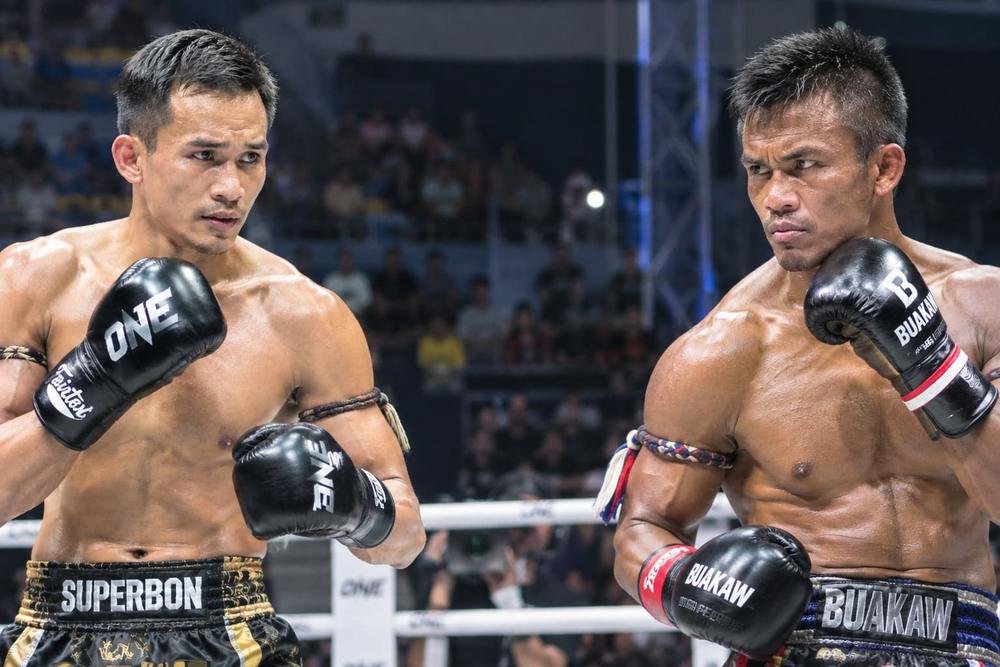
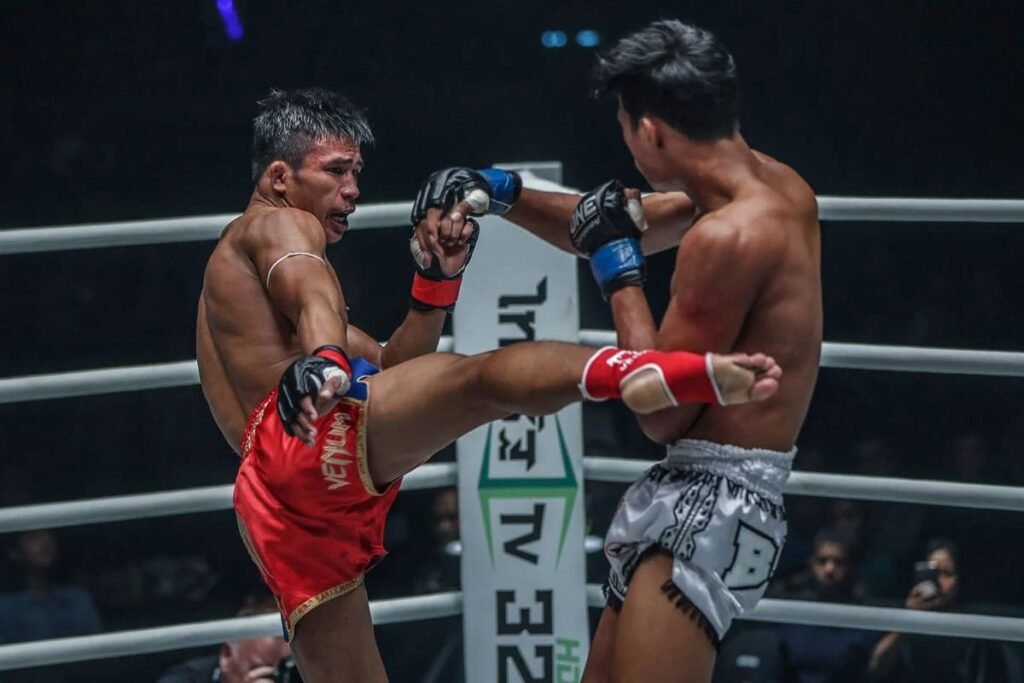
Now picture a Lumpinee Stadium card in 2026. Padded gloves, a ring with roped corners, a referee who breaks clinches after a few seconds, judges scoring on points, and rules that specifically ban the things that made the old fights so dangerous. That’s modern Muay Thai, and the gap between the two is the whole story worth telling.
What Muay Boran Actually Is
Muay Boran translates loosely to “ancient boxing.” It isn’t one style so much as an umbrella term for the combat traditions Thai soldiers and villagers practiced for centuries before anyone wrote down a rulebook. Historians trace its roots back hundreds of years, developed as battlefield and self-defense training in a region where wars between Thai, Burmese, and Khmer kingdoms were common. Weapons training came first. Hand-to-hand fighting was what happened when the sword broke or ran out of reach.
There was no unified governing body. Villages and regions developed their own preferences, passed down from teacher to student, often within a single family line. Fights happened at temple fairs and festivals, judged loosely by local elders rather than a standardized scoring system. Wins came from knockouts, submissions, or an opponent simply refusing to continue.
How the 1920s and ’30s Turned It Into a Sport
Everything changed in the 1920s and ’30s, when Thailand began building a version of the art meant for a stadium rather than a battlefield. The government of the time pushed the sport toward Western boxing conventions: a roped ring replaced the open dirt circle, gloves replaced rope-wrapped fists, and timed rounds replaced fights that could run indefinitely.
Ring construction alone changed the sport’s geometry. A circle allows circling and retreating, angles a four-cornered ring doesn’t. Fighters lost the option to simply run.
The government wasn’t preserving history for its own sake. It wanted a sport foreign visitors could watch without flinching, one that fit into an international boxing landscape Thailand was trying to join. Muay Thai as most people know it today, gloved, timed, refereed, judged, is a product of that standardization. Muay Boran is what came before it, and largely what got left behind.
What Got Banned Along the Way
The rulebook that emerged didn’t just add gloves. It subtracted an entire category of techniques that had been standard practice for generations.
Headbutts went first. A fighter closing distance and driving his skull into an opponent’s face or temple was a legitimate, expected tactic in the old style. Groin strikes, once fair game, got banned outright. Hip throws and sweeps that ended with a fighter slamming an opponent to the ground largely disappeared, replaced by the more contained clinch rules used today. Most tellingly, ground fighting vanished. In Muay Boran, a downed opponent wasn’t necessarily safe, since a standing fighter could follow up. Modern referees stop the action the instant someone touches the canvas.
None of this happened because the old techniques stopped working. They got removed because a sport meant to run for scored rounds, in front of paying spectators and eventually television cameras, couldn’t survive fighters ending each other’s night with a headbutt in round one.
The Regional Styles: Chaiya, Korat, and Lopburi
Before national standardization, different provinces built reputations around different approaches to the art. These distinctions are commonly cited in Thai martial arts history and oral tradition rather than documented with the precision of a modern rulebook, so treat them as broad regional character rather than a strict technical taxonomy.
| Style | Region | Commonly cited reputation |
| Muay Chaiya | Chaiya, Surat Thani province | Defensive, economical movement, with an emphasis on close-range elbow and knee work and a guarding posture built around conserving energy |
| Muay Korat | Korat (Nakhon Ratchasima) | Associated with powerful, direct strikes and a more aggressive, forward-pressing approach |
| Muay Lopburi | Lopburi province | Known for quick footwork and technical precision, often described as fast and tactical rather than purely powerful |
These regional flavors mostly faded once Bangkok’s stadiums and a national rule set became the sport’s center of gravity. A handful of schools still teach them explicitly as living lineages, but most modern gyms train a blended, standardized version that doesn’t trace itself to one province.
Ong-Bak and the Movie Version
For a global audience, Muay Boran has one entry point: Tony Jaa, backflipping off a car hood in Ong-Bak. When the film reached international screens in the early 2000s, it did something no textbook or documentary had managed. It made ancient Thai fighting look like a superpower.
Jaa trained in Muay Boran specifically for those sequences, not modern ring Muay Thai, and the choreography leans hard into the older art’s flashier elements: flying elbows, knee strikes that double as acrobatics, and a willingness to use every limb the “art of eight limbs” nickname promises. Ong-Bak and its sequels turned a niche historical curiosity into a searchable phrase for millions of viewers who had never heard “Muay Boran” before the credits rolled.
It’s worth separating the movie from the history, though. Real Muay Boran was never choreographed for spectacle. It was blunt, practical fighting meant to end confrontations quickly, not a stunt reel.
Can You Actually Learn Muay Boran Today?
Yes, but not as a live combat sport the way you’d learn Muay Thai at a gym. A handful of masters and cultural centers, mostly in Thailand, still teach Muay Boran forms as demonstration and heritage, closer to how a museum preserves a craft than how a boxing gym builds a fighter.
Part of the reason is practical. Sparring a system built around eye strikes, groin attacks, and ground stomps doesn’t work in a modern training hall without heavy modification, and once you modify it enough to spar safely, you’re arguably not training the original art anymore. What survives tends to show up in performance: pre-fight Wai Kru rituals, cultural demonstrations, and the movement vocabulary that choreographers behind films like Ong-Bak borrowed for the screen.
Some Muay Thai gyms fold Muay Boran elements into advanced curriculum, mostly for historical context and specific techniques, like certain elbow angles or clinch entries that never got written out of the modern rulebook entirely. A student who wants to compete will still spend most training time on the ring version. Muay Boran survives today mainly as cultural memory and performance art, kept alive by people who want the old techniques remembered even though they can no longer legally be used the way they once were.
Readers curious about the fuller timeline, from village fighting to modern stadium sport, can find it in the complete history of Muay Thai. The art’s connection to film runs deeper than one franchise too, covered in Muay Thai’s long relationship with Thai cinema.
FAQ
Is Muay Boran still legal to practice? Yes. Nothing stops a school or cultural center from teaching Muay Boran forms and techniques. What changed is competition: sanctioned matches follow modern Muay Thai rules, which is why headbutts, groin strikes, and ground attacks don’t appear in a stadium bout.
Did Tony Jaa really train in Muay Boran for Ong-Bak? He did, alongside gymnastics and stunt work that gave the fight scenes their acrobatic edge. The style informed the choreography, though the film pushes it well past what any traditional match looked like.
Is Muay Boran the same as Krabi Krabong? No, though the two are related. Krabi Krabong is Thailand’s traditional weapons-based martial art, while Muay Boran refers specifically to the unarmed fighting system. Many historical fighters trained in both.