
Six minutes into a sparring round, a fighter throws a check kick, catches her partner’s shin, and her own guard rotates a good two inches sideways. The pad that was covering her shin bone a second ago is now sitting somewhere near her calf muscle. She finishes the round anyway, favoring that leg, and spends the walk home wondering if the guard is broken or she just bought the wrong size.
It’s usually the second one.
Shin guards get blamed for a lot of things that are actually fit problems: guards that slide during a check, straps that dig in, padding that bunches at the ankle. None of that means the gear is bad. It means the guard doesn’t match the leg wearing it, and most gyms don’t have anyone standing at the door checking that before someone hands over cash for a pair.
This guide covers the two questions nobody answers properly online: how a shin guard is actually supposed to sit on the leg, and what to do once it starts smelling like it’s been buried.
When Do You Actually Need Shin Guards
Not on day one. A beginner’s first few weeks of Muay Thai are almost entirely pad work, bag work, and technique drills with a partner who isn’t kicking back. Nobody needs shin guards for that.
The line is sparring. The moment a coach announces sparring for the week, that’s the point to own a pair, not the point to start shopping for one. Waiting until the night before usually means showing up without them and borrowing a pair that’s the wrong size anyway.
Some gyms also require guards for clinch work or harder pad rounds before actual sparring starts. Ask the coach directly. It’s a five-second question and it saves a wasted purchase. The same buy-it-when-you-need-it approach applies to ankle support, which beginners often grab too early or skip until an ankle rolls.
There’s a separate group of fighters who train shin conditioning specifically to reduce reliance on padding over time. For anyone building shin toughness alongside sparring, the shin conditioning guide on this site covers that training side in more depth.
So How Should Shin Guards Actually Fit?
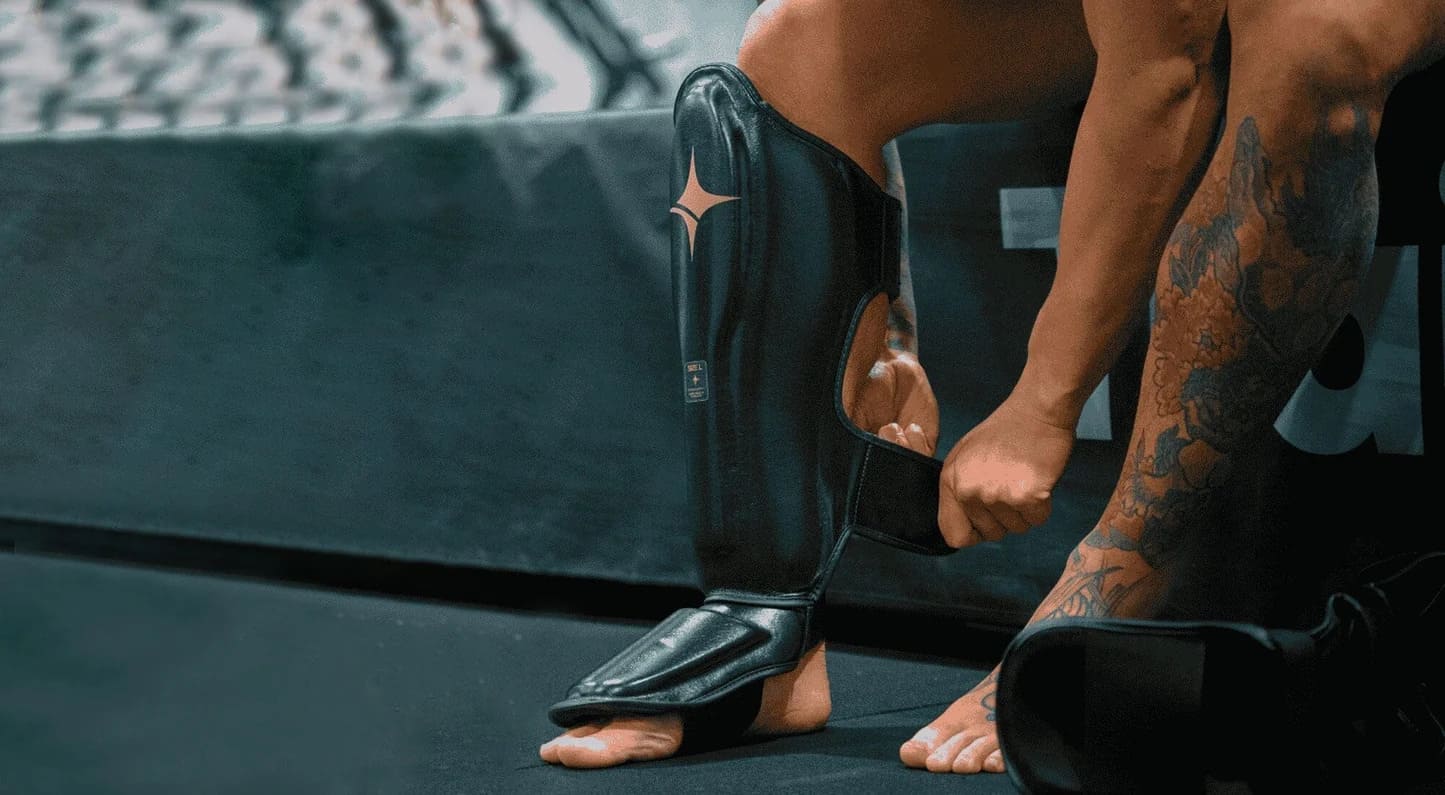
Coverage first. A proper guard runs from just below the knee down to the instep, protecting the shin bone and the top of the foot in one continuous piece. If there’s a visible gap between the bottom of the pad and the top of the foot, the size is wrong, or the guard is a low-quality design cutting corners on length.
Rotation is the real test, though. Coverage looks fine standing still. It falls apart mid-round.
Here’s the check most people skip: put the guards on, then throw a few check kicks and a few round kicks against a bag or a partner’s pads. Twist the leg the way it actually moves in sparring. If the guard rotates so the padding drifts off the shin bone, even by an inch, that’s a fail. Straps that are too loose cause this. So does a guard shaped for a leg wider or narrower than the one wearing it.
A second test: jump straight up and land. If the guard shifts noticeably on landing, the straps need tightening or the size is off. Fighters who skip this step and go straight into sparring are the ones who end up mid-round pulling a pad back into place with one hand while trying to defend with the other.
The straps themselves should sit snug enough that two fingers barely fit underneath, not loose enough to slide a full hand in. Too tight cuts circulation during a long round. Too loose invites exactly the rotation problem above.
Sizing by Brand: What Actually Varies
Sizing charts across brands aren’t standardized, and cut varies even within one brand’s own lineup from year to year. Treat the table below as a general pattern reported by gym-goers and reviewers, not a guarantee.
| Brand | Commonly Reported Sizing Tendency | Practical Note |
| Fairtex | Often described as running slightly small or narrow through the calf | Consider sizing up if calves are on the larger side |
| Twins Special | Generally reported as true to size, sometimes slightly long in the shin panel | Check length against the instep before buying |
| Yokkao | Frequently described as running small, especially in S/M | Many buyers size up one tier from their usual pick |
| Venum | Reported as roomier through the calf than Thai brands | Good option for wider calves needing more room |
Two people can wear the same brand and size and describe completely different fits, because calf shape varies more than shin length does. When ordering online is unavoidable, checking a brand’s own return policy matters more than trusting any chart.
Leather or Synthetic?
Leather guards last longer, mold to the leg after a few weeks of use, and generally take heavier impact better over years of training. They also cost more and need actual maintenance, which is the part people skip.
Synthetic guards, usually a form of PU or microfiber, cost less and need almost no care beyond wiping down after use. They don’t break in the way leather does, so the fit stays roughly the same from the first day to the day they get replaced. For a beginner unsure if Muay Thai is a long-term thing, synthetic is the lower-risk buy.
The gap between the two matters less than people think for someone training two or three times a week. It matters a lot for someone sparring five days a week for three years, where leather’s durability pays for the higher price tag.
How to Clean and Deodorize Shin Guards
Shin guards absorb a shocking amount of sweat for their size, and a closed gym bag turns that sweat into a smell that doesn’t come out easily.
Air them out after every session. Not folded in a bag, not stuffed in a locker. Out in open air, ideally somewhere with airflow, until they’re fully dry before the next use.
A diluted vinegar and water spray, or a dedicated gear deodorizer spray, handles the bacteria that cause the smell. Spray the inside lining, let it sit for a few minutes, then wipe with a dry cloth. Some fighters swear by a light dusting of baking soda left overnight and brushed out before the next session.
Machine washing is where people ruin good gear. Leather cracks and warps when it goes through a washer or gets left near a heater to dry fast. Synthetic guards handle a damp wipe-down fine but still shouldn’t go in a machine, since the foam padding inside can separate under that kind of agitation. Hand-wipe, air-dry, done.
When to Replace Them
Padding that’s gone flat in the impact zone is the clearest sign. If a light tap on the shin feels different from how it felt three months ago, thinner and harder, the foam has compressed permanently and stopped absorbing shock the way it should.
Cracked leather, a strap that won’t hold tension anymore, or a guard that visibly rotates even with the straps maxed out all mean it’s time to shop again. Most guards used two to three times a week last somewhere between one and two years before one of those signs shows up. Heavier use shortens that window.
FAQ
How should Muay Thai shin guards fit? They should cover from just below the knee to the instep without gaps, stay in place through check kicks and round kicks, and not rotate when tested with a jump-and-land or twisting motion. Straps should sit snug enough that two fingers, not a full hand, fit underneath.
How do you wash Muay Thai shin guards? Never machine wash them. Wipe leather and synthetic guards down with a damp cloth, use a diluted vinegar spray or gear deodorizer on the inside lining to kill odor-causing bacteria, and air-dry fully between sessions rather than storing them damp in a gym bag.
Do beginners actually need shin guards on day one? No. Shin guards become necessary once sparring or hard pad work starts, not during the first weeks of solo drilling and bag work. Ask a coach when sparring begins and buy a pair before that first session, not after.