
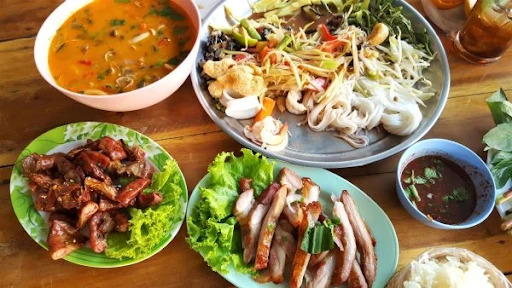
A bowl of white rice, a ladle of stewed pork over it, a bowl of clear soup on the side. No garnish. No protein shake. No neon-colored recovery drink waiting next to the plate. That is lunch inside a working muay thai camp on a normal training day, and it looks almost nothing like the fitness-magazine version of a “fighter’s diet” that gets shared online.
Thai fighters, especially the ones training in rural gyms outside Bangkok or in provinces like Chonburi and Surin, tend to eat food that is cheap, plain and repetitive. Rice is the base of nearly every meal. Chicken and pork show up far more often than beef, mostly because they’re cheaper and easier to cook in bulk for a camp full of hungry fighters. Fish gets worked into the soups. Vegetables are usually boiled or stir-fried fast, not steamed into some carefully plated side dish.
Fruit fills the gaps between meals. Papaya, banana, watermelon, pineapple, whatever’s cheap and in season at the local market that morning. A fighter might eat five or six small meals across a training day rather than three large ones, picking at fruit or a bit of sticky rice between sessions instead of sitting down for a formal snack.
Nobody is counting macros here. Ask a Thai trainer how many grams of protein a fighter needs and you’ll likely get a shrug, not a number. Food is fuel, not a spreadsheet entry. The camp cook doesn’t weigh portions on a kitchen scale. She cooks enough rice for however many fighters show up that day, and everyone eats until they’re full, then heads back to the ring.
A Real Day of Eating
A realistic day of eating in a Thai camp follows the training schedule, not the clock most Western gyms run by. Wake up early, train, eat, rest, train again, eat again, sleep. The table below sketches out what a fighter in a modest camp might eat and spend in a single day, in Thai baht. Prices shift by region and by camp, so treat these as rough, typical ranges rather than anything official.
I’ve eaten this kind of camp food more than once during training trips to Thailand, and what stuck with me wasn’t how disciplined it looked. It was how ordinary it felt. Nobody was weighing chicken breasts on a kitchen scale. Nobody cared about intermittent fasting windows. It was just plain food, served often, eaten fast between rounds on the bag.
| Time | Meal | Approx. Cost (THB) |
| 6:00 AM | Black or sweet Thai coffee before the morning run | 20-30 |
| 7:30 AM | Rice soup (khao tom) with a little chicken or pork, after training | 40-60 |
| 10:30 AM | Fruit (papaya or banana) plus water | 20-40 |
| 12:30 PM | Rice, stir-fried vegetables, and grilled or stewed meat | 50-80 |
| 3:00 PM | Sticky rice or a small snack before evening training | 20-30 |
| 6:30 PM | Soup (tom yum or a milder broth) with rice and protein | 60-90 |
| 8:30 PM | Fruit or a light final snack | 20-30 |
That’s the whole day, and it rarely tops 300 to 400 baht, roughly 8 to 11 US dollars at recent exchange rates, unless someone’s buying extra bottled drinks or snacks between sessions.
Eating Around Two-a-Day Training
Camps that run two sessions a day build meals around training, not around a calendar of meal-prep Sundays. The gap between morning and afternoon sessions usually runs four to six hours, long enough to eat a full meal and actually digest it before the next round of pads starts.
Coffee is common before the early run, mostly for the caffeine rather than any performance-science reasoning behind it. A lot of Thai fighters grew up drinking sweet, strong coffee before dawn training simply because that’s what their trainers did, and their trainers before them. It’s tradition dressed up as habit, not a supplement stack.
After morning training, the first real meal tends to stay light on the stomach: rice soup, maybe a little protein, nothing that sits heavy before the midday rest. Lunch, the biggest meal of the day for most fighters, comes a few hours later once the body has settled down. A smaller snack holds things over until evening training, then dinner arrives, usually the meal with the most protein packed into it since there’s no more training left that day to interrupt digestion.
Hydration matters more than any of it. Bangkok and the provinces run hot and humid nearly year-round, and a fighter sweating through two sessions a day loses far more fluid than most Western gym-goers ever will in a single one-hour workout.
What Western Amateurs Should Copy (and Skip)
Amateurs training muay thai outside Thailand can take real lessons from this approach, and just as many warnings.
Worth copying: the simplicity. Western fitness culture loves complexity, supplements, ratios, tracking apps, when plain food eaten consistently would get most amateurs further than another app ever will. Copy the hydration habits too, and copy the small, frequent meals around training, which matters even more once the sport’s full-body fitness demands start showing up in your appetite. Coffee before an early session is fine as well. Nothing wrong with a cup before a run.
Worth skipping: the total absence of tracking. Thai fighters often grow up inside this food culture from childhood, training six days a week for years, so their bodies adapt in ways a thirty-year-old amateur with a desk job simply hasn’t built up yet. An amateur skipping protein because “Thai fighters don’t count macros” is misreading the situation. Those fighters train twice a day, every day, for a living. Someone training three times a week after work needs more protein per session, not less, since the training volume isn’t there to compensate for it.
Also skip the idea that eating less equals discipline. Undereating around hard training sessions is a fast way to get hurt, not a shortcut to looking like a fighter.
Weight Cutting: Thai vs Western Approaches
Weight cutting in Thailand tends to be built into the culture of the sport rather than treated like a separate, dramatic event. Fighters often walk around close to their fighting weight most of the year, mostly because eating heavily just isn’t practical alongside two sessions of training a day. The final cut, in the days before a fight, usually means eating a little less, trimming fruit intake slightly, and sweating out water weight through extra training rather than through extreme dehydration tactics.
Western amateur cutting can get riskier, partly because amateurs often walk around 10 to 15 pounds over their fight weight and then try to fix that in a single week through sauna sessions, water deprivation, and drastic carb cuts all at once. That combination, stacked right before a fight, is where people end up dizzy at the medical check, or worse.
The safer route runs closer to how it’s actually done in Thailand. Stay near fight weight year-round. Skip the wild swings. For anyone using muay thai mainly to manage weight loss rather than to compete, the sheer volume of training does more of that work than starving before a single session ever could. That’s a different goal than making a number on a scale by Friday afternoon, but the method underneath doesn’t change much: gradual adjustments beat a desperate final week.
Supplements: What’s Actually Used
Supplement use inside Thai camps is minimal compared to what gets marketed to fighters and gym members back home. Electrolyte salts or rehydration drinks show up now and then, usually bought from a local pharmacy rather than shipped in from an overseas brand. Multivitamins appear occasionally too, the cheap kind sold at any Thai convenience store, not a specialized sports formula.
Protein powder is rare in most camps, though it has grown more common in gyms that cater heavily to foreign fighters and long-term visitors who bring their own supply from home. Creatine, pre-workout powders, branched-chain amino acids, all the products that fill Western supplement shelves, are largely absent from the daily routine of a fighter training in Thailand full time.
Part of that comes down to cost. Part of it comes down to a simpler fact: rice, soup and fruit, eaten enough times a day around hard training, have carried fighters through fight camps for generations without a single scoop of powder. Ask a fighter what’s in his gym bag before an evening session, and most days it’s just a water bottle and a bag of sliced pineapple.