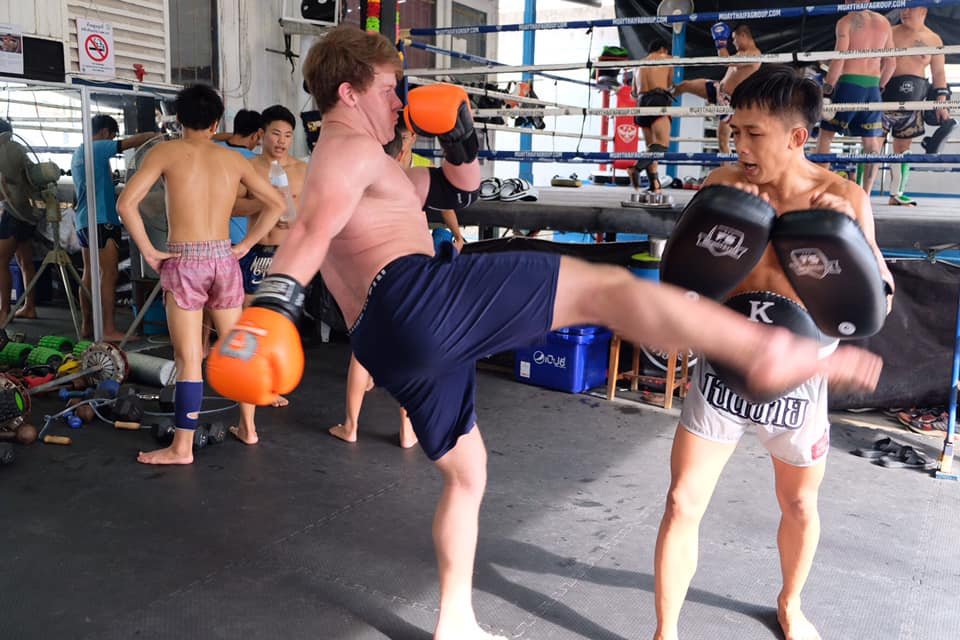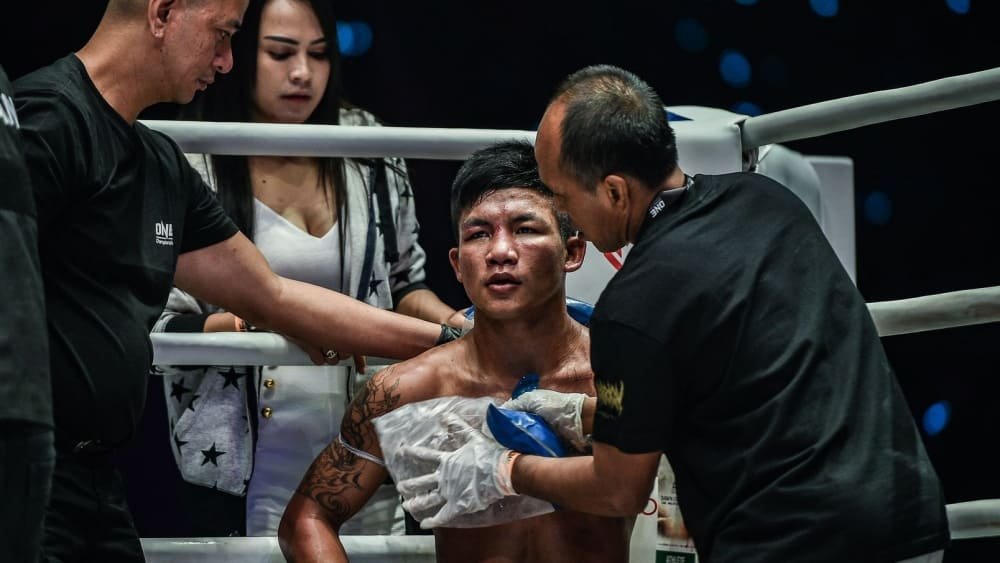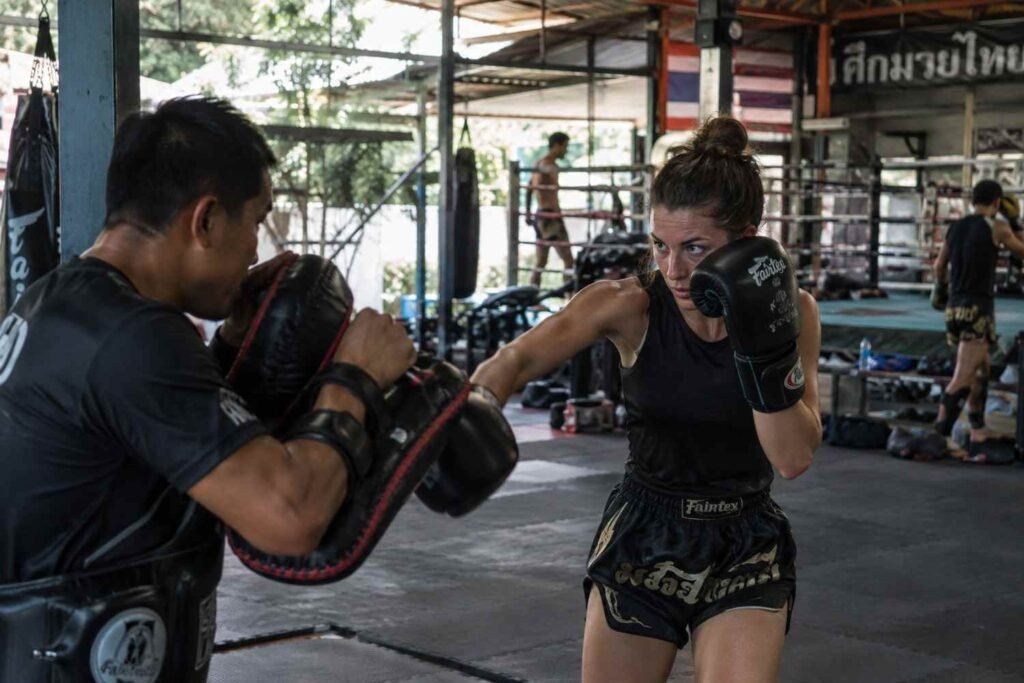

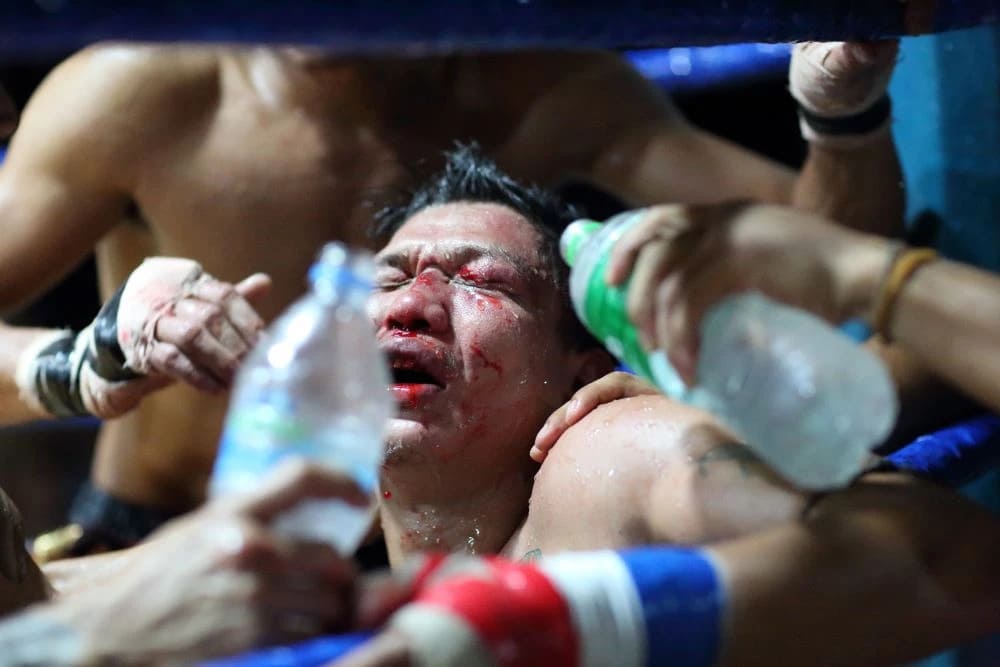
Anyone who trains Muay Thai long enough will deal with some version of these seven injuries. Not a rare bad-luck scenario, not a sign of poor technique. Shin bruises, tweaked ankles, sore shoulders and split eyebrows are simply part of what happens when the body gets used as both a weapon and a target several times a week. The good news is that most of these injuries follow predictable patterns, which means most of them can be prevented, or at least caught early enough that they don’t turn into something worse.
This is not medical advice, and nothing here replaces an actual diagnosis from a doctor or physical therapist. What follows is a practical rundown of why these injuries happen, what to do in the first hour or two after they occur, how to lower the odds of getting them again, and the specific warning signs that mean it’s time to stop guessing and get checked out.
The Seven Injuries Every Fighter Eventually Meets
Shin Bruising and Stress Reactions
The shinbone was never designed to absorb repeated impact from another person’s shin, a heavy bag, or Thai pads held at the wrong angle. Early in training, this shows up as deep, painful bruising along the tibia. Push through that pain for months without building tolerance the right way, and it can progress toward a stress reaction in the bone itself, which is a different and more serious problem than a bruise.
Ice for the first 24 to 48 hours helps with acute swelling, though the old advice to ice aggressively and often has softened in recent years. Many clinicians now lean toward the newer PEACE and LOVE framework (protection, elevation, avoiding anti-inflammatories early, compression, education, followed later by load, optimism, vascularisation and exercise) instead of the older RICE model. Neither is gospel. Both agree on the basics: protect the area, don’t panic, and reintroduce load gradually rather than all at once.
Prevention comes down to gradual conditioning rather than brute-force toughening. Structured shin conditioning over weeks, not days, builds real density instead of just numbing nerve endings. Red flag: sharp, localized pain that doesn’t fade after a week of light training, or pain that gets worse with pressure rather than better, needs an X-ray. That’s not a bruise anymore.
Rolled and Sprained Ankles
Ankles roll when a kick gets checked awkwardly, when footwork lands on the edge of the foot during a pivot, or when someone steps on an opponent’s foot during clinch work. The ligaments on the outside of the ankle take most of the damage in a typical inversion sprain.
First aid follows the same protection-then-gradual-loading logic as the shin. Compression wrap, elevation when possible, and avoid weight-bearing until the initial swelling settles. Prevention is partly about ankle mobility and strength work, and partly about gear. A lot of fighters underestimate how much ankle support during recovery or high-volume sparring weeks can prevent a minor tweak from becoming a repeat injury. Once an ankle has sprained badly, it’s genuinely more likely to sprain again, so proprioception drills (standing on one leg, wobble boards, slow directional changes) matter more than most people think.
Red flags: inability to bear any weight at all, visible deformity, or swelling and bruising that spreads down into the foot rather than staying around the ankle joint itself. Any of those means an X-ray to rule out a fracture, not just a sprain.
The Knee Buckles: MCL Strain from Checked Kicks
Check a kick with poor structure, and the outside force can twist the knee sideways rather than absorbing it through the shin and hip. That sideways stress lands directly on the medial collateral ligament, the band running down the inner knee. It’s a mechanism specific enough to Muay Thai that most general sports-injury guides skip right past it.
Swelling on the inner knee, a feeling of looseness or instability when walking, and pain when the leg is pushed inward are the telltale signs. Standard soft-tissue care applies here too: reduce load, support the joint, and resist the urge to test it out too soon. Prevention means checking kicks with the correct hip rotation and shin angle rather than a flat, straight-legged block, and building general leg strength so the joint has support beyond the ligament alone. See a doctor if there’s a popping sensation at the moment of injury, if the knee gives way when standing, or if swelling comes on fast and hard within the first hour.
Shoulder and Rotator Cuff Strain
Thousands of repetitions of the same punching motion, plus heavy pad holding sessions where the holder absorbs shot after shot, wear down the small stabilizing muscles around the shoulder joint long before anything dramatic happens. Rotator cuff strain tends to creep in gradually. A dull ache during overhead movement, then a sharper twinge when throwing a hook, then difficulty sleeping on that side.
Rest from the aggravating motion, gentle range-of-motion work once the acute pain fades, and anti-inflammatory approaches as advised by a physician if needed. Strengthening the smaller rotator cuff muscles, not just the big pressing muscles, is the real long-term fix, alongside proper pad-holding technique that doesn’t lock the arm rigid on impact. A shoulder that can’t lift above the head without sharp pain, or one that feels weak rather than just sore, warrants a proper evaluation rather than more ice and hoping.
Hands and Wrists Take the Impact
Bare knuckles and heavy bags are a bad combination without the right preparation. Wrist hyperextension on a mistimed punch, or a jammed finger from catching a kick wrong, account for a huge share of hand complaints in any Muay Thai gym. Boxer’s fractures, breaks along the smaller knuckle bones, happen when the fist connects at the wrong angle with too much force behind it.
Protection is straightforward on paper and skipped constantly in practice: proper hand wraps every session, gloves that fit and aren’t dead from years of use, and punching technique that lands with the first two knuckles rather than the whole fist at an angle. Ice and rest handle the minor stuff. Visible deformity, inability to make a fist, or pain that’s sharp and localized to one specific point on the hand rather than general soreness means an X-ray, because a fractured knuckle that heals wrong stays crooked for good.
Rib Injuries from Body Kicks and Clinch Knees
A hard body kick or a knee driven into the ribs during clinch work can bruise the rib itself or strain the intercostal muscles running between the ribs. Less commonly, and usually with real force behind the strike, an actual rib fracture. The pain is distinctive: sharp with breathing, worse with twisting, and often tender to a very specific touch point.
There isn’t much to do for rib injuries beyond rest, careful breathing, and avoiding anything that compresses the torso, including tight clinch work or heavy bag rounds. Padding up appropriately during sparring and building core and oblique strength to absorb impact both reduce risk, though no amount of conditioning makes ribs immune to a well-placed shot. Difficulty taking a full breath, pain that makes breathing shallow and rapid, or any sharp pain when pressing directly on one rib are reasons to get imaging done. Rib injuries are also one of the few on this list where waiting it out at home carries real risk if something more serious is missed.
Cuts and Split Skin
Elbows, headbutts in the clinch, and the occasional accidental clash of heads open up skin fast, usually around the eyebrow, the bridge of the nose, or inside the mouth. It’s less about bad luck than about thin skin over bone with very little cushioning underneath.
Direct pressure stops the bleeding in most cases within a few minutes. Clean the area once bleeding slows, and keep an eye on it over the following days. A vaseline-based product between rounds during sparring reduces friction and lowers cut risk somewhat, and better clinch defense reduces headbutt exposure, though neither eliminates it. A short list is worth keeping in mind for anything past a routine cut:
- bleeding that won’t slow after ten minutes of firm, direct pressure
- a wound that gapes open rather than staying closed
- any cut near the eye itself rather than the brow
- signs of infection days later: redness spreading outward, warmth, or pus
Any of those means stitches or a same-day medical visit, not a butterfly bandage and hoping for the best.
Recovery Basics: Sleep and the Ice Debate
Ice gets treated like a magic fix in a lot of gym folklore, and the reality is more modest. It helps manage pain and swelling in the first day or two after an acute injury, but it doesn’t speed up the underlying healing process, and some research suggests aggressive icing may even blunt part of the body’s natural inflammatory repair response if overdone. That’s part of why the PEACE and LOVE approach has gained traction as an alternative framing to the older RICE model, not because RICE was wrong, but because “rest completely and ice constantly” turned out to be an oversimplification of a more nuanced process.
Sleep does more heavy lifting for recovery than most training programs give it credit for. Tissue repair, hormone regulation and inflammation control all lean heavily on consistent, adequate sleep, and a fighter running on five hours a night while nursing a shin bruise is working against their own recovery before they even step on the mats. Nutrition and hydration matter too, but sleep is the one variable most commonly ignored and most directly under a fighter’s control.
Training Around an Injury
Total rest isn’t always the right call, and it isn’t always the wrong one either. It depends entirely on what’s injured and how badly. A rolled ankle usually still allows for upper-body bag work and technical shadowboxing while the joint settles. A rib injury might rule out almost everything that involves twisting or impact for a couple of weeks. The skill worth developing isn’t toughing out every injury or panicking over every one, it’s learning to tell the difference between soreness that fades with movement and pain that gets worse with it.
Talk to the coach honestly about what hurts rather than hiding it to avoid looking weak. Most experienced trainers can adjust a session on the spot, swapping sparring for pad work, or pad work for conditioning, without derailing weeks of progress. The fighters who stay in the gym longest aren’t the ones who never get hurt. They’re the ones who know when to push through discomfort and when to back off, and who treat that judgment as a skill worth building, the same way they’d build a jab or a clinch.