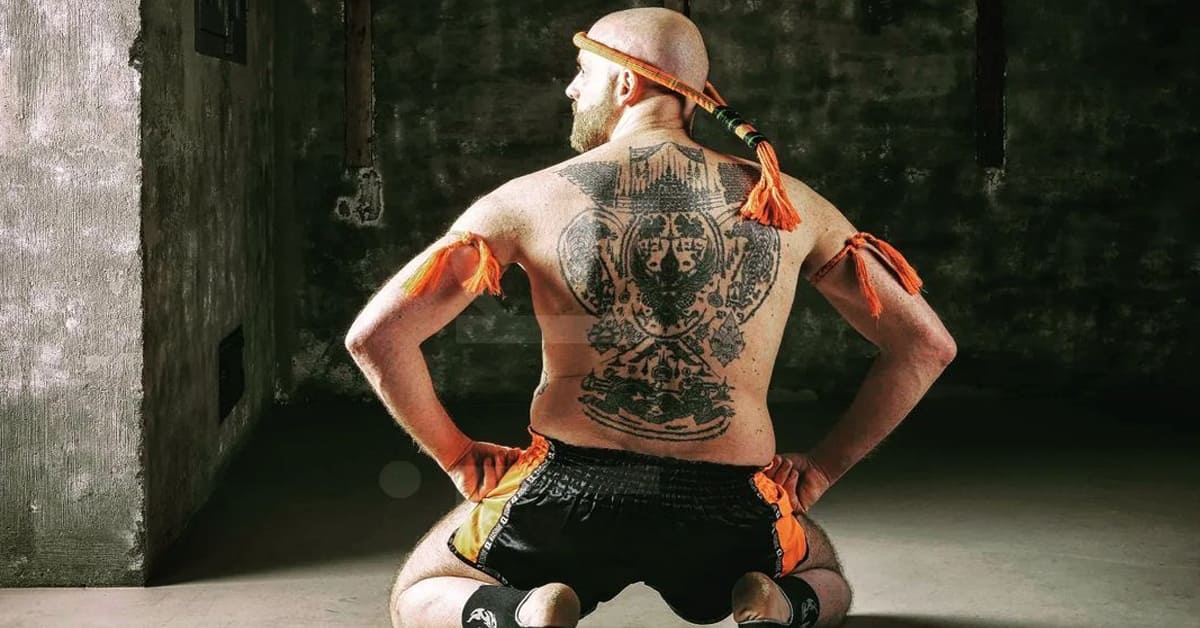
A fighter steps toward the ring with a woven headband circling his skull and two cloth armbands knotted just above his biceps. He climbs through the ropes, bows to each corner, and moves through a slow, deliberate dance that looks closer to prayer than warm-up. Then, before the first punch lands, a cornerman lifts the headband away and carries it off with both hands. The armbands stay. Neither item is decoration. Both are blessed objects carrying the weight of family, faith, and generations of ritual, and once you know what they represent, the whole pre-fight ceremony reads differently.
The Two Sacred Items
The headband is called the mongkhon. The armbands are pra jiad. Western commentary sometimes lumps them together as “Muay Thai gear,” the same category as gloves or shin pads. That framing misses the point entirely. Gear protects the body. These two items protect something else, and Thai fighters, trainers, and camps treat them with a seriousness that has nothing to do with performance.
The Mongkhon: History and Rules
The mongkhon traces back to Thailand’s warrior traditions, where soldiers wore woven headpieces believed to hold protective power before battle. Over centuries the practice migrated into Muay Thai, and the headband took on a more spiritual role than a practical one. A monk or a fighter’s own kru, the traditional term for a trainer, typically blesses the mongkhon before it’s ever worn in competition. Many camps keep one central mongkhon that gets passed among fighters from the same gym rather than each person owning a personal item, which itself says something about how communal the tradition is.
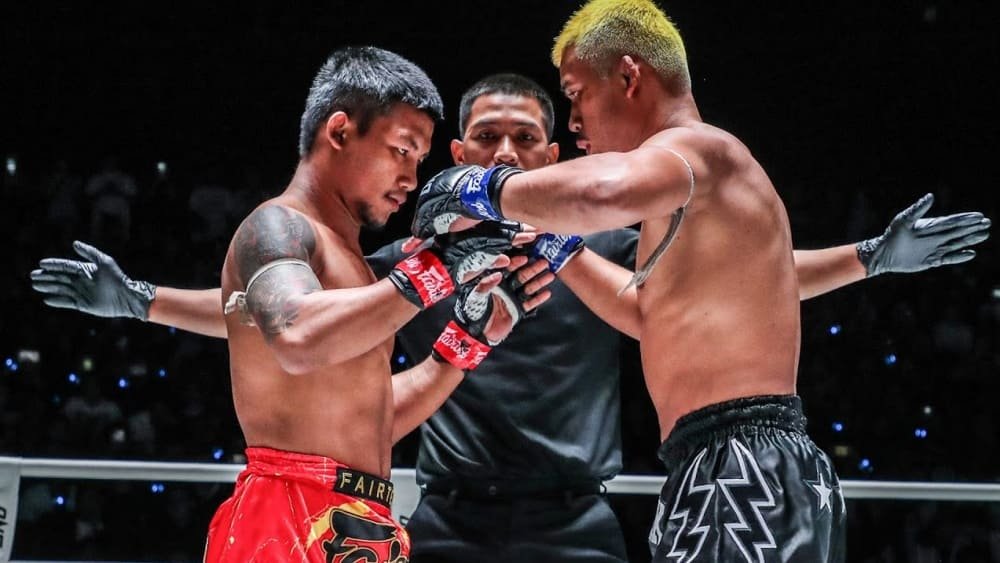
The mongkhon comes off before the actual fight starts. It is worn during the wai kru ram muay, the ceremonial dance that opens every professional bout, and removed right after, usually by the kru or a designated cornerman. Nobody just yanks it off and drops it somewhere convenient. That’s where the taboos come in, and they matter more than most outsiders realize.
The Pra Jiad: A Mother’s Cloth
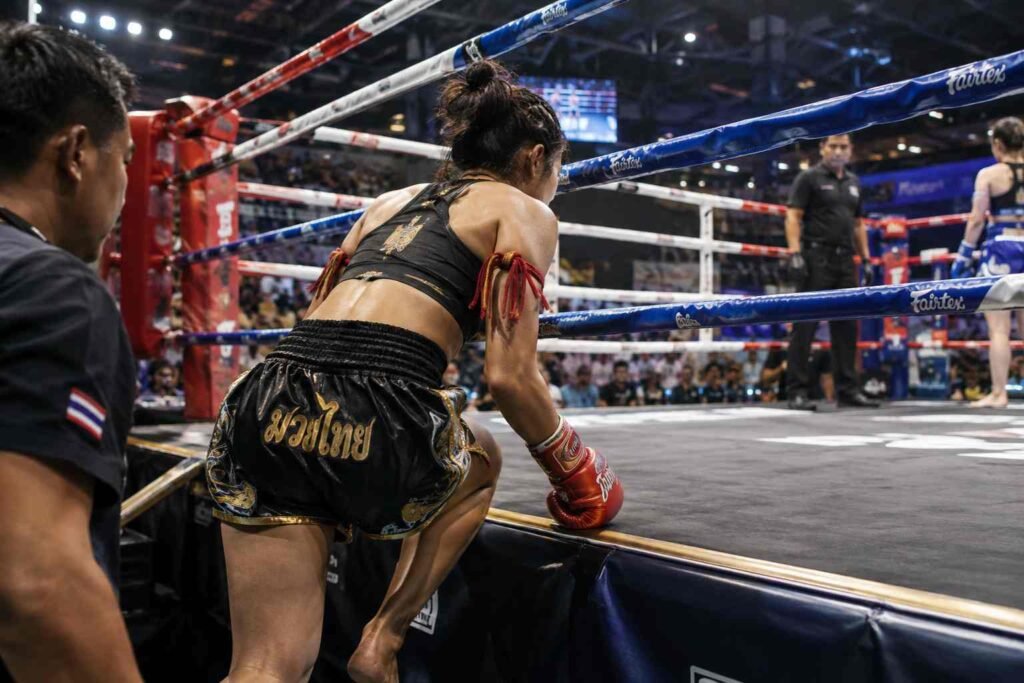
The pra jiad works differently. Where the mongkhon is a shared, almost institutional object tied to the gym, the pra jiad is personal. Tradition holds that it should be made from cloth connected to someone close to the fighter, commonly a mother, and worn as a protective charm rather than a uniform requirement. Unlike the headband, the armband typically stays on through the entire fight. It rides on the bicep, sometimes on both arms, sometimes just one, and it’s meant to carry a piece of home into the ring with the fighter.
Ask five different trainers about the exact origin of a specific fighter’s pra jiad and you’ll likely get five different stories. That’s fine. This isn’t a rulebook tradition with a single official version. It’s a living practice, and the details shift from family to family, gym to gym.
Pre-Fight Rituals Involving Them
The tying of the mongkhon usually falls to the kru, often performed with a short chant or blessing just before the fighter enters the ring area. The wai kru ram muay follows, a slow circling of the ring meant to pay respect to the trainer, the sport, and sometimes the fighter’s own ancestors. Both items are worn through this. Then the headband comes off, the corner takes over, and the actual fight begins with only the pra jiad remaining.
Some fighters touch the mongkhon to their forehead before handing it over. Some camps have the fighter’s trainer whisper something before removing it. None of this is standardized across Thailand, and claiming otherwise would be dishonest. What stays constant is the underlying idea: these moments carry weight, and rushing through them isn’t something serious fighters do.
Taboos: Never Touch the Ground
Here’s the rule almost every source agrees on. The mongkhon should never touch the ground. It’s handled with care when removed, passed hand to hand rather than tossed aside, because the belief is that its blessing, and the respect owed to it, gets undermined the moment it hits the floor. A dropped mongkhon isn’t just clumsy. In the traditional view, it’s a small spiritual failure, and camps that take the ritual seriously treat it that way.
This taboo extends, loosely, to how the whole pre-fight ceremony is handled. Rushing it, treating it as a formality before the “real” action starts, or letting sacred items get casual handling all cut against the spirit of the tradition. Fighters who grew up around Muay Thai gyms tend to absorb these habits without ever being told the full history behind them.
Armbands as Ranking in the West
Muay Thai itself has no belt system. Fighters aren’t ranked by colored cloth the way judo or karate practitioners are. Bouts are scored fight by fight, closer in spirit to how the sport’s own 10-point must scoring system works, evaluating performance in the moment rather than accumulating rank over years.
Western gyms, though, love a progression system, and some have quietly borrowed the visual language of pra jiad to build one. Colored armbands, or sometimes colored wraps, get handed out informally as students hit skill milestones, echoing the belt culture more common in Japanese and Korean martial arts. It’s a Western invention layered onto a Thai symbol, not something that exists in Thailand’s own competitive structure. Worth knowing if a gym markets its “armband ranks” as ancient tradition. They aren’t. They’re a modern adaptation, and there’s nothing wrong with that as long as it’s presented honestly.
Can Foreigners Wear Them?
This question comes up constantly among foreign practitioners training in Thailand, and the honest answer is: it depends on context. A pra jiad given by a trainer after months of genuine training, as a gesture of respect, is generally welcomed and worn with pride. Buying one off a souvenir rack and wearing it into a gym you’ve never trained at, purely for the look, reads very differently to Thai instructors and fighters.
The safest approach is simple. Ask your kru. If you train seriously and a trainer offers you a pra jiad or invites you to wear a mongkhon during a ceremonial dance, that’s an honor worth accepting with the same seriousness the art of eight limbs has always demanded of its practitioners. Wearing sacred items you weren’t given, in a context that isn’t yours, tends to land as costume rather than respect. Most Thai trainers will tell you exactly where that line sits if you simply ask.
FAQ
Do female fighters wear the mongkhon and pra jiad too? Yes, though some older stadiums historically restricted women from certain ring rituals or from entering the ring the same way as men. That’s changed considerably as women’s Muay Thai has grown, and pra jiad in particular are worn by female fighters at all levels today.
Why does the mongkhon come off but the pra jiad stays on? The mongkhon is tied to the ceremonial dance that precedes the fight, not the fight itself, so it’s removed once that ritual ends. The pra jiad is treated as a personal protective charm meant to stay with the fighter through the actual bout.
Can you buy an authentic mongkhon or pra jiad? Genuine ones are usually made or blessed within a gym or by someone connected to the fighter, not mass-produced for retail. Souvenir versions exist and are fine as keepsakes, but they carry a different meaning than one earned through training and given by a trainer.
One Comment