
No other major striking art trains fighters to fight with a straight arm stuck out toward an opponent’s face. Boxers keep both hands high and tight. Kickboxers cover up tighter still. Muay Thai fighters, on the other hand, spend hours drilling a guard that looks almost passive from the outside, an arm extended, a hip cocked back, weight settled low. That single tool, the long guard, has no real equivalent in Western boxing, and it changes how every exchange in the ring gets fought before a single strike lands.
Why the Muay Thai Guard Looks Different
A boxing guard exists to protect the head and body from punches thrown in straight lines and hooks thrown at head height or below the ribs. Muay Thai adds elbows, knees, and kicks aimed at the skull. That changes the math completely. A guard built only for punches sits lower and tighter, hands near the cheekbones, elbows tucked to the ribs. A guard that also has to survive a hard right kick to the temple or a spinning elbow needs more structure higher up and more forearm surface available on short notice.
This is why the classic Thai guard reads as taller and more static than a boxer’s bounce-and-weave setup. Fighters aren’t slipping and rolling nearly as much in Muay Thai, because rolling under a kick doesn’t work the way rolling under a hook does. The guard has to hold its shape, absorb impact through bone and muscle, and reset fast. Static doesn’t mean passive. It means built for a different threat profile.
The High Guard
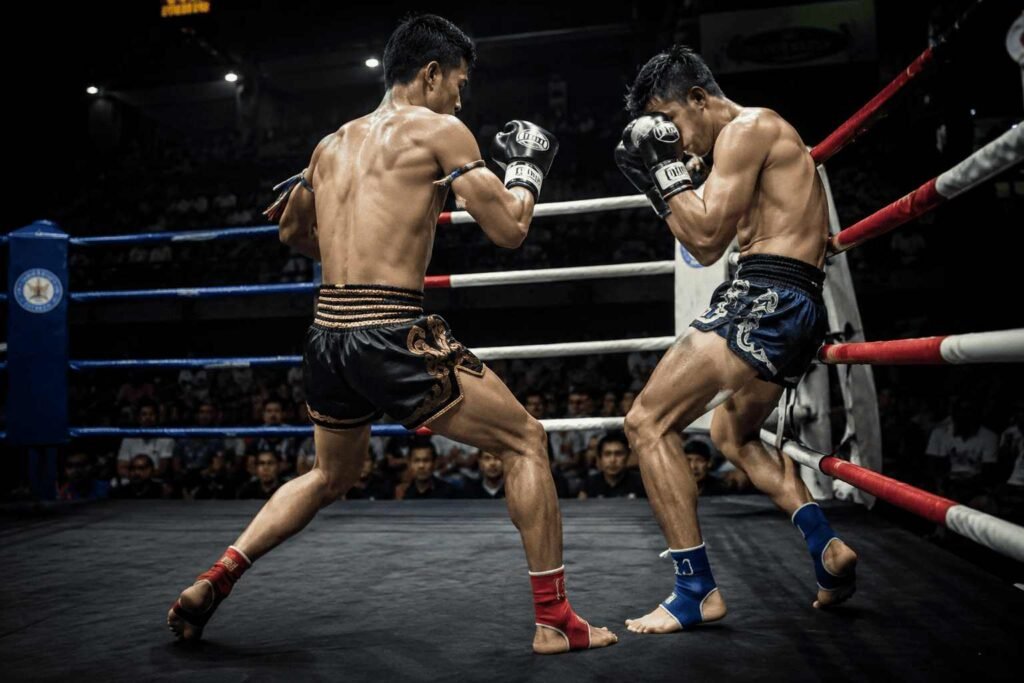
The high guard is the resting position most people picture when they think “Muay Thai stance.” Both forearms come up to shield the sides of the head, elbows point down and in to cover the ribs and floating ribs, and the hands stay loose near the temples rather than clenched white-knuckle tight. Chin tucks slightly. Shoulders roll forward just enough to close the gap between elbow and rib.
The job of the high guard is absorption, not deflection. A hard low kick into a checked shin still hurts. A hook that lands on a covering forearm still transfers force. The high guard accepts that some punishment is coming and organizes the body to take it on bone rather than on the jaw, liver, or temple. Fighters who fight out of a good high guard tend to look calm under fire, because the guard is doing its job even when they’re not actively parrying anything.
One common mistake: dropping the guard to throw. A jab or a cross that drags the opposite hand down leaves that entire side open to a counter kick or a check hook. The rule most coaches drill is simple. Whatever hand isn’t throwing stays up, full stop.
The Long Guard: Muay Thai’s Secret Weapon
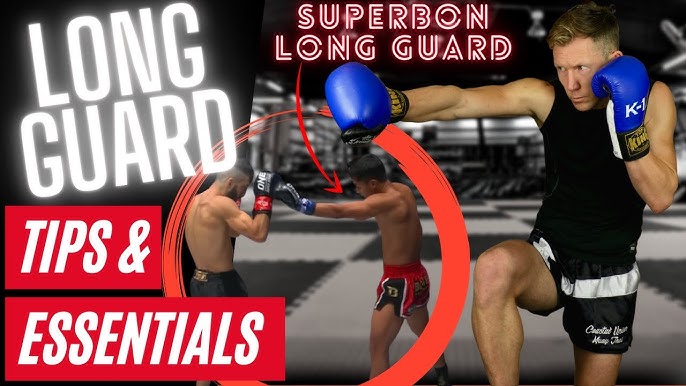
The long guard is the arm extended straight out toward the opponent’s forehead, palm often turned down or slightly outward, weight sitting back on the rear leg. It looks defensive because it is, but it does three jobs boxing simply doesn’t need a tool for.
First, range control. A straight arm measures distance automatically. If the opponent has to reach past it to hit you, they’ve told you exactly when they’re within striking range, and you’ve already got a post between you and them. Second, it blinds. Stick that forearm across an opponent’s line of sight and their depth perception on the incoming kick or knee gets worse. Third, and this is the part that makes the long guard genuinely dangerous rather than just annoying, it sets up the elbow. From a long guard, the same arm that’s posting on the forehead can fold in tight and short into a horizontal or diagonal elbow with almost no windup, because the arm is already up and already close to the target.
Fighters who use the long guard well don’t hold it constantly. It comes out in specific windows, when an opponent closes distance aggressively, when a fighter wants to reset the pace of an exchange, or right before initiating a clinch entry. Held too long, it becomes predictable and gets swatted or grabbed.
Blocking Kicks With Arms and Shins
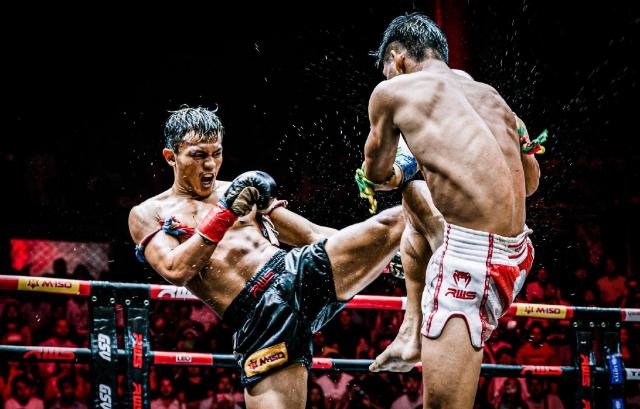
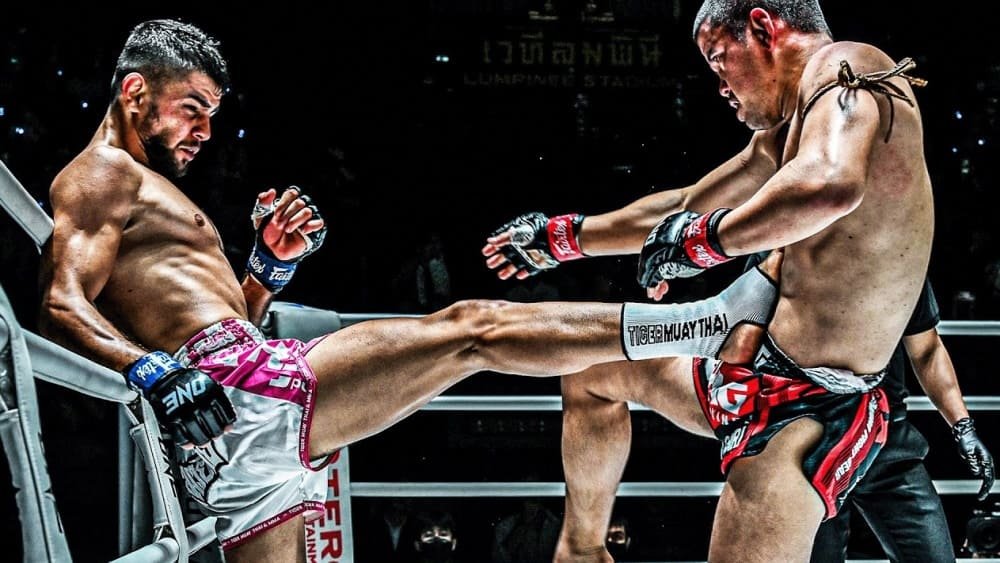
Muay Thai defense against kicks splits along a clean line: legs check leg kicks, arms cover body and head kicks that get through, and shins do double duty as both weapon and shield. A checked kick means raising the shin to meet an incoming low kick with bone against bone, and it hurts the kicker more than the person checking it once conditioning catches up.
Body kicks get covered differently. The near-side elbow drops and rotates to meet the kick with the point of the elbow or the forearm, turning slightly into the kick rather than standing square to absorb it flush. Head kicks are the hardest to block cleanly, and most experienced fighters would rather catch one on a raised forearm than try to duck, since ducking into a kick’s path can be worse than eating it on the guard.
Guard vs Parry vs Intercept
These three defensive philosophies get lumped together by beginners, but they’re not interchangeable. Blocking absorbs. A checked shin, a covered elbow, a raised forearm, none of these redirect the strike, they just take it on a part of the body built to handle it. Blocking costs conditioning over a fight but costs almost nothing in terms of timing or positioning.
Parrying redirects. A parry uses a small hand movement to deflect a jab off its line or catch a teep and push it past instead of taking it head-on. Parries are faster and cheaper on the body, but they require better timing and leave a fighter more exposed if the read is wrong.
The teep-stop is its own category entirely. Rather than block or redirect an incoming attack, the teep interrupts the opponent’s rhythm before their strike ever develops, pushing them back out of range at the first sign of forward movement. It’s less a defense against a specific strike and more a defense against the setup for one. Good fighters mix all three rather than leaning on a single default.
Common Guard Leaks
A few habits show up again and again in fighters who otherwise look sharp:
The lead hand drops after throwing a jab, a habit almost every beginner has to unlearn. The rear hand drifts away from the cheek during combinations, especially after throwing a cross. Fighters square up their hips when tired, which opens the centerline to straight punches and knees. And many fighters hold the long guard flat-footed instead of loaded on the back leg, which kills its usefulness as a range tool since there’s no ability to retreat if it fails.
Drills
Shadowboxing with a mandatory guard reset after every combination, hands back to position before the next punch starts, builds the habit without a partner. Partner drills where one fighter throws only kicks and the other only blocks and checks, no counters allowed, isolate the guard from offense entirely. Long guard entries paired with a single elbow, thrown from a partner slowly feeding pressure, wire the range-control-to-strike connection into muscle memory. Pad work with a coach calling out “kick” or “punch” at random forces the guard to switch shape on demand rather than settling into one comfortable shape all round. None of this looks exciting in a gym. It’s also the difference between fighters who get hit clean and fighters who get hit on the guard.