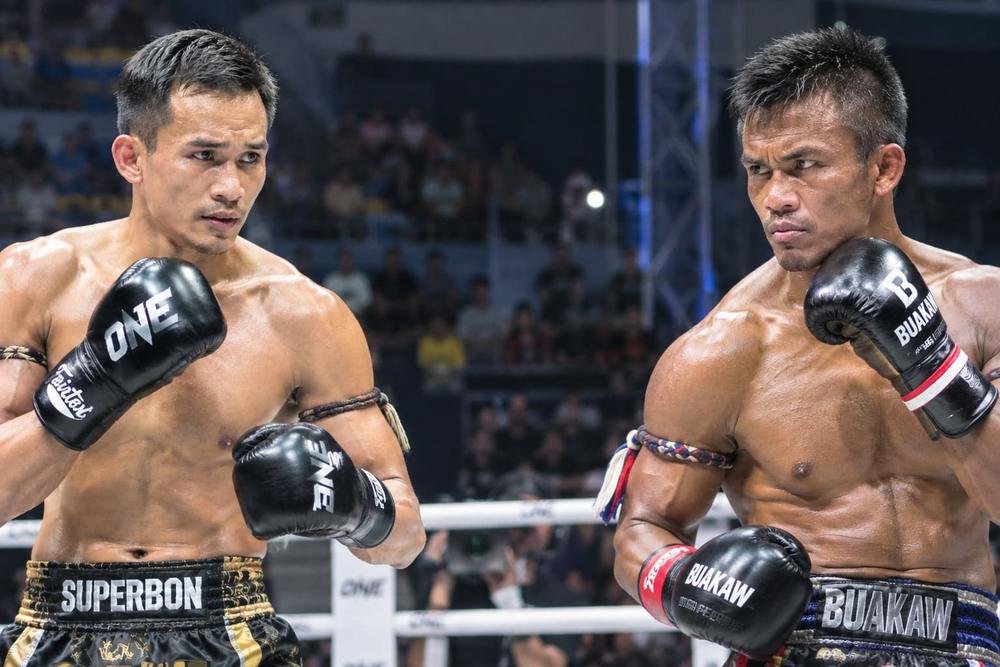

The first time a boxer steps into a real Muay Thai sparring session, something predictable happens. A jab comes in, and years of gym habit take over: chin drops, shoulder rolls, head slips just outside the punch’s line. It’s clean. It’s textbook. And in a boxing ring, it would have worked perfectly.
In a Thai gym, it usually ends with a knee sliding straight up the center line, catching the fighter right where the head just dropped. The Thai training partner didn’t even throw a combination. He just recognized the gap and filled it.
That single exchange explains most of what people argue about online when they debate Muay Thai versus boxing defense. It isn’t that Thai fighters can’t slip a punch. Many can, and do, when the range calls for it. The deeper issue is structural: the human head moving forward and down, which is exactly what a slip requires, travels directly into the strike zone for a knee or a switch kick. Boxing never has to solve for that problem, because boxing has no knees or kicks to defend against in the first place.
The Boxer’s First Shock in a Muay Thai Gym
Ask anyone who has crossed over from boxing to Muay Thai what surprised them most, and head movement usually comes up in the first few sentences. Boxers are trained from day one to make their head a moving target. Slip, roll, weave, repeat, until evasion becomes reflexive rather than conscious.
Bring that reflex into a ring where knees, elbows, and kicks are legal, and the same movement that used to protect the head now walks it into danger. A slipped jab drops the skull forward and down. A knee strike, thrown straight up the centerline, rises to meet exactly that space. Nobody has to aim for it specifically. The geometry does the work.
This is not a knock on boxing defense. Inside a ring where only punches exist, slipping is elite technology, refined over more than a century of gloved competition. The problem only shows up once you add nine more weapons to the opponent’s arsenal.
Why Slipping Gets You Kneed
Break the mechanics down and the risk becomes obvious. A slip works by moving the head laterally and downward, just enough to let a straight punch pass over the shoulder. That motion collapses the distance between your skull and your opponent’s hips, which happens to be exactly where a knee strike originates.
Ducking is worse. A duck buries the head even lower and holds it there a beat longer than a slip does, right in the flight path of an up-knee or a low head kick. Thai fighters know this instinctively, and they punish it without hesitation. Duck under a punch often enough in a Thai gym and someone will eventually make you regret it.
There’s a second cost that rarely gets mentioned: balance. Slipping and ducking both involve bending at the waist or dropping the base, which briefly compromises the ability to check a low kick or sprawl against a clinch attempt. Boxing defense assumes the only incoming threat is a fist. Muay Thai assumes it could be a shin, a knee, an elbow, or a punch, sometimes in the same combination. Bend away from one and you may walk straight into another.
What Muay Thai Uses Instead
Rather than moving the head, Thai fighters manage distance and angle with the rest of the body, keeping the skull roughly upright and stacked over the spine.
The teep, Muay Thai’s push kick, is the first line of defense. Thrown to the hip or the midsection, it interrupts an opponent’s rhythm before punches or kicks ever reach effective range. A good teep is less an attack and more a spacing tool, a way of saying “not yet” without swinging.
The long guard does similar work at closer range. One arm extends toward the opponent’s chest or shoulder, reading incoming movement through touch and controlling distance, while the rear hand stays home to guard the jaw. It looks passive to a boxing eye. It isn’t.
Angle-stepping replaces the slip. Instead of moving the head off the centerline, a Thai fighter steps the whole body off-line, pivoting to an angle that takes the head out of range without ever lowering it. And checking, raising the shin to block an incoming kick, absorbs the strike where it lands rather than trying to avoid it altogether. Combine those four tools and a fighter rarely needs to duck anything.
The Scoring Reason Nobody Mentions
Here’s the part most head-movement debates skip entirely. Traditional Thai judging doesn’t just reward damage. It rewards composure, and composure has a very specific look under Muay Thai’s 10-point must scoring system: standing tall, absorbing or evading cleanly, and answering back without visible strain.
A fighter who leans, bends, or drops the head to avoid a strike can read to Thai judges as unsettled, even if the technique lands the intended result. Scorecards in Thailand have historically favored the fighter who looks unbothered over the one who looks busy dodging. Bobbing and weaving, prized in boxing as proof of skill, can register on a Thai scorecard as a sign the fighter is struggling to control the exchange.
That’s a cultural judgment as much as a technical one, and it shapes how fighters train long before they ever face a foreign opponent. Thai stylists grow up drilling stillness under pressure. Stillness scores.
Fighters Who Blend in Head Movement
None of this means head movement is banned or useless in Muay Thai. Some historically boxing-influenced Thai technicians have folded head movement into their game for decades, particularly fighters who came up training alongside boxers or competing internationally, where scoring often leans more toward damage and aggression than composure.
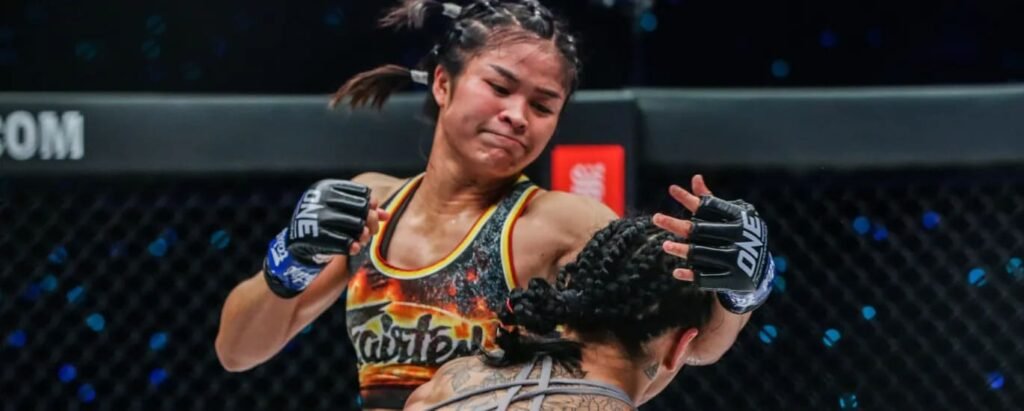
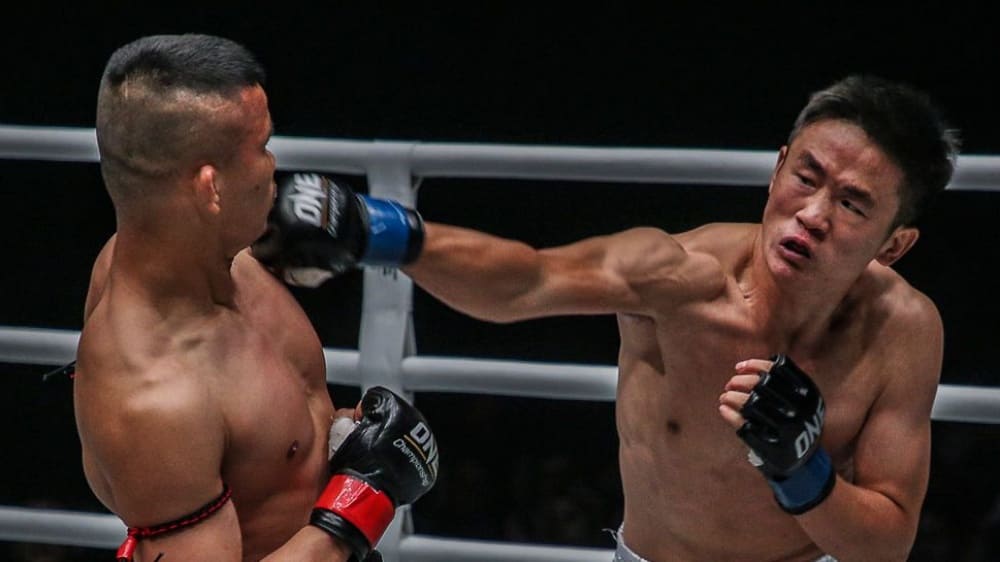
The trend has only grown more visible in the modern era. Several hybrid stylists competing at the ONE Championship level now mix in slips and rolls borrowed straight from boxing, layered on top of a Thai foundation of checks, teeps, and clinch work. Not every hybrid stylist trains this way. The ones who do tend to use head movement selectively, as an occasional tool rather than a default habit, limiting their exposure to the exact risk described earlier in this article.
That blend reflects a broader shift the sport has gone through as Muay Thai spreads globally and absorbs boxing’s fusion into Muay Thai at gyms outside Thailand. Fighters trained in mixed systems often carry boxing habits into their Muay Thai, for better and for worse.
So When Is Head Movement Actually Safe?
A few conditions matter more than any general rule about when slipping makes sense in Muay Thai.
Range is the biggest factor. At pure punching range, outside knee or kick distance, a slip carries far less risk because the opponent’s hips simply can’t reach. The danger appears only once the exchange closes into clinch or mid-range territory, where a knee is one small step away.
Reading the opponent matters just as much. Against a fighter who leads heavily with hands and rarely threatens with knees, a well-timed slip can create a counter opportunity that a Thai-style guard wouldn’t. Against a clinch-heavy or knee-heavy opponent, the same slip becomes a liability.
Recovery speed decides the rest. A slip that snaps the head back upright in a fraction of a second closes the window before a knee can exploit it. A slow, lingering slip, the kind that looks good on a highlight reel, leaves the head exposed too long. Used briefly, at the right range, against the right opponent, head movement works fine in Muay Thai. Used as a leftover boxing habit, it’s an invitation.
FAQ
Is head movement completely absent in Muay Thai? No. It’s rare compared to boxing and used more selectively, mostly at ranges where knees and kicks can’t punish it.
Why do Thai judges seem to penalize dodging? Traditional scoring rewards composure and control. A fighter who visibly bends or leans away from strikes can be read as unsettled, even when the movement is technically sound.
Can a boxer switch to Muay Thai and keep slipping? Only with adjustments. Slipping still works at long range, but it has to be retrained for speed and paired with checks and angle-stepping once the clinch and kicking ranges enter the picture.