

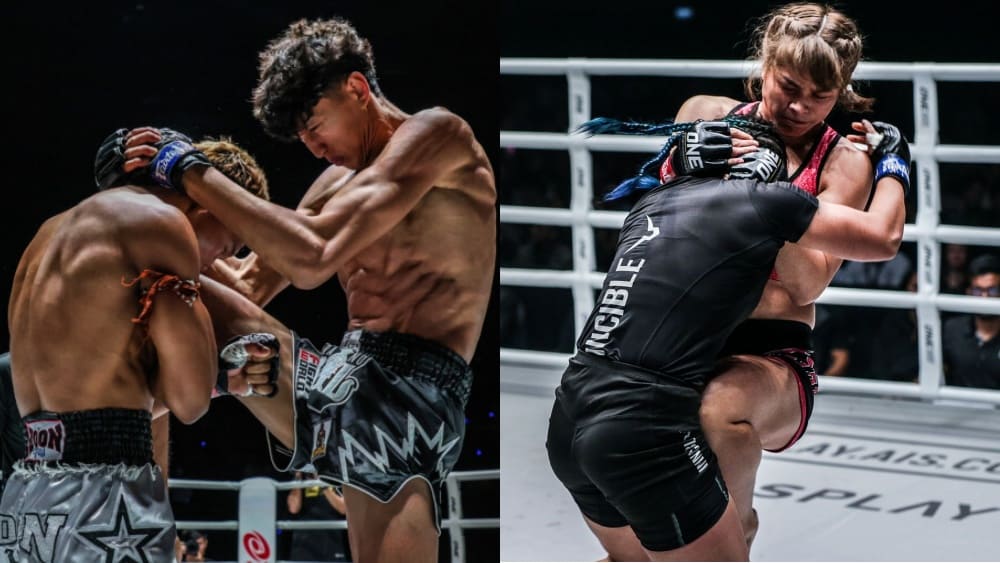
A single knee to the body can end a round faster than a combination of six punches, yet most beginner curricula spend a fraction of the time on knees that they spend on jabs and crosses. That imbalance shows up fast in the ring. Fighters who can box well but never learned to knee inside the clinch tend to get out-scored in exactly the exchanges that Thai judges care about most.
Why Knees Win Rounds
Knees carry weight differently than punches. A knee comes from the hip, the heaviest part of the body, and it travels a short distance into a target that has nowhere to give. Ribs. Solar plexus. The soft tissue under the sternum. When a knee lands clean there, the opponent’s posture breaks, even if the punch stats on a scorecard would never show it.
Thai referees and judges have always weighted this differently than Western commissions. A fighter who lands twenty punches that get blocked or brushed off scores worse than a fighter who lands three knees that visibly buckle an opponent. Effect matters more than volume. That single fact explains why so many Thai fighters build their whole game plan around getting into range for knees, then just staying there.
Five Knees, Five Different Jobs
Muay Thai breaks knee strikes into distinct categories, and each has a Thai name attached to a specific job.
Khao trong is the straight knee, sometimes called the thrust knee. It travels straight up the center line into the stomach or chest, thrown either from range or, more commonly, from inside a clinch tie-up. It is the simplest knee to learn and the hardest to see coming when it is thrown fast off a short step.
Khao chiang is the diagonal knee, and it curves. Instead of driving straight up, it swings up and across, wrapping around a guard to find the ribs or the side of the body. Fighters use it when an opponent covers the centerline tightly, since the curving path gets around forearms that would stop a straight knee cold.
Khao loi is the flying knee, thrown off a jump with both feet briefly leaving the ground. It closes distance in a single explosive motion and works best as a counter against an opponent who ducks a punch or drops their head, or as a surprise strike off a lead step that looks like it’s setting up something else. It is high-risk. Miss it and a fighter is airborne with no base.
The skip knee doesn’t have one settled Thai name the way the others do; gyms mostly just call it what it is. It uses a small skipping step off the lead leg to close ground quickly and throw a knee without ever entering a clinch, and it has become common in gyms with heavy Dutch kickboxing influence. Think of it as a bridge between a teep and a full knee, fast enough to catch someone stepping forward.
Then there is the clinch knee, which is less a single technique than a family of them, all thrown while controlling an opponent’s head, neck, or arms. This is where most fight-ending knees actually come from, and it’s worth its own section below.
What Makes a Knee Land Hard?
Power in a knee strike comes from the hips, not the leg. The supporting leg pivots on the ball of the foot as the hip drives forward and up, and the knee simply follows where the hip points it. Fighters who try to lift the knee with the thigh alone get a weak push instead of a strike.
Weight distribution matters just as much. Staying flat-footed kills rotation, so the base foot needs to ride up onto the ball of the foot right as the knee fires, letting the hip rotate through the target instead of stopping short of it. The strike should finish with the shin or the top of the knee driving through the target, not just touching it.
Hands do real work here too. In the clinch, one arm typically controls a bicep or shoulder while the other frames the neck or head, and that control is what lets the hip turn freely. Outside the clinch, hands stay up to guard while the hips and legs do the traveling. A knee thrown with dropped hands invites a counter that lands before the knee ever does.
Setting Up Knees Outside the Clinch
Not every knee needs a clinch first, and some of the cleanest ones never touch it. A teep, the push kick, sets one up almost by accident. When a fighter retracts the teep foot and immediately steps into the space the teep just cleared, a straight knee often lands on an opponent who is still recovering their balance from getting pushed.
Catching a kick works the same way. An opponent throws a low or mid kick, the defender catches it under the arm, and instead of just holding it or sweeping, the defender steps in with the same-side or opposite knee while the opponent is stuck on one leg. This is one of the highest-percentage knee setups in the sport because the opponent physically cannot check or retreat.
Feints do the rest of the work. A jab feint that draws a flinch, followed immediately by a skip knee, catches fighters who are used to reacting to hand strikes and not to legs. Timing beats power here. A knee that lands a half-second after an opponent commits their weight forward does more damage than the same knee thrown into a stable stance.
Working Knees Inside the Clinch
The clinch is where knee strikes become a full offensive system rather than a single technique. Once a fighter secures a double collar tie or even a single-arm frame, the priority shifts to breaking the opponent’s posture, pulling the head down and off-balance while driving knees up into the exposed midsection.
Short, repeated knees do more damage over a round than one big swinging attempt. A fighter who racks up eight to ten compact khao trong strikes while controlling the tie almost always beats a fighter throwing wild, off-balance knees trying to end things early. The rhythm matters: pull, knee, reset the tie, knee again.
Dieselnoi Chor Thanasukarn is the name every Thai boxing gym brings up when this topic comes up, and for good reason. He built a reputation as one of the most dominant clinch fighters the sport has ever produced, using his height and reach to trap opponents against the ropes and simply out-knee them until the fight was stopped. Fighters still study clips of his clinch work today, not for specific numbers but for how completely he controlled a tie once he had one.
How Judges Score a Knee
Thai scoring, laid out in more detail in the 10-point must system, rewards damage and dominance over raw output, and knees fit that system better than almost any other strike. A body knee that visibly hurts an opponent, one that makes them wince, drop their guard, or step back, can outweigh an entire round of light punching on a scorecard. Judges are watching for who controlled the center of the ring and who was forced backward, and clinch dominance sits right at the heart of that.
This is part of why so many fighters who look busy on punch counts still lose rounds. The judge isn’t counting strikes the way a Western boxing judge might. They’re asking who looked like the fight was going their way, and a fighter getting kneed repeatedly in the clinch looks like the fight is not going their way at all.
Training Knees Without Wrecking a Partner
Knee work needs real caution in the gym, more than most strikes get. A belly pad, not a Thai pad held loosely, should absorb full-power knees during partner drills, and the holder needs to brace it against their body rather than just their arms. Bag work is safer for straight and diagonal knees at speed, since the bag won’t move or complain.
Flying knees and clinch knees are the two that cause the most accidental injuries in training. Flying knees should stay at low intensity with partners until timing is dialed in on pads alone, and clinch knee drills should start slow, with both partners agreeing on power level before speeding up. A coach who lets beginners go full speed on clinch knees on day one is asking for a bruised sternum or worse.
FAQ
Which knee strike is best for beginners to learn first? The straight knee, khao trong, from inside a basic clinch tie. It has the simplest mechanics and teaches hip drive without the balance risk that comes with flying or skip knees.
Are flying knees actually practical in a real fight? They work best as a counter against a ducking or overcommitted opponent rather than as a planned opener. The payoff is high but so is the risk of landing off-balance if it misses.
Do knees count as much as punches in Thai scoring? Not equally by count, they count more by effect. A clean body knee that visibly hurts an opponent typically outweighs several light punches on a Thai judge’s card, which is why clinch control matters so much in this sport.

3 Comments