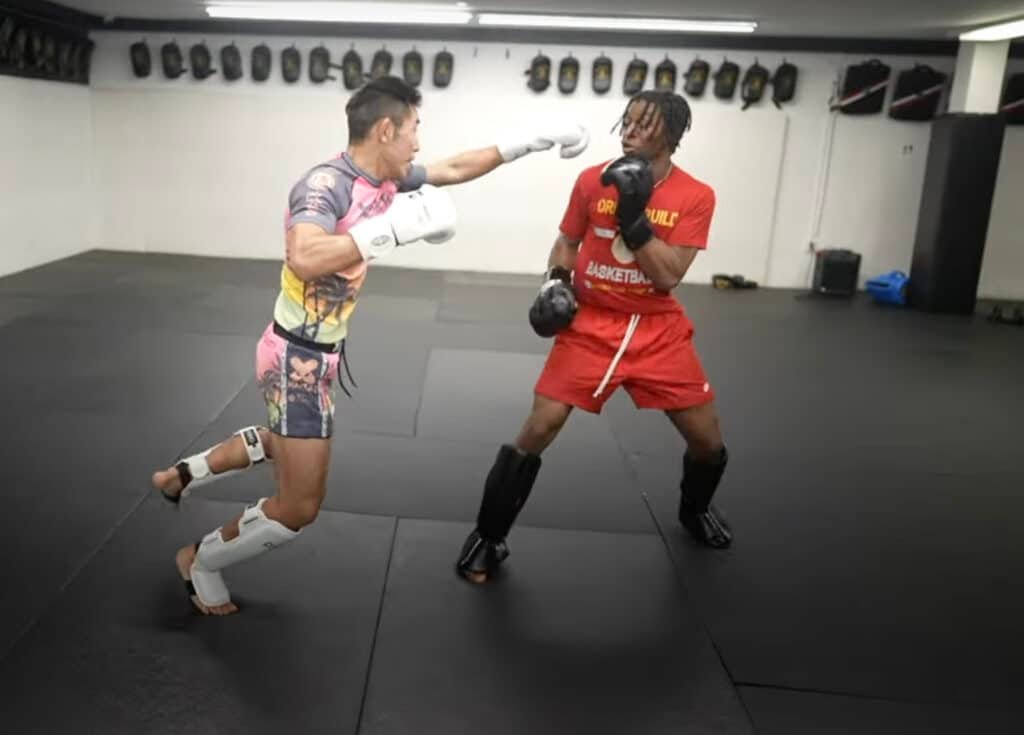

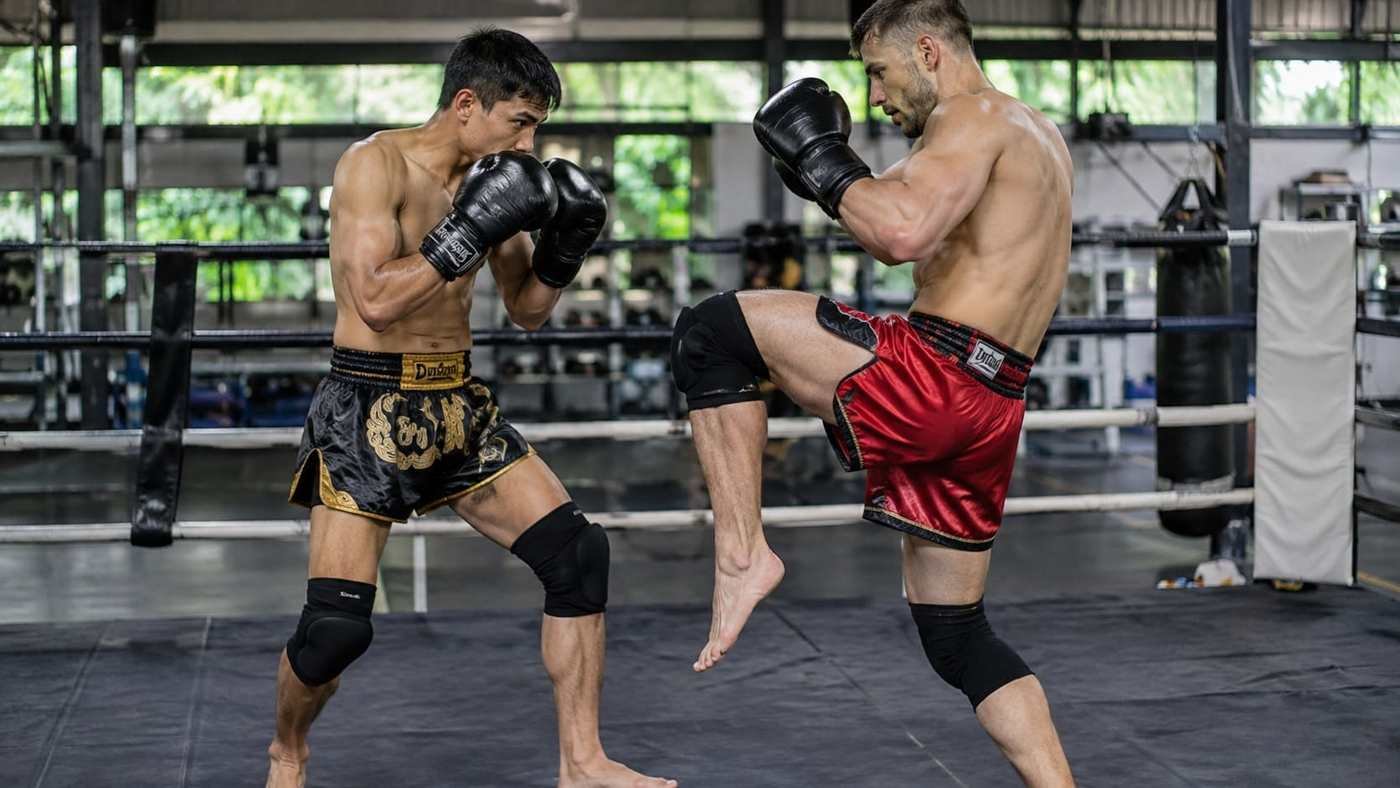
Walk into a real Muay Thai gym at six in the evening and look at the knees. Most of them are bare. Scarred, a little knobby, maybe taped on a bad day, but bare. Then look at the guy in the corner wearing thick muay thai knee pads over his shorts for a bag session, sweating through foam he doesn’t need. Nobody says anything. Somebody should.
Knee pads are one of the most misunderstood pieces of kit in the sport. Some people buy them on day one because a starter bundle came with a pair. Others refuse to touch them out of some tough-guy code and then wonder why their clinch partners stop picking them. Both camps are wrong about half the time. So here’s the version nobody puts on the box.
First, the Uncomfortable Truth
You don’t need knee pads for most of what you’ll do in a Muay Thai class. Pad rounds, bag work, shadowboxing, drilling knees on a Thai pad or a belly pad: bare knees are fine, and honestly better, because you learn exactly where the point of the knee lands. Foam hides that. It lets you get sloppy and still feel protected.
Competition doesn’t ask for them either. The IFMA rulebook, the one amateur federations work from, lists head guards, shin guards, cloth elbow guards, gloves, a groin guard, and a body protector. Knee pads aren’t on the list. It even bans ankle protection outright, cloth anklets and tape included. So if you’re buying knee pads because you think fighters wear them, they mostly don’t.
Where they earn their place is the part of training where a real human being takes the hit.
When Muay Thai Knee Pads Actually Earn a Spot
Here’s the short list, ranked by how much a pad actually changes the outcome.
| Situation | Wear them? | Why |
| Clinch sparring with body knees | Yes, strongly | Repeated knees to ribs and thighs add up fast, and a pad spreads the impact |
| Technical sparring where knees are allowed | Usually | Protects your partner more than you, which is the whole point |
| Coming back from a knee bruise or bursitis flare | Yes | A soft cap stops you reopening the same sore spot |
| Training on a hard or thin mat | Sometimes | Useful if clinch work puts you on the floor a lot |
| Pad work and bag rounds | No | You need feedback from the striking surface |
| Amateur competition | No | Not part of the standard kit, so check your event rules |
Look at that table and notice something. The best reason to wear them is somebody else’s ribs. Knee pads in sparring are a courtesy, the same way 16 oz gloves are. The pad protects your partner’s floating ribs from your kneecap, and it protects your own knee from slamming into a hip bone or an elbow block. Nobody gets a medal for giving their training partner a cracked rib on a Tuesday.
If you already spar elbows in pads, the logic is identical. The piece on sparring elbows safely with pads covers the same etiquette for the other sharp weapon in the sport.
Three Kinds You’ll Actually Find
The market has more variations than it deserves, but nearly everything falls into one of three designs.
| Type | What it looks like | Good at | Weak at |
| Elastic sleeve | Knitted or neoprene tube, little or no padding | Warmth, light compression, sweat control | Barely softens a knee to the ribs |
| Sleeve with foam cap | Slip-on tube with a padded patch over the kneecap | Clinch sparring, everyday protection | Can slide down if sized loose |
| Strap-on guard | Thick foam with hook-and-loop straps behind the leg | Heavy impact, rehab days | Bulky, shifts in the clinch, straps can scratch |
My opinion, for whatever it’s worth: the slip-on sleeve with a foam cap is the one most people should own. It stays put, it moves with the leg, and there’s nothing hanging off the back to catch on a partner’s shorts. The plain elastic sleeves feel nice but offer so little padding that they’re closer to a warm sock for your knee than to protection. And the big strap-on guards look like something borrowed from a roller derby team. They have a place when you’re nursing an injury. They’re miserable in a tight clinch.
Before you spend money on any of it, get your priorities straight. A decent pair of gloves, shin guards, and a mouthguard matter far more, and the rundown of gear worth the money is blunt about which extras can wait.
Sizing Without the Guesswork
Bad sizing kills more knee pads than anything else. Too loose and the pad migrates to your shin by round two, leaving the cap exposed right when a partner catches your knee. Too tight and your calf goes numb, or the top edge digs into the back of your leg every time you chamber.
Here’s how to get it right:
- Measure the leg, not your jeans size. Wrap a soft tape around the middle of the kneecap with the leg straight, and note the number. Some brands ask for a second measurement a few inches above the knee on the thigh.
- Check the brand’s own chart. Sizes aren’t standard across companies. One maker’s medium is another’s large, and some Thai brands run small compared with Western sizing.
- Between sizes, think about use. For clinch sparring, lean toward the snugger size, because a pad that stays put beats one that feels roomy. For rehab or long sessions, the looser size is kinder to circulation.
- Test it in a stance. Put the pads on, drop into your fighting stance, and throw ten knees in the air. If the cap drifts off the kneecap, go down a size.
- Wash, then judge. Neoprene and knitted sleeves usually loosen a little after the first few washes. A pad that feels slightly tight in the shop is often perfect a month later.
One more thing, and it’s a boring one. Air them out. A sleeve that lives balled up in a wet bag starts to smell like a fish market by Thursday and breaks down faster. Most sleeve-style pads handle a gentle wash, and a quick look at a nak muay’s gym bag will show you how to pack them so they dry between sessions.
How to Spar Knees Without Wrecking Anybody
Pads help. They don’t replace judgment. The knee is one of the heaviest weapons in Muay Thai, driven by the hips and the whole body, and a padded knee thrown at full intent still lands like a sack of cement. The gear is the easy part. The manners are harder.
Agree on the rules before the bell
Say it out loud: body knees only, or knees to the thigh allowed, and at what power. Silence is where people get hurt, because two partners walk in with different ideas of what “light” means.
Aim for the meat, not the bone
In sparring, target the belly, the side of the ribs below the armpit, and the big muscle on the front of the thigh. Stay away from the floating ribs at full power, the groin (obviously), and the head. Straight knees to the head don’t belong in regular gym sparring, pads or not.
Control the pull, not just the knee
Most injuries in clinch knees come from the arms, not the leg. When you yank a partner’s head down hard and drive a knee up to meet it, the collision speed doubles. Keep the pull soft and let the knee travel at half speed. You’ll still learn the timing.
Tap, don’t drive
A good sparring knee touches the target and comes back. Think of it like marking the shot rather than finishing it. The fighters who spar knees best in Thailand make contact you can hear and feel, but they don’t sink the hips into the rep the way they would in a fight.
Stop when someone is hurt
Obvious, yes. Still ignored in gyms everywhere. If your partner bends over or grabs their side, the round is over for that exchange. Pride can wait until they’re breathing again.
The Night You’ll Be Glad You Bought Them
Picture it. Saturday open mat, clinch rounds, and the new guy who’s built like a refrigerator wants to work knees with you. He’s eager, a little wild, and has no idea how hard his knees land. You can refuse, and look precious about it. Or you can pull your foam-cap sleeves out of the bag, hand him a pair of spares if you have one, set the rules, and get six useful rounds in without anyone limping to the car.
That is the whole case for knee pads. They’re cheap, they’re light, and for one specific kind of training they turn a risky round into a productive one. Keep them out of your pad work, leave them home on competition day, and put them on the moment real knees start flying at real ribs.