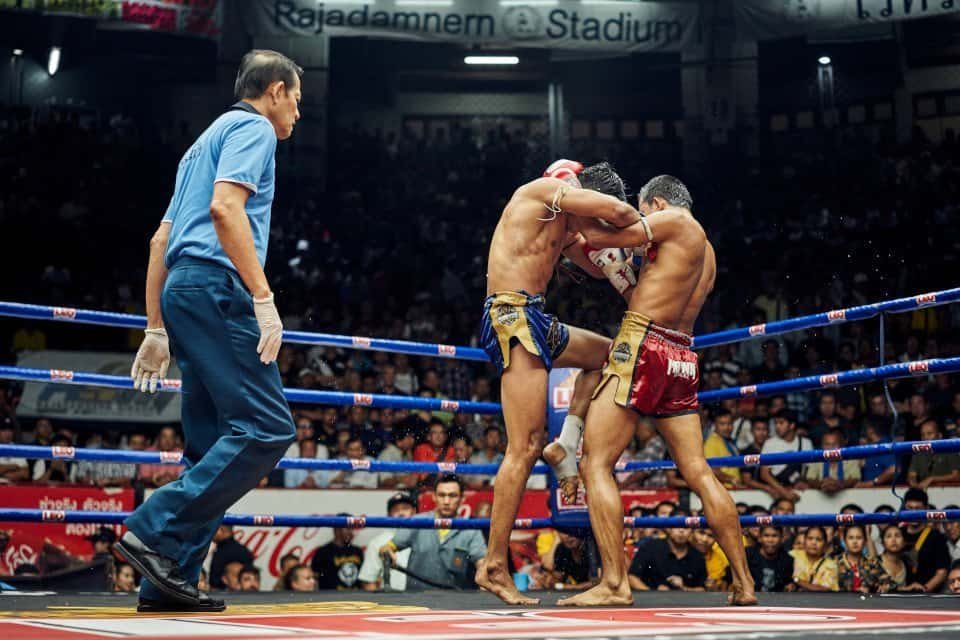
Walk into a gym in Chiang Mai or into a strip mall unit outside Cleveland and the opening move is identical: shoes come off at the edge of the mat and sit in a pile by the door. New students ask about this constantly, almost always the night before their first class, almost always phrased as some version of “what shoes do I wear for Muay Thai.” The answer is none, and the reason usually given back (“it comes from Thailand, that’s just how it’s done”) is the weakest version of the truth.
Bare feet are a technical requirement of the way this sport kicks. Cover them and three separate things break at once.
The pivot is the entire argument
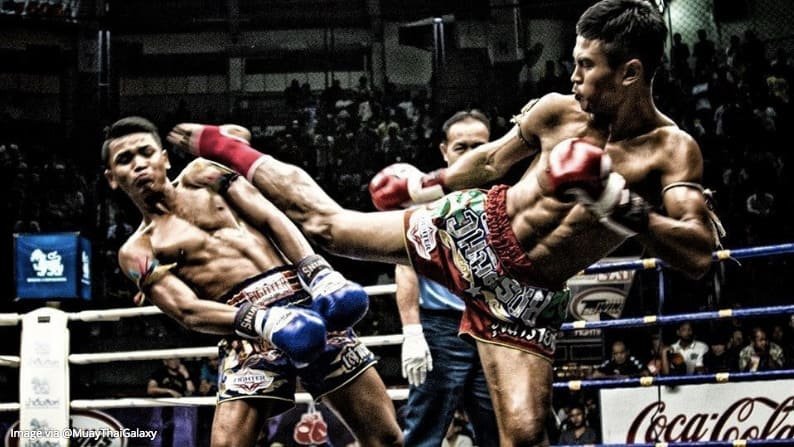
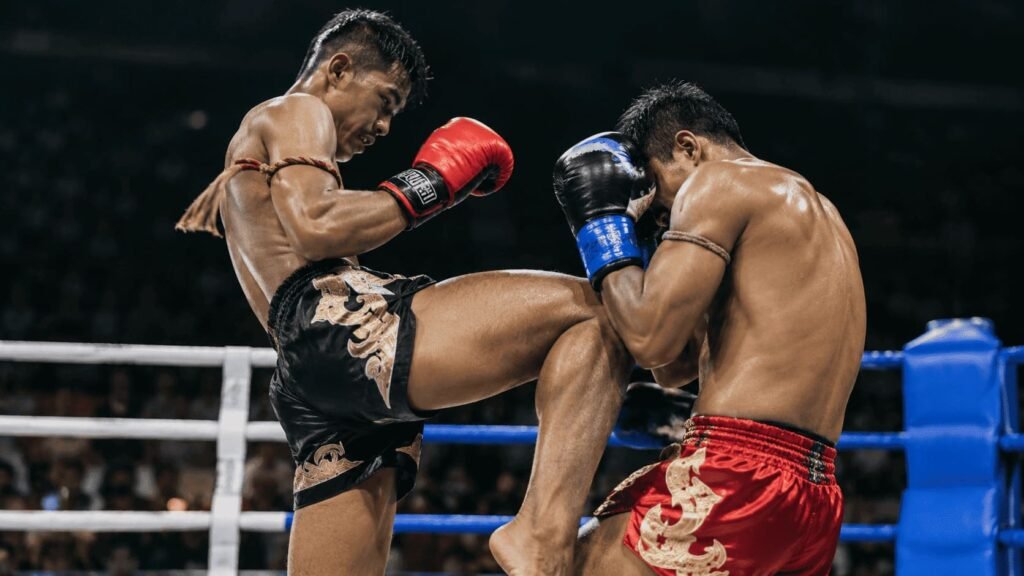
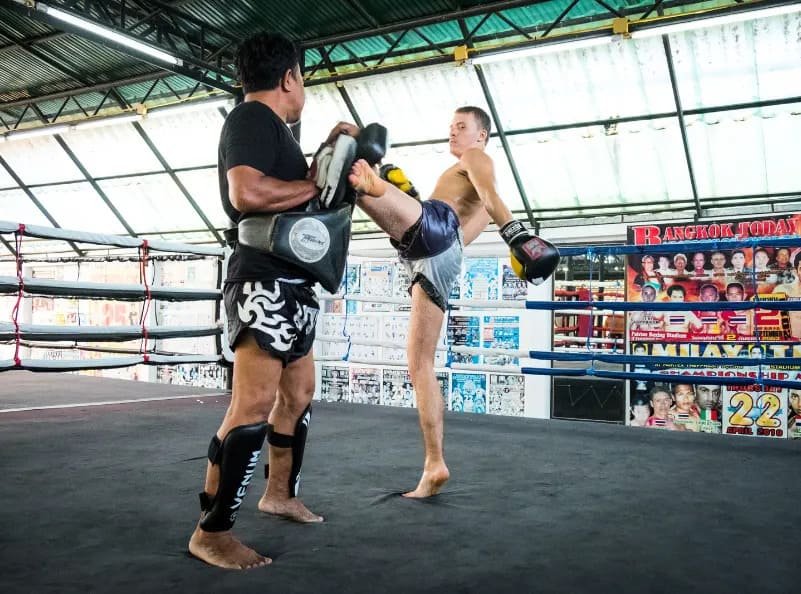
A Thai roundhouse is not a leg swing. The power comes from the hip turning through the target, and the hip can only turn as far as the standing foot allows. So a coach spends most of your first month shouting about one thing: the heel. Get it off the floor, get up on the ball of the foot, let the whole leg screw into the ground. Strong kickers rotate that standing foot well past ninety degrees, and a few turn the heel most of the way toward the target.
Put a rubber outsole under that foot and you have installed the opposite of what you need. Sneaker tread is engineered to grab. Your torso keeps turning, the foot stops, and the difference has to go somewhere: it goes into the knee of the standing leg as a shearing twist. That is the injury a coach is actually thinking about when they nag you to pivot. Shoes turn the floor into a surface that argues with your hip.
Boxing boots are the least bad option because the sole is thin smooth leather with almost no tread, and boxers obviously pivot in them. But a boxer’s lead foot turns forty-five to ninety degrees on a hook. A Thai kick asks for double that, under far more torque, on the leg holding up all your weight. All of it starts with foot position in the stance.
Your shin has to arrive flat
Second problem, and it is about the kicking leg rather than the standing one. Muay Thai strikes with the shin bone, not the foot. The shin only presents a flat surface if the ankle and foot are pointed correctly at impact: toes extended, ankle locked, foot roughly in line with the tibia. From knee to toe it works as one rigid pole.
A shoe changes the pole. The heel counter and the sole stack add a hard rim and a couple of centimeters of material exactly where the shin meets the ankle, so a kick meant to land bone-flat lands with the shoe hitting first. Anybody who has held pads for someone in sneakers recognizes the sensation. Stinging slap instead of the deep thud of a shin. On a partner’s forearm or thigh, that rim opens skin.
Gyms have a blunter reason as well. Shoes destroy equipment. Sole edges scuff and eventually split Thai pads, belly pads and the vinyl skin of heavy bags, and a gym carrying two thousand dollars of pads enforces the barefoot rule for that alone.
Feet as sensors
The third reason rarely makes it into beginner guides: you cannot feel your own balance through a shoe.
The Muay Thai stance sits upright and fairly even, often a touch rear-weighted, and everything built on top of it depends on knowing where your weight is at a given instant. Checking a kick, landing a teep without falling into it, staying unsweepable when someone locks the clinch: all of it runs on that. Barefoot you simply know, because pressure under the ball of the foot reports the moment you have drifted onto a leg that is about to get chopped. Foam blurs the report.
Plenty of experienced fighters will tell you this benefit gets oversold, and for someone with ten years of mat time they are probably right. Their balance is proprioceptive by now, not tactile. For a trainee in month three, though, that same signal is the difference between learning the stance and guessing at it.
Canvas, tatami, rubber: the floor is a variable
Barefoot is not one consistent experience. The surface changes what your feet have to do.
Ring canvas stretched over padding grips hard and abrades harder, which is where mat burn on the top of the toes and the ball of the foot comes from. Jigsaw tatami mats, the standard in most Western gyms, behave like two different floors depending on sweat: grabby and rough when dry, greasy when someone has been dripping on them for an hour. Rolled rubber sits in the middle and tends to stick. Many Thai gyms lay thin carpet or canvas over their mats, which is why visitors arrive with decent feet and shred a toe inside three days.
One fix costs nothing and improves the kick anyway. If the mat keeps catching you, you are probably too flat-footed on the turn. Riding higher on the ball of the foot, closer to a calf raise, cuts the contact patch and the friction with it, and the kick lands harder for the same effort.
So what are the ankle wraps for?
People see Thai fighters in elasticated ankle sleeves and assume they are a grip or padding solution. They are neither. Those sleeves compress the joint and restrict the last few degrees of an ankle that has been rolled before, which matters in a sport full of sweeps, catches and clinch scrambles that put the ankle in ugly positions. They do nothing whatsoever for skin, blisters or traction. The different types of ankle support split along that same line: joint protection, never footwear.
Shin guards with an instep flap are a separate category. The flap shields the bones on top of the foot during sparring, a real vulnerability when you catch an elbow with your instep, and it comes off the second the round ends.
The sports that do wear shoes, and why they are different
Savate is the cleanest contrast. The French sport is fought in boots by rule, and the boot is not there for the floor at all. Savate kicks strike with the toe, the edge or the sole, thrown in chambered snapping lines that look closer to fencing than to Muay Thai. The foot is a precision point, so the equipment hardens it.
Sanda fighters compete in shoes on a raised platform, where the kicks lean on the instep and lower leg while the wrestling exchanges reward traction. Boxing boots exist for lateral movement and ankle support in a sport with no kicks to compromise. Olympic taekwondo goes barefoot but adds thin electronic foot socks, scoring sensors more than protection. American full-contact kickboxing in the 1970s used padded foot covers, and that ruleset kicked above the waist with the foot.
Look at which part of the leg does the hitting and the whole pattern sorts itself out. Strike with the foot as a point and footwear helps. Swing the shin like a bat and footwear becomes a liability.
When shoes are the right call
Honest exceptions exist, and this is where a lot of coverage gets preachy.
If you have plantar fasciitis, a bunion, a healing fracture, a fused joint or reduced sensation in the feet, talk to your coach before your first class rather than after. Most will accept flat minimalist mat shoes or wrestling shoes for bag work, shadow and conditioning, as long as you stay out of clinch and partner drills. The key detail is the sole: flat, smooth, no aggressive tread. Trail-runner lugs on a mat are worse for your knee than no shoe at all.
Training at home is a legitimate case too. A garage with a concrete or hardwood floor will not let you pivot barefoot, and it grinds your skin off trying. Something thin and smooth beats both bare skin and running shoes there.
Then the unglamorous one. A shared barefoot floor moves fungus and plantar warts around a gym efficiently, so wear sandals from the door to the mat and never walk to the bathroom barefoot.
Worth saying plainly: barefoot training does strengthen the small muscles in the foot that cushioned shoes let go slack, but the sport is not a treatment program. Some feet feel better after a year of this. Some hurt more.
The first month, and what to do before your next session
Skin adapts first and fastest. Expect blisters in two predictable spots, the pad under the big toe and the outer ball, both products of the pivot. Gyms have their own name for it, usually some version of rookie toe, and the people who get it worst are the ones whose feet spent nine hours damp inside work shoes before class. A fresh pair of socks and five minutes of air before you change genuinely reduces it. Arches and calves complain separately, since standing on the ball of the foot for five three-minute rounds loads them in a way nothing in normal life does. Six to eight weeks is the usual timeline before an average adult stops noticing.
Three things you can do today, none of which require buying anything. File thick calluses flat with a pumice stone once a week, because a heavy callus does not protect the skin, it shears off in a sheet and takes the tender layer underneath with it. Cut your toenails short and square before every session, not after you catch one on a mat seam. And tape a hot spot the moment you feel it, instead of dressing a torn blister that night.
Then check one thing on the bag. Throw ten right roundhouses and watch your left heel. If it stays glued to the floor, your hip is finishing at maybe seventy percent and your knee is eating the rest of the rotation. Fix that heel and the shoe question answers itself, because nothing you could strap to that foot would let it turn the way it needs to.