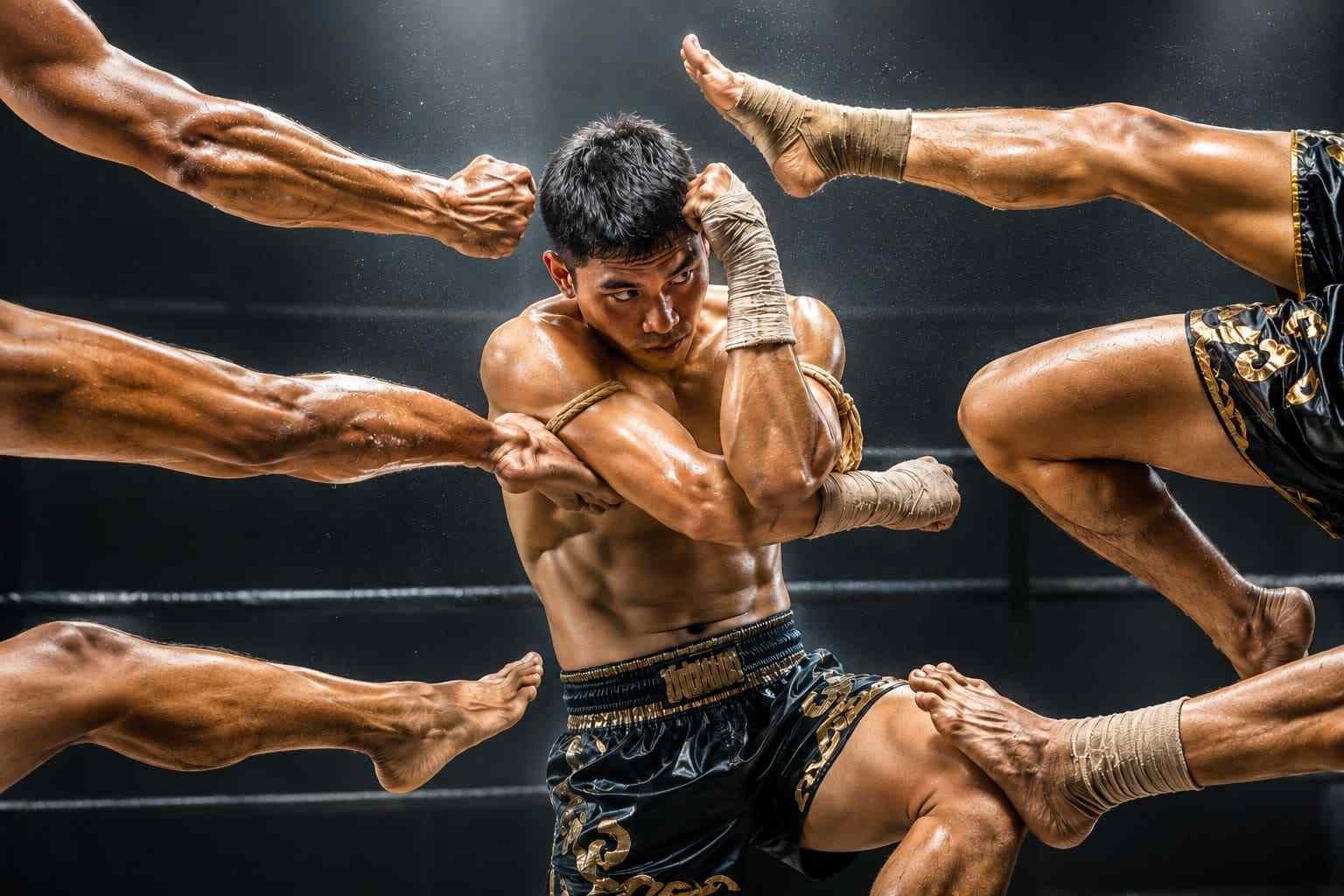
Ask someone two months into training what they do when a kick comes at them and you get the same honest answer every time. They cover up. Hands welded to the temples, elbows crushed into the ribs, eyes closed for a fraction of a second, waiting for it to be over. Then they open their eyes and the round is somehow still going.
The problem is not courage, and it is not reflexes. Most beginners own exactly one response to eight different weapons, and the one they own happens to be the worst option on the list.
Three answers, not one
Here is the frame that fixes more sparring than any single technique. Every attack has a preferred answer, a second-best answer, and an emergency answer.
The preferred answer neutralizes the shot and leaves you in position to hit back. The fallback keeps you safe but costs you something: position, air, a little damage, the initiative. The emergency answer is the one you use when you got caught, guessed wrong, or never saw it. Covering up is almost always the emergency answer. Beginners live there because it requires no reading, no timing, and no decision. It also teaches your opponent that they can throw anything they want without consequence, which is how a light technical round turns into target practice by minute two.
Good coaches spend the first year dragging students up that ladder from emergency to preferred. Most of what people call defense training is exactly that climb.
The field manual
| Incoming | Preferred answer | Fallback | Mistake that gets punished |
| Jab | Small lean off the line, catch it on the rear glove, stay in range | Rear-hand parry, short step back | Reaching out to swat it, which opens the lane for the cross |
| Cross | Catch on the lead glove while stepping to the outside of their lead foot | Shoulder roll, then pivot out | Backing straight up in a line |
| Hook | Tight cover with the elbow sealed to the ribs, turn the shoulder into it | Duck under and reset your feet | Pulling the head straight back with the chin up |
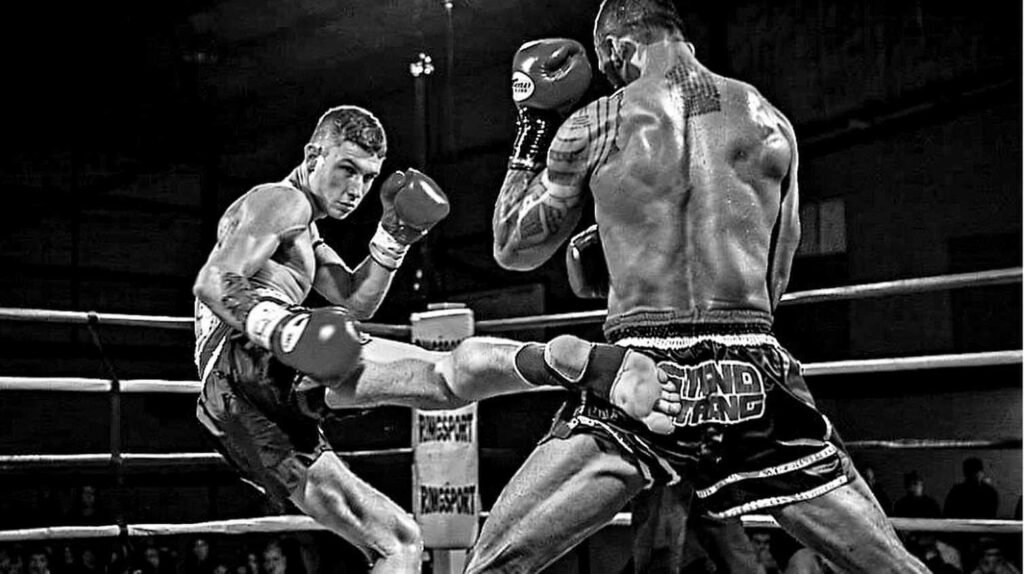
| Body kick | Long guard on the kicking side, elbow pointed down, hip turned in | Brace the lat and arm, exhale hard as it lands | Blocking with the arm only while standing square |
| Low kick | Shin check, knee lifted and turned out, toes down | Step back so it lands short, or angle off the arc | Standing flat and taking it on the thigh |
| Head kick | Same-side arm block plus a step forward into the hip | Duck low and cover both temples | Leaning away with the hands sitting low |
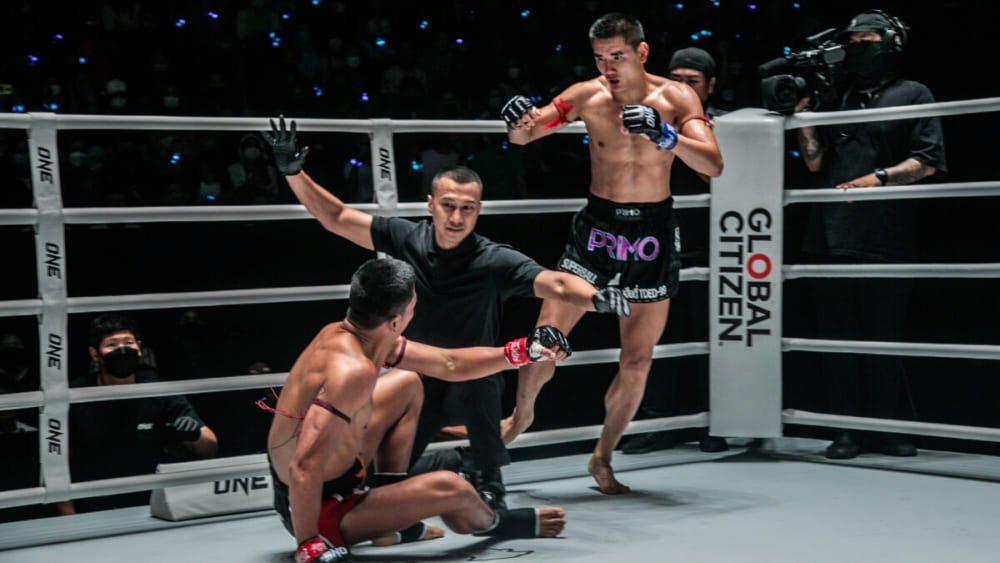
| Teep | Parry down and across with the lead hand, sweep the ankle aside | Angle off the centerline, or teep first | Reaching for the catch |
| Knee | Frame early with the long guard, hands driving into the hips | Turn the body, take it on the hip or the arm | Standing tall in the clinch with both hands inside |
| Elbow | Get your own frame up first, forearm vertical, elbow high | Close the distance and smother the arm | Ducking straight into it |
Hands: stop reaching
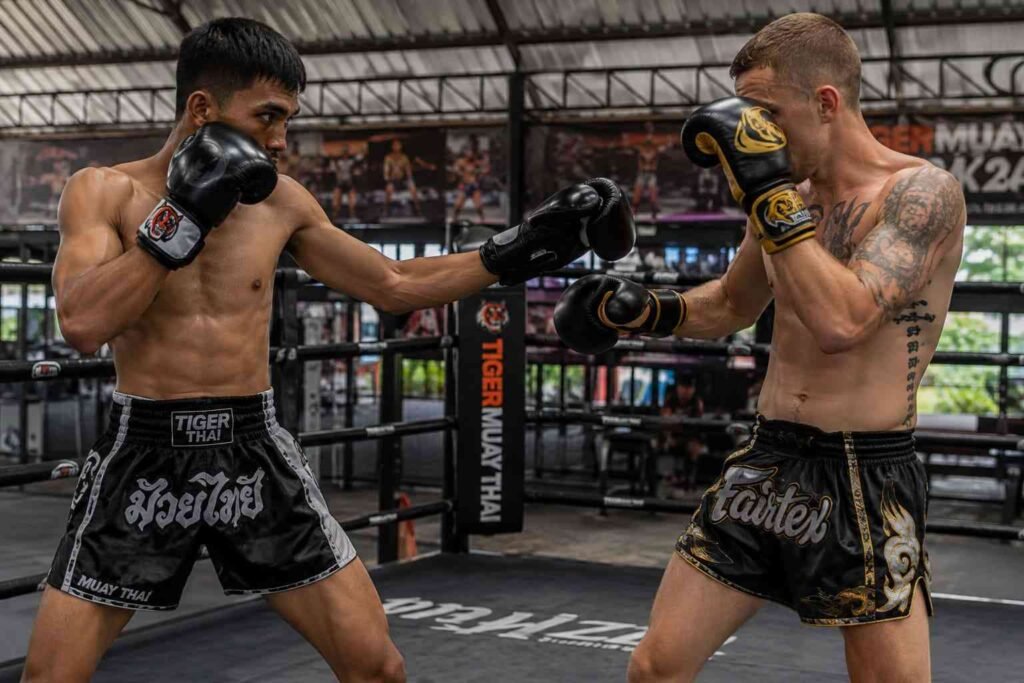
The jab is where the reaching habit is born. A new student sees the punch, panics, and shoots a hand out to slap it away. The hand travels, the head stays exactly where it was, and the cross arrives in the space the hand just left. Catching a jab means the glove barely moves: it sits on the cheek and the punch dies in it while your head shifts an inch off center.
Plenty of good coaches will tell you to stop parrying entirely for your first year, and they have a point. Parry drills reward hand speed, and hand speed is the thing beginners have least of. Learn to catch, learn to move your head one lane, and add the parry once you can see punches early enough to choose.
Hooks are the one place where covering up is the correct answer rather than the emergency one. There is no elegant slip against a short hook thrown from close range. Seal the elbow, turn into it, and take it on the arm. What gets people knocked out is the instinct to yank the head backward, because the chin lifts and travels along the punch’s path instead of away from it.
The low kick punishes hesitation more than anything else
A Thai low kick is not built to end the fight in one shot. The point is to buy the same leg four or five times over three rounds until you cannot push off it. Hesitation costs more down here than anywhere else: a half-check, a late check, or a check you abandoned halfway is worse than no check at all, because your weight is already shifting when the shin lands.
The mechanics are unglamorous. Knee comes up, knee rotates outward, toes point down so the shin faces the incoming leg, and the whole thing happens in one motion instead of two. If you want the full breakdown, we covered checking a kick in detail elsewhere. The part worth repeating: you check with the lead leg most of the time, and you have to be willing to stand on one foot for a beat.
The most common complaint from people six weeks in is that they cannot check because they never see the kick coming. They are usually telling the truth, and the fix has little to do with eyesight. Kicks announce themselves in the shoulder and the rear foot, not the leg. Watch the far shoulder in sparring for a few rounds and the kicks start to arrive noticeably earlier.
Blocking versus absorbing, and why it matters
These two get used interchangeably in gym talk and they are not the same thing. Blocking means bone meets bone. Your shin against their shin on a low kick, your forearm against their instep on a head kick. The energy stops. Better than that, it reverses: the person kicking eats the impact on the thin, nerve-rich lower third of their own shin, and after two clean checks most people quietly stop kicking that side. Shin conditioning exists for exactly that reason.
Absorbing means you let it land somewhere you can afford. A body kick taken on a braced lat with the elbow down and the air pushed out of your lungs is an absorbed kick. It hurt, but nothing folded. Absorbing counts as a real defensive choice, especially against a taller kicker whose body kicks arrive faster than your long guard.
The trap is absorbing where you should be blocking. Take a low kick flat on the outside of the thigh and you have not defended anything. You have accepted a dead leg. The kick lands on the muscle and the nerve running along the outside of the quad, and the bruise is cumulative. Fighters who lose to low kicks rarely go down from one; they go down from the seventh, when the leg stops answering. Gyms pass this around as gospel: learn where you can afford to take a kick. Good advice, and the outside of the thigh is not on that list.
When they get inside
Knees and elbows live in the pocket, and both of them punish the same error: standing upright with your arms where they were.
Against knees, the long guard is the answer, and it works through distance rather than padding. Arms extended into the hips or the biceps means their knee has no space to accelerate. The moment your hands come inside their arms and your posture goes tall, you have handed them the clinch and the knees start landing on the sternum instead of the arm. Thai fighters built around this game, the ones the gyms call muay khao, spend entire careers waiting for exactly that posture.
Elbows are the shortest and fastest weapon in the sport, which means reaction defense mostly fails. You defend the elbow by defending the range: get your frame up before the exchange starts, or close the distance and trap the arm so it cannot swing. Ducking is what gets people cut, because a downward elbow travels into the space where your head just went.
Does defense actually score in Thailand?
A lot of Western instruction quietly misleads people here. Yes, blocking a kick means it did not land cleanly, and a fighter whose kicks keep hitting shin and forearm will not build a score with them. Judges at Lumpinee and Rajadamnern watch for damage and dominance, and a blocked shot is neither.
But defense on its own does not put anything in your column, and constant retreating actively costs you. Backing up in a straight line for a round reads as losing that round, even if you were never touched. The Thai system rewards the fighter who is moving forward and controlling the exchange, and it discounts the fighter who looks like they are surviving. Rounds three and four are where the fight is decided in a five-round Thai bout, and a fighter still running at that point is being scored as the loser regardless of how clean their guard was. Western judging weighs this differently, and we broke down the scoring differences separately.
The fighters people hold up as defensive masters make sense in that light. Samart Payakaroon and Saenchai are famous for not getting hit, but neither of them evades and then resets. Every piece of defense in their game is attached to a counter. The technical style Thais call muay femur is not about avoidance; it is about making the other person miss into something.
The two habits worth building first
If you can only fix two things this month, fix these.
The first is the interrupter. Pick one weapon, a jab, a teep, or a low kick, and throw it the instant you feel pressure building instead of after it has already arrived. Pressure fighters rely on you giving them uninterrupted time to close distance. One committed teep to the hip resets the whole exchange and buys you a second to think. Most beginners have no interrupter at all, which is why flurries feel unstoppable to them.
The second is committing to one preferred answer per round. Next time you spar, pick a single incoming weapon and promise yourself you will use the preferred answer every time it comes, even when you get clipped doing it. Checks for one round. Catching the jab the next. You will get hit more than usual for about three sessions, and then you will not.
Film one round on your phone from the side of the ring and count how many times you covered up. If the number is above four, you already know what to work on.