
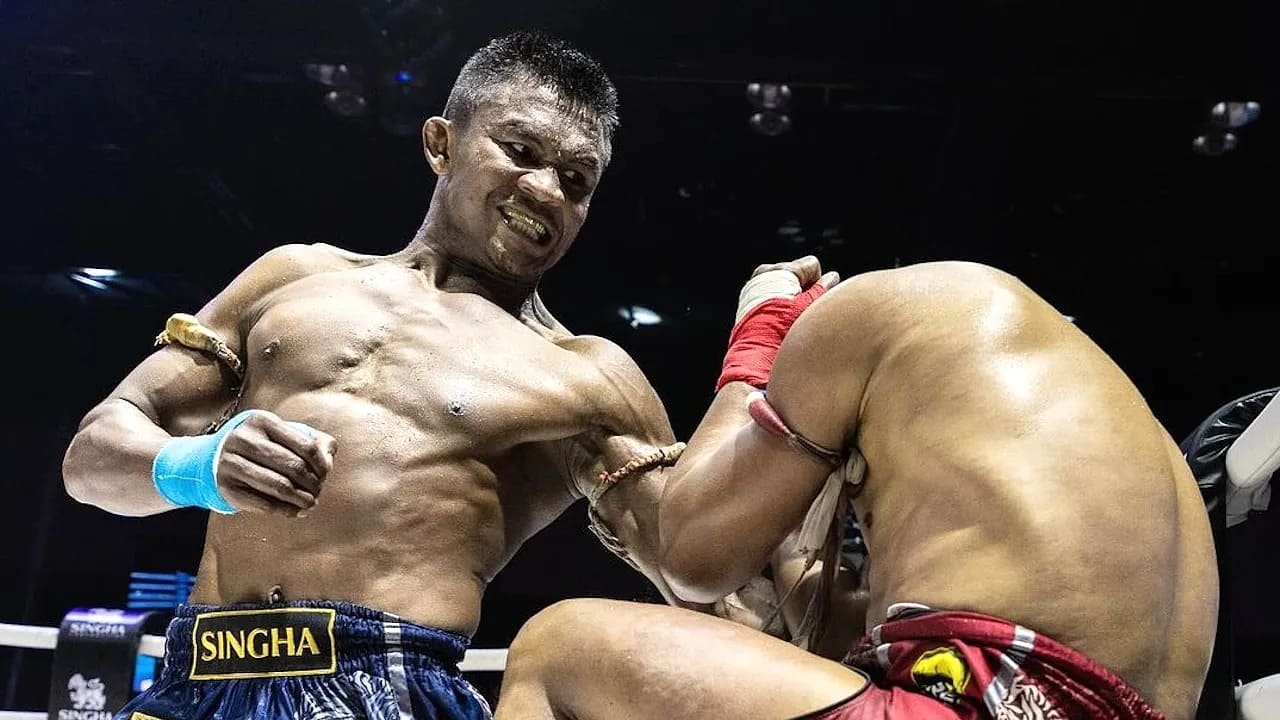
Tokyo, July 2004. Masato was the biggest draw in Japanese combat sports, fighting at home, in the final of a tournament his promotion had more or less been built around. Across the ring stood a 22-year-old out of a gym in Chachoengsao who had already beaten John Wayne Parr and Takayuki Kohiruimaki earlier the same night. The decision went to the Thai.
Everything about his reputation runs through that night. Buakaw Banchamek left the building as K-1 World MAX champion, and a lot of people outside Thailand watched a Thai kicker beat the sport’s local hero for the first time. Two years later he did it again, stopping Andy Souwer with punches in the 2006 final to become the first two-time World MAX champion. The argument this article makes is simple: that run did more for the worldwide reach of Muay Thai than any Bangkok stadium champion of his era managed, and he paid for it in the one currency Thai fans care about. He rebuilt his game around somebody else’s rules.
The kid from Surin, and what we actually know
He was born Sombat Banchamek on May 8, 1982, in Samrong Thap district, Surin province, out in Isan. He started fighting at around eight years old, which in rural Thailand in 1990 was ordinary rather than notable. In 1997 he joined Por. Pramuk gym in Chachoengsao, roughly 50 km east of Bangkok, and stayed there for fifteen years. The ring name came with the camp. Buakaw translates as white lotus, and it had been carried by earlier fighters in the stable before it was handed to him.
Past those bare facts, be careful. Almost all of the village-boy color you find in English traces back to interviews, promotional material and documentary footage produced long after he was already a star, and every retelling sands the edges a little smoother. Thai fighter origin stories are a genre with their own conventions, and this one has been told a few hundred times.
Before Japan, a good stadium fighter
Here is the part most profiles skip. His Thai record before K-1 was strong without being historic. He took the Omnoi Stadium featherweight title in 2001, the Thailand (PAT) featherweight title the same year, the Omnoi lightweight belt in 2003, and in December 2002 he won the Toyota Muay Thai Marathon at 140 lbs, beating Satoshi Kobayashi in a final staged at Lumpinee. Real career, real belts. Omnoi is a serious stadium, the crowd there gambles as hard as anywhere in the country, and the fights are five rounds with everything legal.
What he never won was a Lumpinee or a Rajadamnern belt. In Thailand, that sentence usually ends the conversation, and you will still see Thai fans deploy it whenever a foreigner calls him the greatest of all time. It is a fair point and worth stating plainly rather than arguing around. Nobody at Por. Pramuk was pretending otherwise at the time either. He was ranked and fighting regularly at Lumpinee without ever getting a belt around his waist there, which puts him in the large and slightly bitter company of Thai fighters who were very good in the years when someone else was slightly better.
It also matters that the two systems reward different things. A stadium fighter is judged on rounds four and five, on the clinch, on composure, on looking unbothered. None of that won K-1 tournaments, and if you have never seen how Thai judges score a five-round fight, the gap between the two sports is wider than the shared techniques suggest.
What did kickboxing rules do to his Muay Thai?
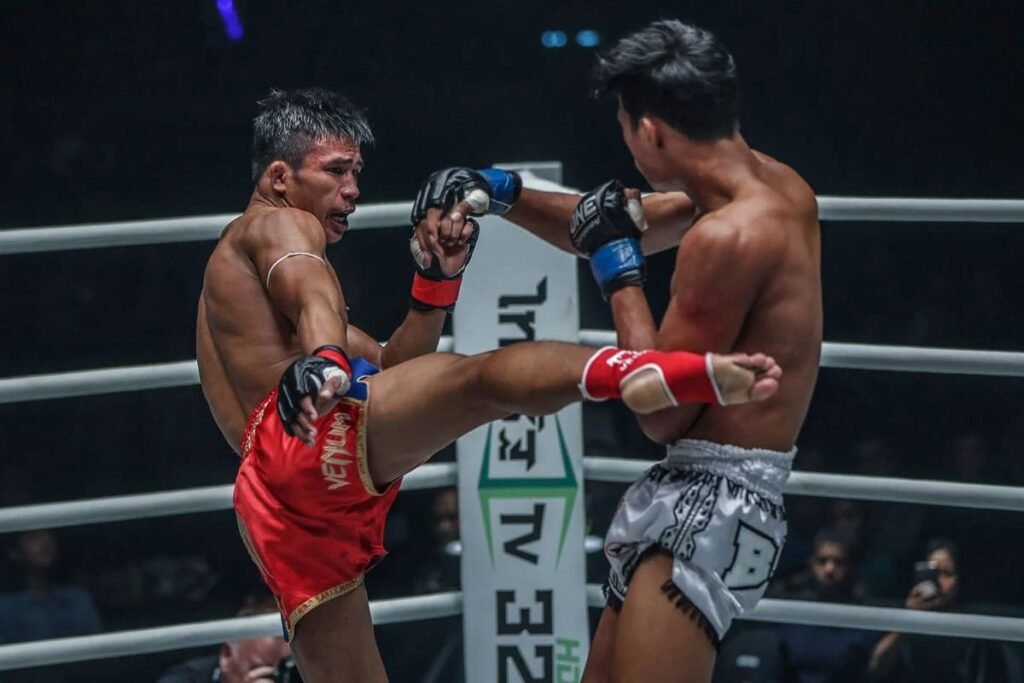
K-1 ran three three-minute rounds, with an extension round if the judges called it even. No elbows. No throws or sweeps. Clinching allowed for about five seconds before the referee broke it. Every one of those lines removes something a Thai fighter grows up banking rounds with.
Strip the clinch and you strip the place where a nak muay scores when he is tired, when he is behind, and when he wants to steal the last ninety seconds. Strip elbows and you remove the tax on standing in front of somebody. Cut five rounds to three and the whole Thai pacing model, slow first two rounds, decision made in the fourth, becomes suicide. Buakaw’s adaptation was to fight the first bell like it was the fourth round, keep his volume high, and lean on two weapons that the ruleset happened to protect. The purist complaint is that the version of him the world fell in love with is a kickboxer, not a Thai stylist, and there is something to that. Watch his 2003 stadium footage and then a 2006 K-1 bout, and you are looking at a different fighter with the same face.
Why the lead kick and the hands traveled so well
- No elbows meant no price for the pocket. In a Thai ring, pressing forward into punching range against someone with elbows is a decision with stitches attached. Remove them and combinations become cheap. His 2006 stoppage of Souwer came from a flurry of punches, not a kick.
- The five-second clinch limit killed the standard counter. The normal answer to a fighter who keeps kicking is catch the leg and go to work in the clinch. Under K-1, the referee separates you almost immediately, so catching the kick bought his opponents nothing.
- Kicking off the lead leg needs no setup. He fights orthodox but hammers away with the left, which is his front leg. No switch step, no telegraph, and it lands from range on a Dutch-style boxer who wants to be closer.
- Three rounds rewarded whoever started fastest. Nine minutes total does not leave room for a feeling-out period, and Buakaw had already worked out that he did not need one.
- The judging criteria favored pressure and damage. Aggression and visible effect count for far more in a K-1 ring than they do at Rajadamnern, and a leg that stops working is visible to everybody.
Something you can do this week: pull up the 2004 final and the 2006 Souwer rematch and watch them back to back, counting how many times he throws that lead left in the opening thirty seconds of each round. The number is higher than you expect, and it is the clearest lesson in his whole career, which is that one weapon thrown at volume beats five thrown occasionally. Then take the other half of it into the gym. If you cannot check a low kick with the upper shin near the knee, the leg kick is not a technique you get to admire from a distance.
The contract fight that cost him his name
In March 2012 Buakaw went on Thai television and said he was unhappy with his management at Por. Pramuk, that he believed he had been underpaid, and that he was leaving. The gym still held his contract and blocked him from appearing at Thai Fight that April. He filed a complaint with the Sports Authority of Thailand. On May 31 he announced his retirement, which the Bangkok Post covered as a fighter walking away from the sport rather than a negotiating position.
Por. Pramuk then sued for 100 million baht, somewhere around 3.2 million US dollars at the time, naming Buakaw, his new manager, the Thai Fight organizers and the Sports Authority itself. The claim covered lost earnings, sponsorship and broadcast revenue. The case was withdrawn in July 2012 after arbitration at the Civil Court in Bangkok, and he was fighting again by August.
He came out of it as Buakaw Banchamek instead of Buakaw Por. Pramuk, because in Thailand the second half of a fighter’s name belongs to the camp. Losing it meant building his own: Banchamek Gym, with locations in Bangkok and back home in Surin. Thai fighters had left camps before. What was new was one doing it publicly, in the press, with a lawsuit attached, and winning. That fight probably changed more for working Thai fighters than either of his K-1 belts did.
Nobody agrees on his record
Do not trust any single number you see attached to him. Wikipedia lists 286 kickboxing bouts at 245 wins, 25 losses and 14 draws. Siam Fight Mag has run 372 fights and 310 wins. Yokkao, which has worked with him directly for years, has published 229 wins, 23 losses and 12 draws. Those cannot all be right.
The reason is that Thai fighters take dozens of small provincial bouts as teenagers that were never recorded anywhere, and different sources draw the line between kickboxing and Muay Thai bouts in different places. Anyone who quotes you an exact career record for a Thai fighter of his generation, to the fight, is quoting an estimate that somebody once made up and everybody else copied.
Still in there at 43
The post-K-1 years kept going far longer than anyone expected. He won the Thai Fight 70 kg tournament in 2011 and 2012, collected WMC and WBC Muay Thai belts, and took the Shoot Boxing S-Cup in 2010. He fought Saenchai in a bare-knuckle special-rules bout at BKFC Thailand 5 in Pattaya on November 4, 2023, and won a unanimous decision over five rounds, scored 49-46, 50-46 and 48-47. Two legends past their prime, sold as an event, and the crowd did not care.
He knocked out Minoru Kimura in the second round at Rizin Landmark 9 in March 2024, lost a decision to Stoyan Koprivlenski in the K-1 World MAX quarter-finals that July, and beat Han Wenbao at Rajadamnern that December on the stadium’s eightieth anniversary card. In April 2026, at 43, he took a unanimous decision over 29-year-old Meng Gaofeng at T Fight All Stars in Kuala Lumpur. Rajadamnern put him in its Hall of Fame the same year. He is also a captain in the Royal Thai Army, which tells you how the Thai state eventually decided to file him.
The trade he made
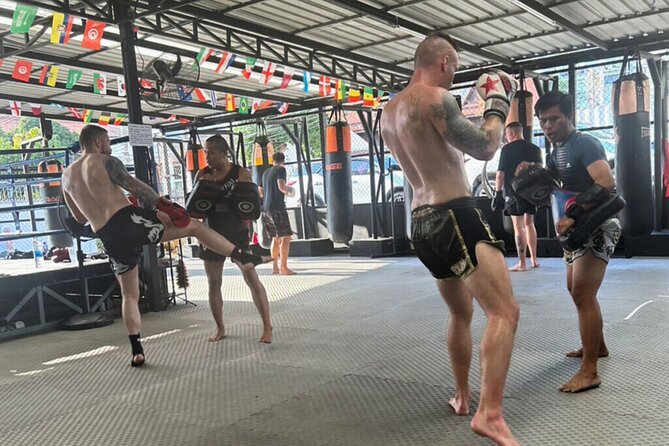
Buakaw’s career maps onto the sport’s globalization almost exactly. A fighter from Isan learns a five-round art, is exported into a three-round product built for Japanese television, adapts, wins, and becomes the image of Muay Thai for millions of people who have never seen a Thai stadium fight in their lives. Half the gyms in North America have a photo of him somewhere. Most of their students could not name a single Lumpinee champion from the same decade.
That is the trade. He gave up the thing Thai fans grade on, and got the thing nobody in Thailand had ever had, which is a global audience. If kickboxing and Muay Thai rules look like a technicality to you, remember that the difference is what the argument about him has been about for twenty years. Both sides are right. He is not the best Thai fighter of his generation, and he is the most important one.