

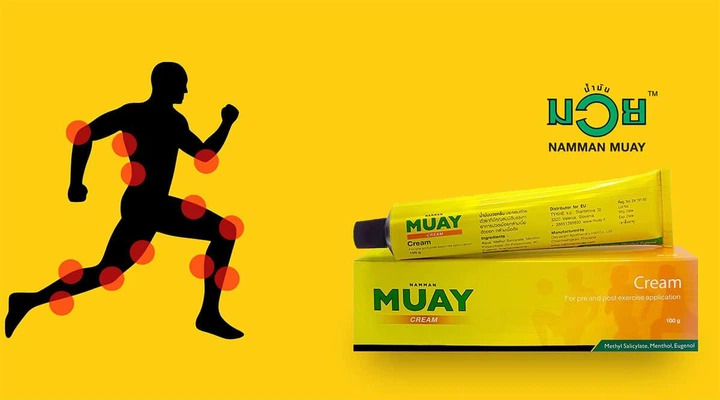
Walk into any gym that sells the stuff and someone will tell you it “heats up the muscles” or “gets the blood flowing” before a session. Search for it online and the claims get bigger: loosens fascia, speeds recovery, works some old Thai secret that Western products can’t match. None of that holds up under a plain reading of the label. Namman Muay is a topical warming liniment. It makes skin feel hot, sometimes for twenty or thirty minutes, and that sensation is the entire mechanism. It does not penetrate into muscle tissue and repair anything. The actual story is duller than the marketing, and also more useful, because knowing what the oil really does is what keeps a beginner from making a bad mistake with it.
What Is Namman Muay
Namman Muay is a Thai-made liniment sold in small glass or plastic bottles, usually amber or dark green, often with a fighter or tiger printed on the label. It has been produced in Thailand for decades and shows up in nearly every gym bag from Bangkok to small-town gyms in Ohio. The name translates roughly to “boxing oil,” which is exactly what it is marketed as: something a fighter rubs on before stepping into the ring.
The base is typically a blend of coconut or mineral oil carrying a handful of active ingredients. The two that matter most are methyl salicylate, a compound chemically related to aspirin that produces a warming, slightly numbing sensation on skin, and menthol, which triggers cold-receptor nerves and creates that tingling, almost icy bite underneath the heat. Camphor shows up in some formulas too. These are the same family of ingredients found in Tiger Balm, Bengay, and dozens of other rubs sold at any pharmacy. There’s nothing exotic in the chemistry. What’s distinct about Namman Muay is the ritual built around it and the specific way it gets used in a Thai gym.
What It Actually Does (and Doesn’t)
Here’s the honest version. Methyl salicylate and menthol are counterirritants. They stimulate nerve endings in the skin, and the brain reads that stimulation as heat, cold, or a tingling ache depending on the exact ratio. This sensation can genuinely distract from mild soreness or make a joint feel looser than it did a minute ago. That’s a real effect, not a placebo dressed up as science.
What it doesn’t do is increase blood flow to the muscle beneath the skin in any meaningful therapeutic way, repair microtears, or “warm up” tissue the way five minutes of jogging and dynamic stretching does. A 2015 review in the British Journal of Sports Medicine on topical rubs found the evidence for any real physiological benefit thin at best. The warmth is skin-deep, literally. If a fighter feels looser after applying it, that’s largely the nervous system reinterpreting a strong sensory signal, plus whatever calming effect comes from the pre-fight routine itself. None of that is nothing. It just isn’t muscle repair, and nobody should skip an actual warm-up because a bottle of oil is in the bag.
The Pre-Fight Massage Ritual
In Thailand, the oil rarely gets applied by the fighter. It’s part of the corner team’s job, and the massage that goes with it is almost as old as the sport. Before a fight, a trainer or cutman works the oil into the fighter’s legs, shoulders, and arms with firm, rhythmic strokes, sometimes for ten or fifteen minutes straight. The physical contact matters as much as the chemistry. It settles nerves, signals that fight time has arrived, and gives the fighter something to focus on other than the crowd noise starting to build outside the changing room.
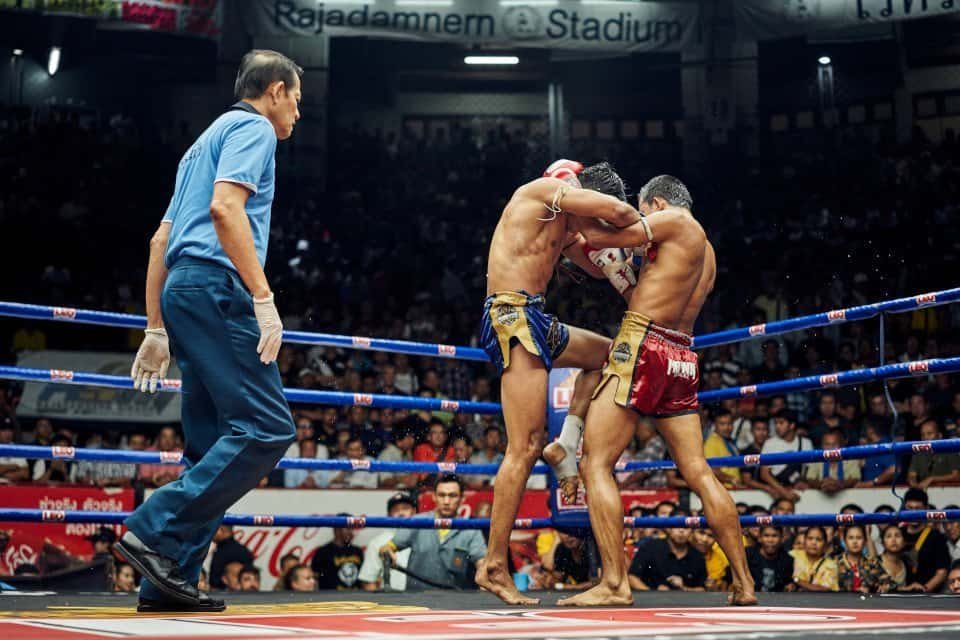
Watch enough Lumpinee or Rajadamnern broadcasts and you’ll notice this happening in the tunnel, sometimes minutes before the wai kru ceremony. It’s tradition layered on top of a mild physical sensation, and in a sport built around mental composure as much as technique, that combination has real value even if the oil itself isn’t doing anything medical.
How to Use It in Training
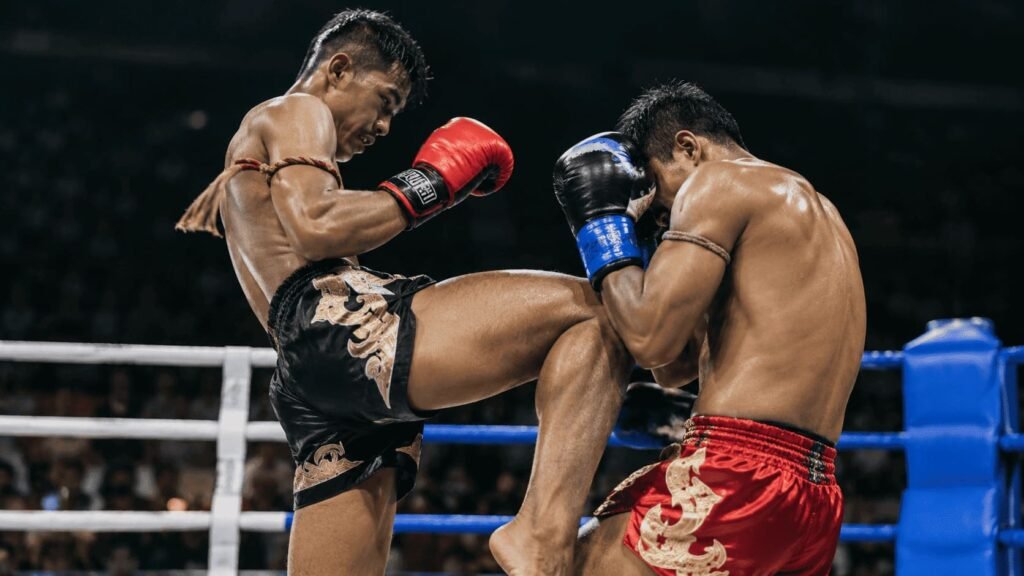
Amateurs picking up a bottle for the first time should treat it as a pre-training tool, not a cure-all. A small amount rubbed into the shins and knees roughly ten to fifteen minutes before pad work or sparring is the standard use. Some fighters extend it to the forearms and calves too. The warming sensation can make shins feel primed for kicking, which pairs naturally with shin conditioning work that gyms already build into a beginner’s routine.
A few things matter here and they’re not optional. Wash hands thoroughly after application, every time. Never apply it anywhere near the eyes, nose, mouth, or any mucous membrane; methyl salicylate and menthol both sting badly on contact and can cause real irritation. That means no oil right before sparring if there’s any chance of touching the face afterward without washing first, and it means being extremely careful applying it to a partner during a corner massage. It also shouldn’t go on broken skin, open cuts, or fresh bruising, since it will burn rather than soothe. And it isn’t a substitute for actual warm-up movement. Oil on cold muscles doesn’t replace jumping rope or dynamic stretching. Use both.
Namman Muay vs Tiger Balm vs Icy Hot
The short answer to “is Thai oil just Icy Hot” is: functionally, yes, with some differences in strength and format.
| Namman Muay | Tiger Balm | Icy Hot | |
| Format | Liquid oil | Balm/ointment | Gel, patch, or roll-on |
| Key actives | Methyl salicylate, menthol, sometimes camphor | Camphor, menthol, methyl salicylate | Menthol, methyl salicylate |
| Sensation | Strong heat, oily residue | Balanced heat/cold, thick texture | Sharper cold-then-heat, dry-touch |
| Typical use in combat sports | Pre-fight/training massage ritual | General muscle soreness | General muscle soreness, less common in Thai gyms |
| Absorbs into clothing/gloves | Yes, noticeably | Less, due to balm form | Minimal, dries fast |
Namman Muay isn’t chemically special. What sets it apart is the oil format, which lets a cornerman work it deep into skin during a massage in a way a balm or gel doesn’t, and the cultural weight it carries in a Thai gym. Someone buying a rub purely for post-workout soreness at home would get essentially the same effect from Tiger Balm or a generic Icy Hot product. Someone training Muay Thai specifically and wanting the traditional pre-fight feel is the person the oil is actually made for.
Where to Buy It in North America
Namman Muay ships to the US and Canada mainly through Amazon and a handful of martial arts supply retailers, plus some Muay Thai gym pro shops that stock it alongside hand wraps and shin guards. Bottle sizes typically run small, in the range of 1 to 2 fluid ounces, and pricing generally sits a notch above a standard drugstore muscle rub, closer to what a specialty sports liniment costs than a mass-market brand. Buyers should expect to pay more per ounce than they would for Bengay, less than a premium CBD-based rub. Checking that a listing ships from a seller with actual reviews on the specific product, rather than a generic marketplace reseller, is worth the extra thirty seconds, since counterfeit and relabeled liniments have shown up in this category before. A gym’s pro shop, when one exists, is usually the simplest and most reliably authentic source.
One Comment