
At Lumpinee the scale opens at 8 a.m. and closes at noon, and the fighter who steps on it will be in the ring that same night. Miss the number and you get one more attempt inside that window, then the bout is gone. That one line in the stadium rulebook explains most of the gap between how Thais manage weight and how a hobbyist in Denver does, where the scale sits a full day ahead of the first bell and everybody treats those 24 hours as free money.
Four things leave your body, and only one of them is fat
By fight week the fat loss is over. Whatever moves in the last seven days is mostly water, and the Thai word for weight makes the point better than English does: nam nak is “water” plus “heavy.”
Water is the biggest lever, around 60 percent of an adult man’s body mass and slightly less for women. Glycogen is the second. Muscle and liver hold a few hundred grams of stored carbohydrate, and each gram holds roughly three grams of water alongside it. Pull the carbs for two days and the water goes too. You feel this one. Flat, slow, strangely cold, and your best kick stops feeling like your best kick.
Third is whatever sits in your digestive tract. A day of low fiber, low residue eating clears a pound or two of material that was never really you. Cheapest weight on the list, and the part beginners skip.
Fourth is sodium, less a thing you lose than a switch you flip. Drink well above your usual intake for several days, then cut the added salt while the fluid tapers, and the kidneys keep dumping water after you stop putting it in. It works. It also puts you on a knife edge, and a beginner who reads about it Monday and tries it Wednesday has skipped the part where you learn how your body responds.
Thailand runs on a different clock
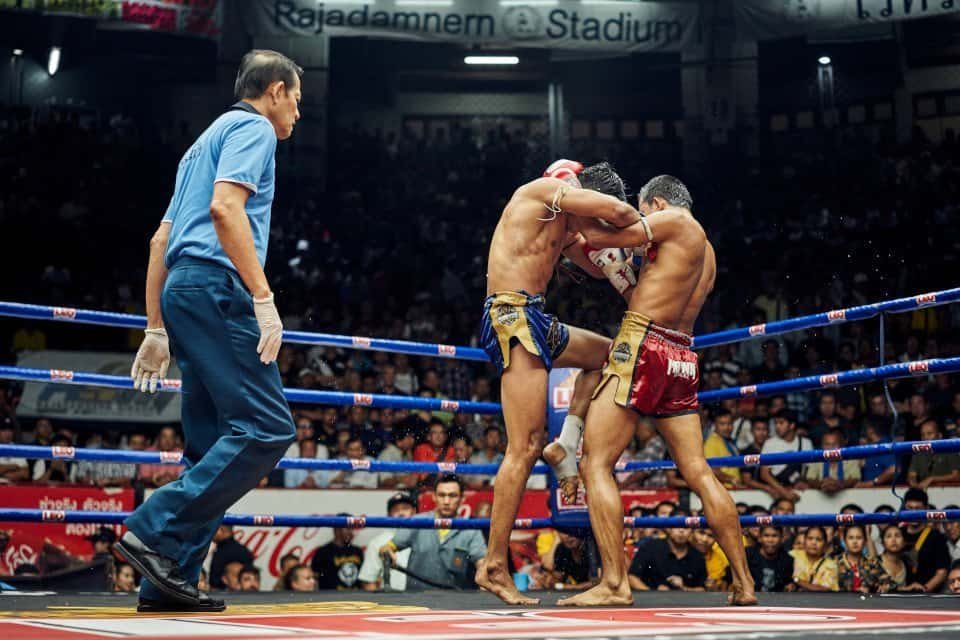
Lumpinee’s published rules put the weigh-in between 8 a.m. and noon on fight day, fighters on the scale naked, one reweigh allowed inside that window and nothing after it. Rajadamnern also weighs on the day. There is no 24-hour buffer to hide in, so a fighter who dumps eight pounds in a hot bath at six in the morning fights five rounds at ten at night as a dehydrated version of himself, in front of a gambling crowd that priced the healthy one.
Frequency is the other half. A working stadium fighter takes bouts on a schedule a Western amateur would find absurd, and careers of well over a hundred fights are ordinary at the top of the Thai game. Nobody survives that with a brutal cut every camp. So they live within a kilo or two of fight weight year round and take the last bit off running in the afternoon heat.
None of which should be romanticized. Thais cut weight. Plastic suits, skipping in the sun, spitting into a bottle in the last hour, all of it happens, and some of it happens to teenagers. The number just stays small, for structural reasons rather than virtuous ones: the clock and the calendar leave no room for more.
The North American setup changes the arithmetic
Put that same fighter on a card in Ohio or Ontario and the incentives invert. Under WBC Muaythai rules the official weigh-in falls no less than 24 and no more than 30 hours before the bout, and the rulebook says why: dehydration and the rehydration after it can go badly. That body also runs safety weigh-ins on the approach, expecting fighters within 10 percent of the limit 30 days out, 5 percent at 14 days, 3 percent at 7 days. Anyone planning to be nine percent over on Monday of fight week should read that twice.
State law can override all of it. North Carolina weighs every fighter, amateur and professional, the day before. A promoter two states over may run a morning weigh-in for an evening show. Tournaments are strictest: at USA Muaythai’s Grand Nationals the scale opens at 6 a.m., closes at 8 a.m., there is no allowance, and you make weight every morning you compete. A water cut built for that has to be repeated three days running.
ONE Championship went the opposite way after Yang Jian Bing, a 21-year-old flyweight, collapsed during a cut in December 2015 and died of cardiopulmonary failure. ONE now runs a hydration test alongside the weigh-in 24 to 48 hours out, measuring urine specific gravity with a pass mark of 1.025 or lower, bans IV rehydration outright, and only sanctions a catchweight if the heavier athlete is within 105 percent of the lighter one. World-level fighters have lost bouts on that test rather than on the scale.
So the first useful thing you can do today is not a diet. Before you agree to a weight, get three facts from whoever is matching you: what time is the weigh-in, how many hours before your bout, and is there an allowance. People agree to the number first and learn the rules in fight week, which is how a manageable 3 percent becomes a panic. If you are unsure what to agree to, start from the amateur weight divisions, not from what your training partner is doing.
The International Society of Sports Nutrition’s position stand on combat sports sorts its guidance by that recovery window. With 4 to 12 hours to recover it puts the ceiling around 2 to 4 percent of body mass from sweat losses, and 3 to 5 percent with 12 to 24 hours, which is where amateur Muay Thai sits. For a 155-pound man, five percent is under eight pounds. Most beginners announcing a cut to 147 are describing far more than the research supports.
A week that does not wreck you
| Day | Food | Water | Sodium | Training |
| 7 to 6 out | Normal meals, carbs in | Well above usual, spread out | Normal | Last hard sparring, then pads |
| 5 out | Portions down, protein stays | Still elevated | Ease off added salt | Light drilling, short rounds |
| 4 out | Lower carb, low fiber | Still elevated | Low | Bag work only |
| 3 out | Small, low residue meals | Begin the taper | Low | Short, movement based |
| 2 out | Small and simple, nothing new | Taper harder | Minimal | Shadow boxing only |
| Weigh-in day | Nothing solid until you are off the scale | Sips only at the end | Minimal | Walk, or a light sweat if close |
| After the scale | Fluids, then familiar carbs and a real meal | Steady, never chugged | Back in with the fluids | Rest, then normal warm-up |
That grid is a shape, not a prescription. The liters and the grams are missing on purpose, and this is where most weight cutting guides oversell themselves: the volumes that suit a 125-pound woman on debut and a 175-pound man with a dozen fights are not the same, and a stranger online handing you exact numbers sight unseen is guessing at your kidneys. Get them from a coach who has watched you cut, or a dietitian who works with fight sports.
Hard sparring belongs at the front of that week and nowhere else, because a dehydrated brain takes head contact badly. And if you are more than two percent over on the Thursday, phone the matchmaker rather than finding a hotter bath.
The window after the scale is the whole game
Making weight is not the skill. Coming back is.
With a day-before weigh-in you have most of a day, enough to restore the bulk of what you dropped if the cut was a sane size. Fluids first, with sodium alongside so the water stays in you rather than running straight through. Carbohydrate follows, in food you have eaten a hundred times before. Fight week is a terrible week to discover a new rice bowl.
Same-day weigh-ins compress that into six to ten hours, and amateur cards are notorious for bout orders that move. Told you are fourth on, you end up second. Rehydrating on that timeline means small, steady, and boring rather than a gallon and a burrito: sip, eat something light, sip again, stay warm, and accept that you will feel about seventy percent of yourself.
Here is the part that gets left out. A large cut is not fully reversible in either window. Glycogen refills on its own schedule and cell water follows, so the fighter who dropped eight percent of his body mass steps in below the athlete he was two weeks earlier. He bought a size advantage on paper and paid for it in round four.
Stop signs you do not negotiate with
Learn these before you ever sit in a hot bath, because the person cutting is the worst judge of how it is going.
- No urination for hours, or urine the color of apple juice
- Cramping in the calves or hands
- Goosebumps or chills in a hot room
- Dizziness on standing, or vision graying at the edges
- A resting heart rate that will not settle
- Confusion, slurred words, or a worsening headache with nausea
Two of those together and the cut is finished. Drink, tell your coach, and be ready to lose the fight rather than the week after it. A coach who tells a 0-0 amateur to get back in the water is showing you how he will corner you when you are hurt in round two.
The case for showing up at your walking weight
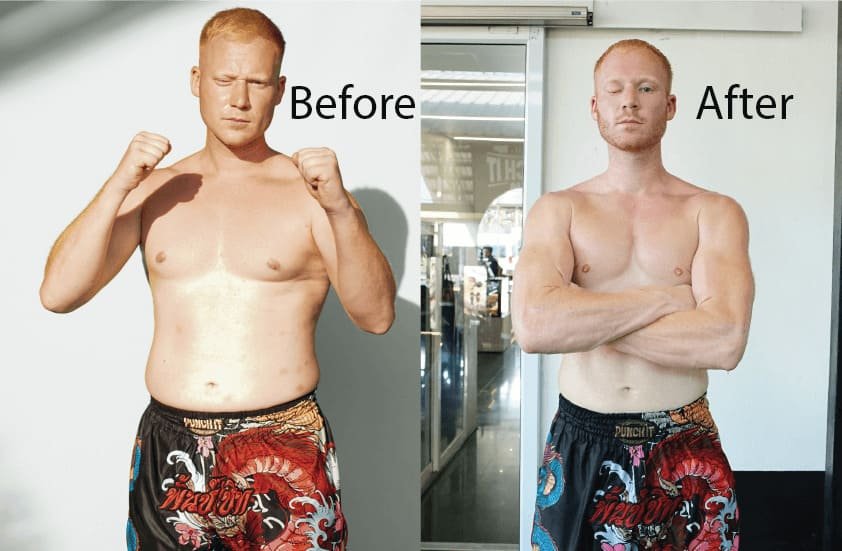
If your record is 0-0 and the event is a smoker or a club show, cutting weight is a plan with no upside. No title, usually no official record, and the matching is done by weight and experience rather than by division, so the six pounds you starved off just move you into a bracket where your opponent starved off six of his own. You arrive weaker at the same relative size. Fight at what you weigh, and find out what the nerves do to your cardio, which is the real lesson on offer at your first amateur show.
Plenty of good coaches disagree, and their argument is decent: rehearse a small, supervised cut of two or three percent before it matters, so fight week is not the first time your body has done it. Fine. Rehearsal is not a first-timer dropping ten pounds in five days because a training partner called it standard.
The fighters who handle weight best are not the ones with the cleverest protocol. They stay near their fighting weight all year, so fight week is an adjustment rather than an emergency. Unglamorous, slow, and the only version that still works when you are 5-0 and the fights come every eight weeks.
Questions people actually ask
How much weight can I safely cut for a Muay Thai fight?
It depends on how long you get between the scale and the first bell. Published sports nutrition guidance puts the ceiling around 2 to 4 percent of body mass with 4 to 12 hours to recover, and 3 to 5 percent with 12 to 24 hours. For most amateurs that is single-digit pounds, not the double-digit numbers gyms talk about.
Do Thai fighters cut weight?
Yes, but usually one or two kilos rather than eight. Lumpinee weighs on the morning of the fight, between 8 a.m. and noon, so there is no overnight window to rehydrate in, and a busy fight schedule keeps them near their weight year round.
What should I eat right after the weigh-in?
Fluids with sodium first, then carbohydrate you have eaten many times, then a normal meal if the timeline allows. Keep fiber low and portions moderate, because a stomach empty for a day punishes a big meal. Get the amounts from your coach or a sports dietitian who knows your body.
Should I cut weight for my first smoker?
No. There is no title and often no official record on the line, your opponent is matched to you by size and experience, and arriving dehydrated to a three-round exhibition costs you the one thing you came for: a clear look at how you perform under pressure.