
Round one feels fine. Ninety seconds into round two your forearms are full of concrete, your mouth is hanging open, and the guy in front of you has not changed his breathing once. You drive home and decide the answer is more running.
Six months and a lot of miles later, the same thing happens in the same round. That is because the thing that emptied you was never your aerobic engine. In the order I see it go wrong, gassing out is a tension problem, then a breathing problem, then a decision problem. Actual conditioning comes sixth on the list, and it is the only one on that list you cannot fix inside a month.
Here is the quick version before we get into each one.
| What you notice first | Most likely cause |
| Forearms and shoulders burn before your lungs do | Death grip and full-body tension |
| Mouth open and gulping air by minute two | Holding your breath through exchanges |
| Fine on the bag, wrecked in sparring | Throwing everything at full power |
| You can never stop moving or striking | No rest positions in your game |
| You come out of the corner as tired as you sat down | Bad recovery in the minute between rounds |
| Slow, heavy and flat from round one, every session | Aerobic base, genuinely |
Cause one: you are strangling your own gloves
Check your hands in the mirror during a round of shadowboxing. If your fists are clenched the whole time, your forearms are working for three straight minutes to do a job that should last a tenth of a second.
It travels upward. A clenched fist pulls the forearm tight, the forearm pulls the bicep, the bicep locks the shoulder, and now you are holding two arms up with muscles already contracting for no reason. That is why people describe the round-two feeling as their arms dying rather than their lungs. The arms are dying. Muscles under constant low-grade contraction burn fuel and choke off their own blood supply, and you cannot out-run that any more than you can out-run holding a plank for nine minutes.
The same tension usually shows up in the jaw, the traps and the toes. Sore traps the next morning after a light technical session is a tell.
The fix is boring and it works. Shadowbox one full round with your hands deliberately loose, fingers curled but not squeezed, and only make a fist in the last few inches of the punch. Thai coaches nag about this constantly, usually with some version of sabai sabai, meaning easy, comfortable, at ease. Plenty of Western coaches push the opposite, telling you to keep a tight fist for wrist safety, and at the moment of impact they are right. The argument is about the other 99 percent of the round.
You stop breathing and you have no idea
Ask anyone who has been coaching beginners for a few years and they will tell you the same thing: most new fighters hold their breath through exchanges. Not for the whole round. For the two or three seconds when something is actually happening, which over nine minutes adds up to a real oxygen debt, and then you spend the rest of the round paying it back with big panicked gulps.
You will not notice it in the moment. You notice the aftermath: a loud sigh once the exchange ends, or that hyperventilating feeling where you are breathing hard but nothing seems to reach the bottom of your lungs.
Thai fighters solve this with two separate habits, and it is worth learning them as two separate habits.
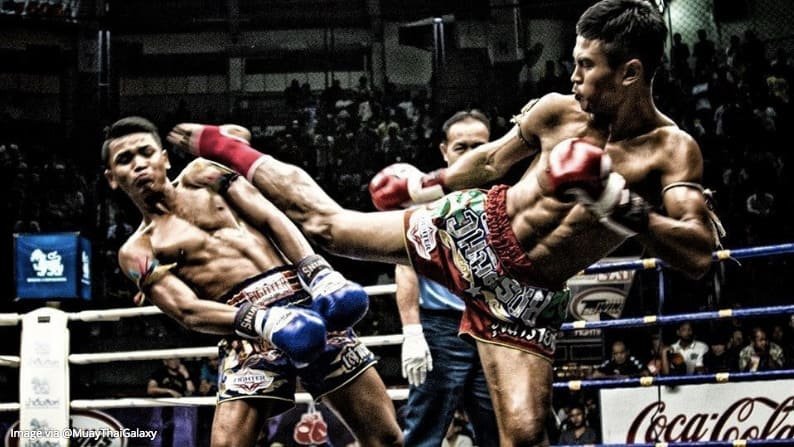
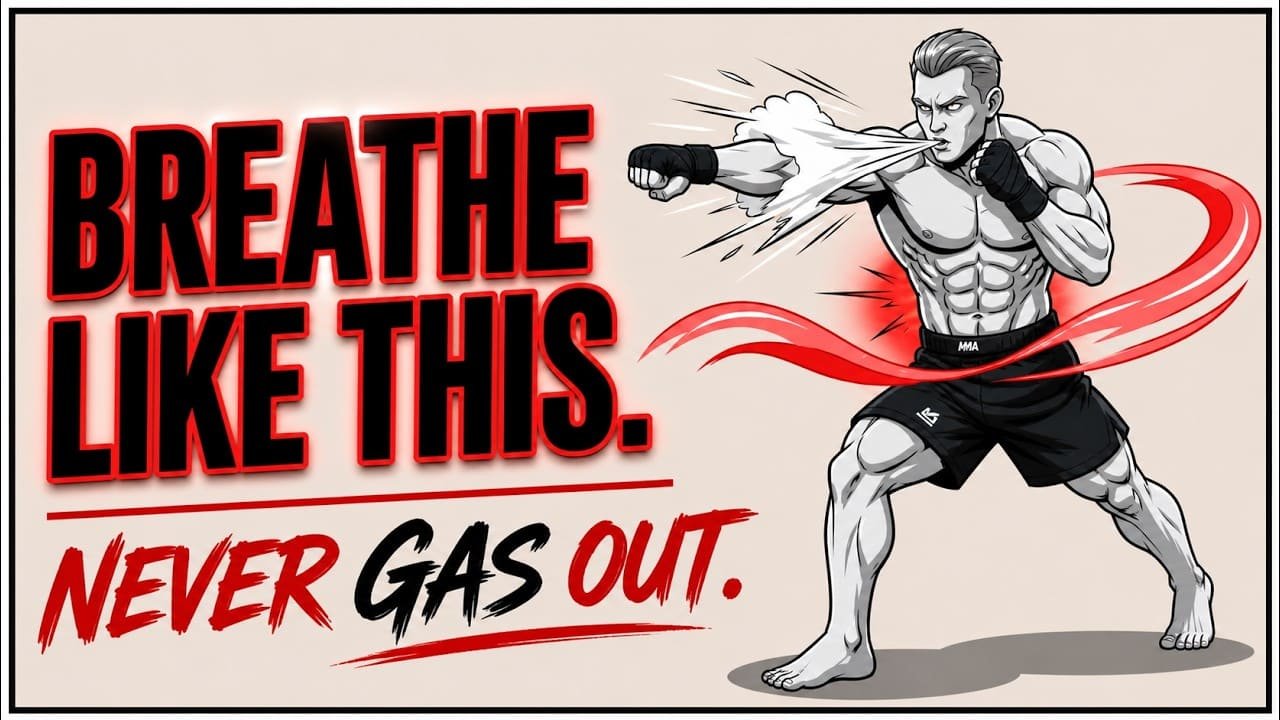
The first is the sharp exhale on impact. One strike, one short forced breath out through a small gap in the teeth, the tss sound you hear all over a Thai gym. It is not decoration and it is not for show. Forcing air out braces the trunk at the moment of contact and, more usefully here, it makes breath holding physically impossible. You cannot hold your breath and exhale at the same time. Four punches in a combination means four exhales, not one long grunt.
The second is nasal breathing at rest. Between exchanges, mouth closed, breathe in and out through the nose at a pace you could hold while walking. It slows you down on purpose and it stops the panic gulping. Be honest about the limits of this one: in hard sparring against someone who is genuinely pressuring you, nose-only breathing falls apart, and anyone who tells you elite fighters keep their mouths shut for five rounds has not watched much film. It is a resting-state tool. Use it for the seconds you are not exchanging, which in a normal round is most of them.
Every strike at 100 percent is a tax you cannot pay
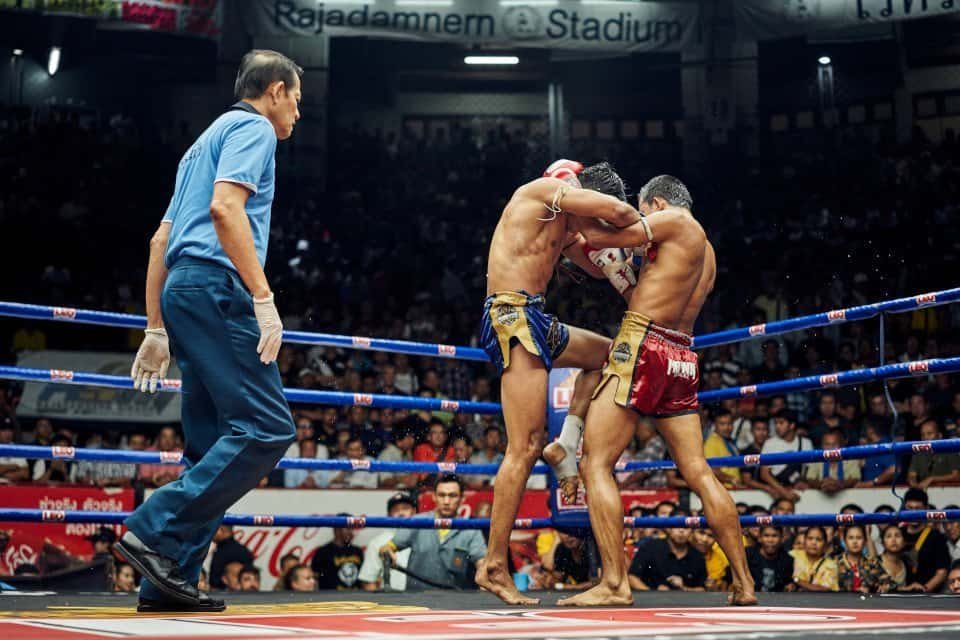
Watch a stadium card at Lumpinee or Rajadamnern, where a bout is five threes separated by two minutes on the stool. Round one is often close to a warmup, both fighters feeling range, output low enough that first-time Western viewers assume something is wrong. Nothing is wrong. The scoring rewards the later rounds, the gambling in the stands only settles late, and the fighters know they have fifteen minutes to work with.
Now watch a typical gym sparring round in the States. Everything at full power, no gears, and by the end of round two both people are heaving. Saenchai spent whole fights barely appearing to try, then took the rounds that counted. Rodtang is the obvious counterexample, a real high-output pressure fighter, but that is a style built on a decade of fights, not a default setting.
Set a rough scale in your head. Roughly 60 percent for the strikes that are gathering information: teeps, jabs, low kicks that measure distance and see what comes back. Full commitment for the two or three moments in a round where you have actually created an opening. If you cannot tell the difference while you are in there, that is the decision problem talking, and it will cost you more air than any missing mile of roadwork.
Nobody taught you how to rest while working
Here is the part most guides skip. Fighters do not have infinite cardio, they have places to hide. If you have no rest positions, you are running the round at one speed, and the only two options available to you are output and panic.
A few that cost almost nothing:
- The teep. Push someone back a step and you have bought yourself two seconds of nothing happening. Cheapest reset in the sport.
- The [long guard](https://thaiboxingpros.com/self-defense-and-practical-skills/the-muay-thai-guard-high-guard-long-guard-and-when-to-use-each/). Arm extended into their space, head behind it, breathing through the nose while they figure out what to do about the pole in their face.
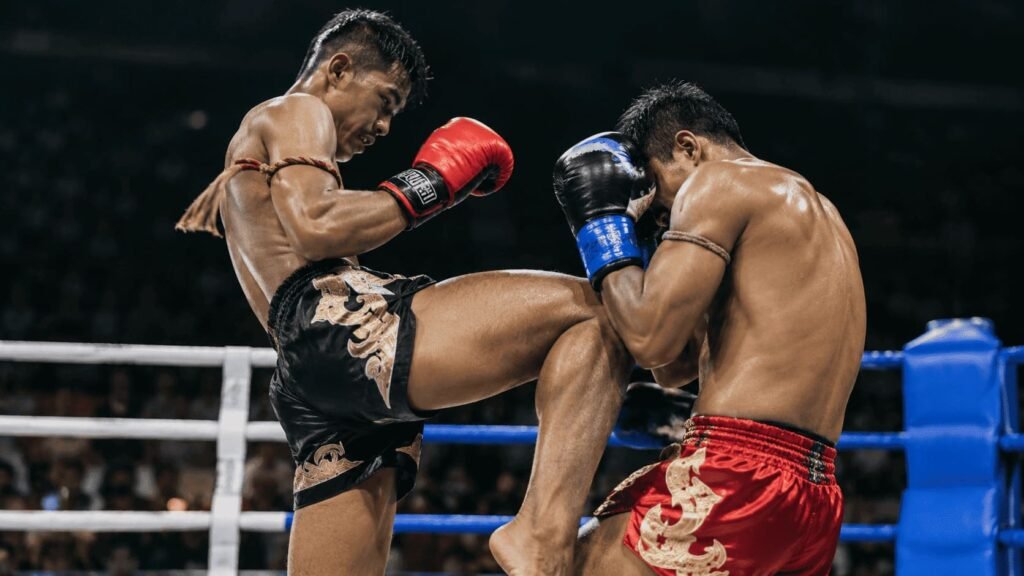
- Clinch as a rest, not a wrestling match. This is where most people burn the most fuel for the least return. Do not muscle it. Get inside position, get heavy, and let them carry your bodyweight while you breathe. Gravity is free. Your biceps are not.
- Circling on the outside, at a walking pace, with your hands where they belong.
If your answer to being tired is to throw more so the round ends faster, you already know how that goes.
The minute in the corner that you are wasting
Sixty seconds in the gym, two minutes in a stadium fight. Either way, that time is where you either come back or you do not.
Do not fold in half with your hands on your knees. Hunching compresses the diaphragm exactly when you need it working. Stand tall, or sit up straight on the stool with your hands on the ropes, chest open. Nose in for about four seconds, slow out through the mouth for six or so, and stop talking. Do not chug water; a mouthful is plenty, and a stomach full of water is a stomach full of water in round three. Aim to have your breathing back under control by the halfway mark of the break, and spend what is left looking at your opponent instead of at the floor.
Most people waste that break. They spend it catching their breath instead of directing it, and they walk out for round two carrying everything round one cost them.
When it really is your aerobic base
Sometimes the boring answer is the right one. If you are flat and heavy from the first bell of every session, if a conversational 30-minute run is out of reach, if you train twice a week and spend the rest of it sitting, then yes, you have a base problem and it needs base work. That is what morning roadwork has always been for.
It sits at number six for one reason. Building real aerobic capacity takes three to four months of consistent work. Unclenching your fists takes about a week of paying attention.
Run this test in your next sparring round
Pick one light technical round, tell your partner you are working on something, and keep 60 or 70 percent output. Then check three things at the 30-second, 90-second and 150-second marks:
- Are my fists clenched right now? Are my teeth clenched?
- Did I hear myself exhale on my last three strikes?
- Can I close my mouth and breathe through my nose for the next ten seconds without panicking?
Score it out of nine. Anything under six and your cardio is not the thing that needs work. Do this for four consecutive sessions and the score climbs on its own, because the checking is most of the training.
Two weeks, six sessions
Week one, one job per session. Session one: shadowbox three rounds with loose hands and only clench on contact. Session two: bag work where every single strike gets an audible exhale, including the ones in the middle of combinations, and you stop the round if you lose it. Session three: one round of pad work capped at 60 percent, deliberately, even when the pads invite more.
Week two, put them together. Session four: technical sparring with the three-point check above. Session five: clinch rounds where the only goal is to stay heavy and keep breathing, no attempt to score. Session six: normal sparring, no rules, and see whether round two feels different.
It usually does. Not because you got fitter in fourteen days, but because you stopped spending energy on things that were never buying you anything.
Questions people actually ask
Why can I run 10k but still gas out in two rounds of sparring?
Running trains a steady, predictable demand. Sparring is repeated short bursts on top of full-body tension and irregular breathing, which is a different physiological ask. Someone who runs a comfortable 10k and still dies in round two almost always has a tension and breathing problem sitting on top of a perfectly adequate engine.
Should I breathe through my nose or my mouth during a fight?
Nose when you are resting, moving, or waiting, mouth open only when the work demands it. The point of nasal breathing is not purity, it is that it forces a slower rhythm and stops the gulping cycle. Under heavy pressure you will breathe through your mouth and that is fine.
Is the loud exhale on strikes actually necessary or is it a gym mannerism?
Both, honestly. It braces your midsection on contact and makes breath holding impossible. It also gets performed at volume by people who have never thought about why. Do it quietly if that embarrasses you; the mechanism works the same.
How long before this stops feeling like extra homework?
Loose hands and the exhale habit usually stick within two or three weeks of deliberate attention. Pacing takes longer, closer to a couple of months, because it needs you to read what is happening in front of you rather than just manage yourself.