
Three weeks in, the thing that keeps most beginners off the mats is not a cracked rib or a purple shin. A coin-sized flap of loose skin under the ball of the left foot does the job just fine. You train barefoot, you grind skin against canvas or vinyl a few hundred times a night, and nobody hands you a foot protocol on day one.
Gloves get replaced. Shin guards get replaced. Your feet are the one piece of equipment that has to last, and few gym foot problems are actually bad luck. Most come from three habits: pivoting like your heel is glued down, ignoring dry skin until it splits, and treating gym hygiene as somebody else’s job.
Here is the whole thing on one page, then the detail on each.
| Problem | Usual cause | What to do now | How to stop it coming back |
| Blister on the ball of the foot | Half-committed pivot, sweaty soles, too much volume too soon | Leave intact blisters alone, pad and tape, remove tape after class | Turn on the ball with the heel lifted, powder the soles, add kick volume gradually |
| Mat burn on the instep or shin drag | Foot dragging across the mat on kicks and knees | Clean, dress, stop kicking with that foot until the skin seals | Finish the kick through the target instead of scraping the floor |
| Turf toe | Big toe jammed into the mat, bag, or a partner | Ice, tape the toe to limit bend, no teeps on that side | Pull the toes back before the teep lands, strike with the ball of the foot |
| Cracked heels | Callus too thick and too dry to flex | File after a shower, urea cream overnight, socks on top | File once a week the night before a rest day, never with a blade |
| Damaged or black toenails | Toes-first teeps, catching the bag, nails too long | Leave a lifting nail attached, tape over it to train | Clip straight across and short every week, clippers live in the gym bag |
| Ringworm or athlete’s foot | Fungus picked up off mats and gym floors | Over-the-counter antifungal cream, twice daily, cover it | Shower right after class, slides on for the bathroom, wraps washed every session |
The pivot blister is a technique problem in disguise
Blisters show up in the same two spots on almost everyone: the pad under the big toe and the ball of the foot behind it. Weight sits there when you turn over a roundhouse. Heat plus friction plus a sweaty sole equals a fluid pocket under the skin, usually on the lead side first, since that foot turns on nearly everything you throw.
Here is the part most guides skip. Beginners blister more because their pivot is stingy, not because their skin is soft. The heel stays low, the foot turns forty degrees instead of ninety, and the sole scrubs the mat rather than spinning on it. Get the heel up and let the foot rotate all the way.
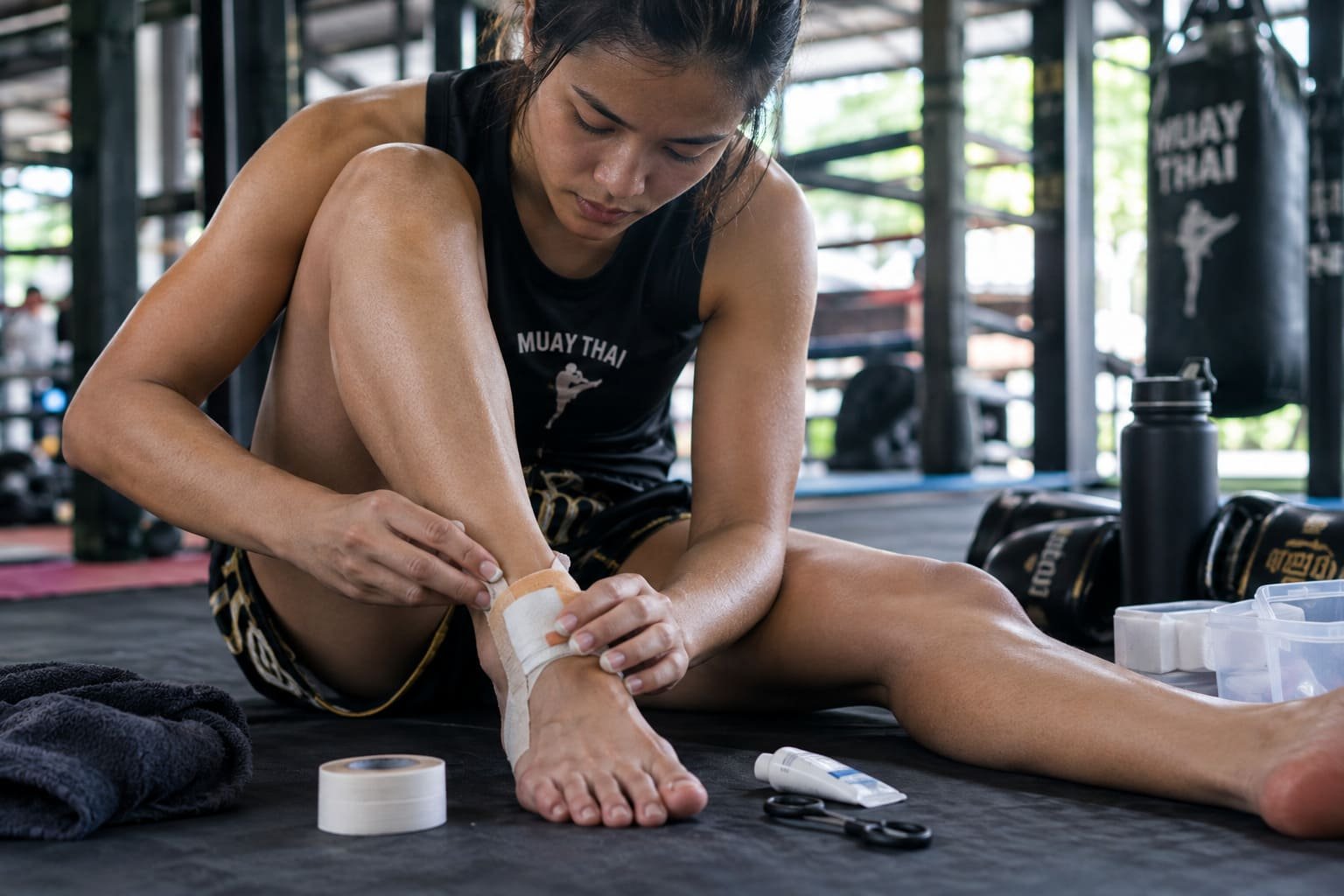
Do not peel an intact blister. That roof is the cleanest dressing you will ever get, and gym mats are not a sterile environment. Pad it with gauze or moleskin, then run tape from skin that moves to skin that does not. Kinesiology tape holds through a sweaty hour better than cloth tape. Pull it off after class and let the foot dry overnight.
Plenty of good coaches will tell you to just train through it until calluses form, and over a year they are right. Over one week they are wrong, because a torn blister on a shared mat is the fastest route to an infection that costs you a month.
Mat burn, instep cuts, and the toe joint that ruins camps
Mat burn is an abrasion, not an injury with a story. The instep drags across the surface on kicks, knees, or a scrappy landing and loses its top layer of skin. Clean it, cover it overnight, give it a session off. Kick full power on a raw instep before it seals and it opens again in the first round, then stays open another week.
Turf toe is the one worth naming properly. The big toe joint gets forced backward past its range, usually by stubbing the bag or landing a teep with the toes instead of the ball of the foot. Pain sits right at the base of the toe, with swelling and a miserable push-off on every step.
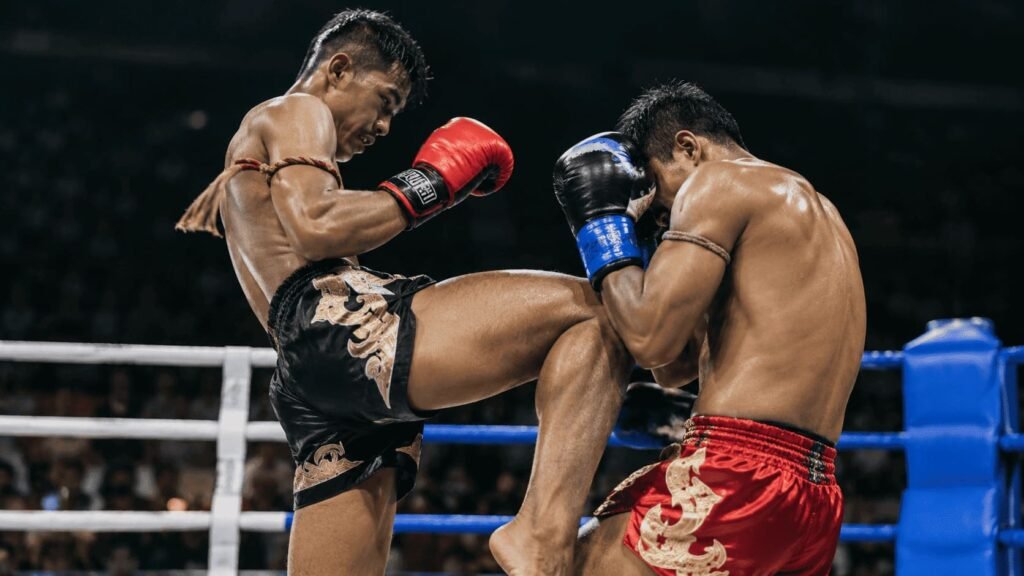
The immediate answer is boring: ice, tape across the joint so the toe cannot hyperextend, no teeps on that side. The long answer lives in the technique. Teep translates roughly as a foot jab, and it lands with the sole, ball of the foot forward, toes pulled back. Everybody knows that and everybody forgets it around round four.
Your calluses are not a trophy
Cracked heels get misdiagnosed constantly. People assume dry skin. The real culprit is callus built too thick to bend, so the heel loads on a step and the skin splits instead of flexing. Anyone training five days a week meets this every winter.
Fix it in the right order. File the callus down after a shower, when the skin is soft, with a pumice stone or a fine foot file. Then a urea-based cream at night and socks over the top so it soaks in. Once a week, the evening before a rest day.
Two warnings. Never take a blade to a callus, and never moisturize your soles right before training. Slick feet on canvas will either dump you on a pivot or grind a fresh blister into skin you just softened.
Toenails, teeps, and bag work
Nails take damage from the same mechanism as turf toe, just further forward. A teep that lands toes-first, a low kick that clips the bag’s stitching, a partner’s elbow in the clinch: any of it bruises the nail bed and turns the nail dark. That bruise is trapped blood, and the nail usually lifts and comes off over the following months. Leave it attached as long as it stays attached, tape over it to train, let the new one push it out.
Prevention costs nothing. Clip straight across, keep them short, do it weekly rather than when you happen to notice. Rounded corners invite ingrown nails, and a long nail cuts your partner as readily as it tears itself. Clippers live in the gym bag, next to the tape.
Ringworm is a fungus, and it does not respect toughness
Ringworm is a fungal skin infection. Not a worm, not dirt, not a badge. It spreads by contact with skin and with surfaces, which is what a Muay Thai mat is for two hours every evening. Athlete’s foot is the same family of fungus setting up between the toes, where it itches, peels, and cracks.
Neither goes away because you ignored it. Both need an over-the-counter antifungal cream twice a day, and you keep going for a week or two after the patch looks clean, because it looks clean well before it is. A ring that spreads fast, sits on the scalp, or has not budged in two weeks is a doctor visit. Scalp cases need oral medication and creams will not touch them.
The hygiene half is genuinely simple, and almost nobody does all of it:
- Shower as soon as you get home, or at the gym if it has showers. Fungus likes the hour you spend sweaty in the car.
- Put slides on to walk to the bathroom. This is the most broken rule in every gym on both continents, and gym bathroom floors are where athlete’s foot recruits.
- Wash hand wraps every session, not when they start to smell. Same for shorts. Damp gear sealed in a bag overnight is an incubator, and the rest of your kit needs the same treatment.
- Cover open blisters and mat burn before you step on the mats.
- Ask how often the mats get mopped. Daily is the standard. Plenty of camps in Thailand keep a water bath at the ring steps so nobody carries the floor into the ring.
One more thing, since it comes up constantly: Namman Muay does nothing for any of this. Thai liniment warms muscles. On broken skin it just stings.
When rope work starts talking back
Most Thai gyms open with rope, often three to five rounds before you touch a bag. New trainees skip on the balls of their feet, on concrete, with calves and arches that have never done it. Around week four the heel starts aching in the morning.
Back the volume off, stretch the calves, roll a lacrosse ball under the arch for a few minutes a night. If the worst pain of the day is your first few steps out of bed and it eases as you move, that points to plantar fasciitis, and it is worth getting looked at rather than skipping through.
This is where “train like a Thai fighter” advice quietly falls apart. A stadium fighter at Lumpinee has been barefoot on concrete since he was eight, and his feet built themselves around it. A 34-year-old who spent thirty years in cushioned running shoes has different feet and has to earn that volume over months. If your gym allows shoes for the rope rounds, use them while you build up, and read why Thais use heavy PVC ropes before buying a speed rope that tempts you to bounce higher.
When to stop treating it yourself
Some of this belongs to a professional, and the signs are specific rather than vague. Red streaks running from a wound, pus, or skin that is hot and spreading means infection, and that is a same-day appointment. Pain at the base of the big toe that has not eased after a week off is worth an X-ray. A rash that resisted two full weeks of antifungal cream is either not fungal or not responding, and both answers need someone who can look at it. Heel pain still there after a month of reduced volume has stopped being soreness.
If you have diabetes or any nerve issue in your feet, none of the self-treatment above applies to you. Get foot wounds looked at properly, every time.
Everything else fits in a small pouch: clippers, a roll of tape, gauze pads, a foot file, a tube of antifungal cream, and a pair of slides. The whole kit runs under thirty dollars, and it decides whether a bad blister costs you one session or three weeks.