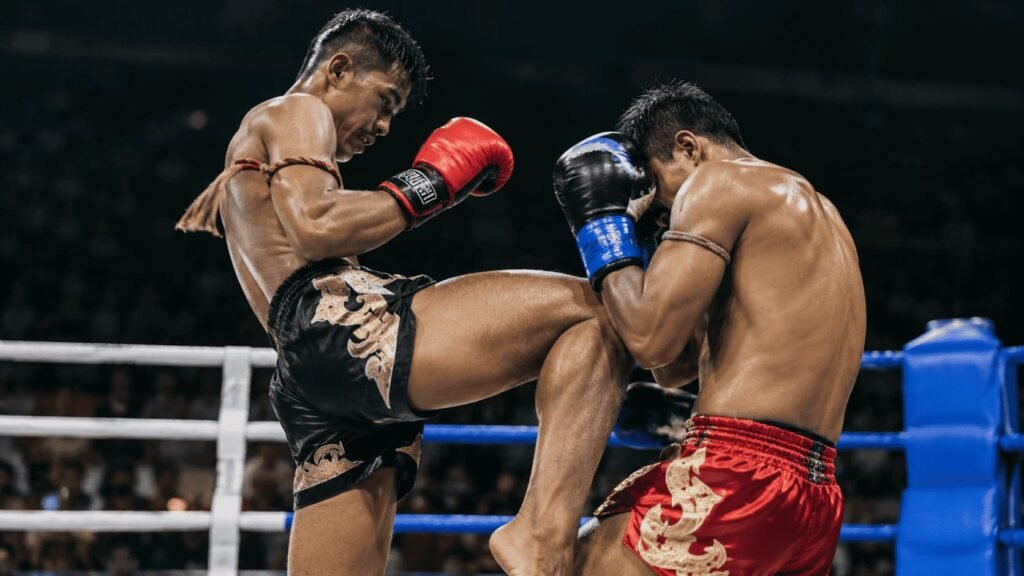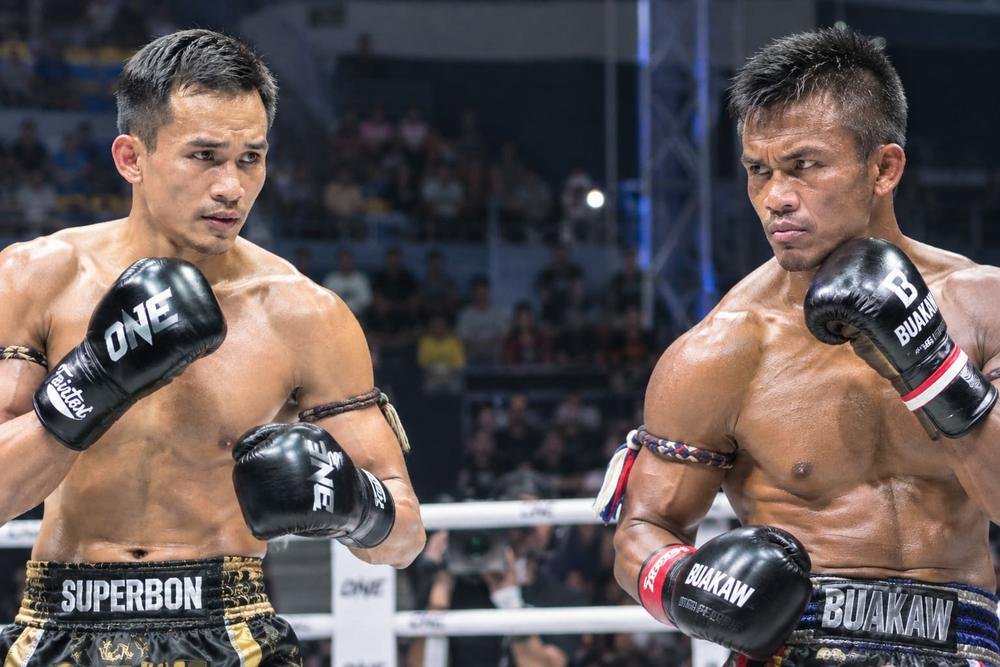

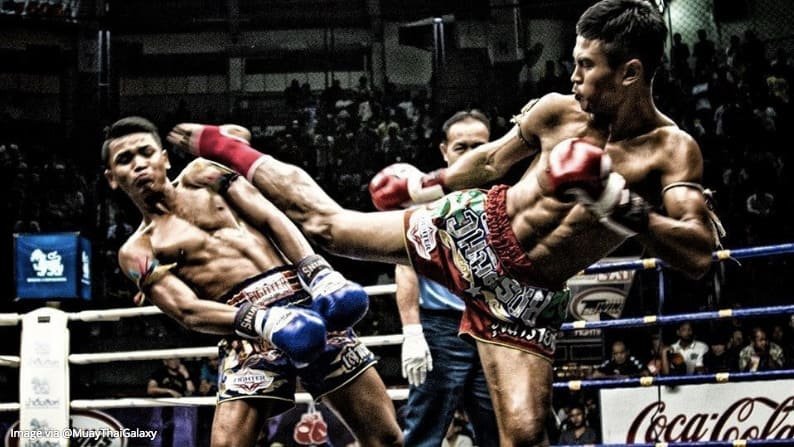
Watch a femur fighter for one round and you may conclude that very little has happened. He has thrown perhaps a dozen kicks. He has been hit rarely, and never cleanly. He has walked backward more than forward. Then the judges score the round his way, the gamblers along the rail of the stadium nod as if they expected nothing else, and the man across the ring looks at his corner with the expression of someone who has been robbed in a way he cannot describe. Muay femur is the name for that style: the technical, defensive, deliberately unhurried way of fighting that Thai audiences have long regarded as the highest form of the sport.
This piece takes the style apart in the order a coach might: the word, the family of styles it belongs to, the mechanics that make it work, the fighters who defined it, and the training that produces it.
The Word and What It Carries
“Femur” has nothing to do with the thigh bone. It is an English spelling of the Thai มวยฝีมือ (muay fimeu), and fimeu means skill, craft, the ability of a practiced hand. A carpenter can have fimeu. So can a cook. When the word attaches to a fighter, it describes someone whose results come from technique rather than from aggression or physical advantage.
The label is a compliment, and an old one. In Bangkok stadium culture, a fighter who wins by walking through punishment earns respect. A fighter who wins without being touched earns something closer to admiration, because the crowd understands that he has solved a problem the other man could not even see.
Where Femur Sits Among the Thai Styles
Thai trainers sort fighters into a handful of broad types. The categories overlap, and most good fighters borrow from more than one, but the vocabulary is useful because it names what a fighter reaches for under pressure.
| Style | Thai term, loosely translated | Primary weapons | How it usually wins |
| Muay femur | “skill boxing” | Teeps, switch kicks, counters, footwork | Controls distance, scores clean, avoids return fire |
| Muay khao | “knee boxing” | Knees, clinch control | Closes range, wears the opponent down inside |
| Muay mat | “punch boxing” | Hooks, crosses, body shots | Pressure and hand damage |
| Muay tae | “kick boxing” | Round kicks to body and head | Heavy, repeated scoring kicks |
| Muay sok | “elbow boxing” | Short elbows from close range | Cuts and sudden stoppages |
The table makes the femur fighter look like a specialist, which is misleading. He is closer to a generalist with a defensive temperament. He can kick, knee, punch, and clinch. What sets him apart is that he chooses, at every moment, the option that costs him the least.
What a Femur Fighter Is Actually Doing
The style can look passive from the cheap seats. Up close it is a continuous series of small decisions, most of them made before the opponent commits to anything. Four habits account for the bulk of it.
Distance, measured to the inch
The femur fighter lives at the edge of his opponent’s reach. He stands where the other man’s kick will fall a few inches short and his own teep will land. When the opponent steps in, he steps back or off the line at the same speed, so the gap never really closes. This is why the style frustrates pressure fighters so thoroughly. A muay khao fighter needs to reach the clinch, and the femur fighter simply declines to be there.
Balance as a scoring weapon
Thai judging rewards effective technique, but it also pays close attention to who looks composed and who looks disturbed. A fighter who is knocked off balance, even without being hurt, loses face in the round. Femur fighters exploit this constantly. They catch a kick and sweep the standing leg. They teep a man backward just as he shifts his weight. They make the opponent stumble, and a stumble in front of Thai judges counts for a good deal.
Reading, then answering
Most of the femur fighter’s scoring comes second. He lets the opponent throw, reads the shape of the attack, and answers into the opening it creates. Kick against a femur fighter and you are likely to find your standing leg swept, your kick caught, or a straight knee arriving as you land. The best of them go further and create the attack they want to punish. They show a lead leg that invites a low kick, or drop a hand for half a second, and they already know what they will do when the opponent accepts. That kind of manipulation is a subject of its own, and there is a longer look at how Thai fighters bait openings that goes deeper into the mechanics.
Economy
A femur fighter wastes nothing. He does not throw combinations to fill silence, and he does not chase a hurt opponent recklessly. In a five-round Thai fight, where the early rounds are often a feeling-out process and the later rounds carry more weight on the cards, this economy matters. He arrives at round four fresh, unmarked, and already ahead in the eyes of the judges.
Three Fighters Who Wrote the Definition
Any list of femur fighters starts arguments. These three appear on almost every version of it, and each shows a different side of the style.
Samart Payakaroon. A southpaw, nicknamed the “Jade-faced Tiger,” Samart won Lumpinee titles in four weight classes in 1980 and 1981 and was named Fighter of the Year by the Sports Writers Association of Thailand in 1981 and again in 1988. In between he crossed into international boxing and took the WBC super bantamweight title in January 1986, knocking out Lupe Pintor in the fifth round. His Muay Thai was built on timing and ring vision, and on a habit of doing the unexpected thing at exactly the right moment. Thai fans still compare him to Muhammad Ali, and the comparison is less about power than about the sense that he was always a step ahead of the other man’s thinking.
Karuhat Sor.Supawan. Karuhat, born in 1968, won Lumpinee titles at flyweight in 1990 and twice at super bantamweight, in 1993 and 1995, during one of the deepest eras the stadiums have seen. He switched stances freely, favored low kicks and elbows, and was famous for how little he could be hit by fighters who were supposed to overwhelm him. His nickname translates roughly as “Top Master.” He finished with about 165 wins in close to 200 fights, most of them against elite opposition, and later opened his own gym to pass the approach on.
Saenchai. Born Suphachai Saepong in 1980, Saenchai collected six Lumpinee titles across four divisions between 1997 and 2010 and was twice named Fighter of the Year, in 1999 and 2008. For much of his prime he gave away weight because no one his own size could hold his attention, and from 2003 to 2014 he lost only twice in Thailand at equal weight. He has kept fighting well into his forties, and his record shows wins in 2026. Western audiences know him best for cartwheel kicks and spinning attacks, though those flourishes rest on something more ordinary, and a closer look at Saenchai’s so-called tricks shows how much plain fundamentals sit underneath them.
What unites the three is longevity. Fighters who absorb less damage last longer, and the femur style, practiced at this level, may be the most durable way to fight that the sport has produced.
How to Train Like a Femur Fighter
No drill turns a beginner into Karuhat. The style is built from thousands of rounds, and much of it lives in reading people, which cannot be scheduled. Still, the habits have components, and a sensible program can work on each one. The progression below suits someone with at least a few months of solid basics.
- Teep until it becomes a ruler. The push kick is the femur fighter’s measuring instrument. Drill it on the pad and on the bag at varying distances, then in sparring with a single goal per round: land the teep before the opponent can set his feet. When you can do that, you control where the fight happens.
- Shadowbox backward. Most people shadowbox while walking forward. Spend whole rounds moving back and at angles, throwing only when you have reset your stance. The aim is to make retreat feel like a position of strength rather than an escape.
- Catch and sweep drills. With a partner throwing light round kicks, catch the kick, step off, and off-balance him by turning or sweeping the standing leg. Start at quarter speed. Balance breaks score heavily in Thai judging, and this drill teaches them directly.
- Defend first, then answer. Run partner rounds where the attacker throws single strikes and you are allowed only one reply per attack. Block, check, or lean away, then counter immediately. The rule forces you to pick the right answer instead of throwing everything. The logic of this work is well explained in a piece on counters in Muay Thai, which argues that the reply is chosen long before the strike arrives.
- Switch stance on purpose. Karuhat and Samart both made opponents uncomfortable by changing the angle of the problem. Spend a few rounds a week fighting from your weak side, even badly, until it stops feeling foreign.
- Spar light, and often. Hard sparring rewards toughness. Light, technical sparring rewards timing and reading, which is the whole point. Thai gyms tend to spar playfully for exactly this reason.
Two warnings belong here. First, a beginner who copies the femur fighter’s retreat without his counters is simply running away, and judges score that accordingly. Second, the style depends on conditioning as much as any other. Moving for five rounds at the edge of an opponent’s range is exhausting, and a tired femur fighter becomes a stationary target.
FAQ
What does “muay femur” mean?
It is a romanized spelling of the Thai มวยฝีมือ (muay fimeu), roughly “skill boxing.” It describes a technical, defensive fighter who wins with timing, distance, and clean scoring rather than pressure.
Is muay femur good for beginners?
The habits behind it (a sharp teep, good balance, calm defense) help anyone. Trying to fight purely as a femur stylist in your first year usually backfires, because the counters that make the style work take a long time to develop.
Who is the best muay femur fighter of all time?
There is no official answer. Samart Payakaroon is the name mentioned most often, with Karuhat Sor.Supawan and Saenchai close behind, and plenty of Thai trainers would add others from the 1980s and 1990s.
How is muay femur different from muay khao?
A muay khao fighter wants the clinch and scores with knees at close range. A femur fighter keeps the fight at kicking distance, avoids the clinch unless it benefits him, and wins on precision and composure.